
Affiliate marketing has quietly become one of the most reliable ways to earn money online — and for beginners, it’s one of the most accessible too.
Instead of building your own product or service from scratch, you partner with a brand, promote their offer, and earn a commission when someone buys or signs up through your unique link.
Simple in concept, but powerful in practice.

Make Money With AI
Join our Partner Programs!
Boost your reputation, drive revenue and grow your business with CustomGPT.ai.
Why Affiliate Marketing Remains a Powerful Growth Channel
What makes affiliate marketing so appealing is its balance of low startup costs and high scalability. You don’t need to handle inventory, customer support, or product development.
Your role is to connect the right product with the right audience, a task made easier today by the wealth of digital platforms, analytics tools, and AI-powered assistants available to affiliates.
The industry has come a long way since the mid-90s when Amazon first introduced its Associates Program. What started as a simple last-click tracking system has evolved into a sophisticated ecosystem with multi-touch attribution, real-time analytics, and specialized affiliate networks.
In fact, affiliate marketing now powers a significant share of global e-commerce, proving its staying power and adaptability in a constantly shifting digital economy.
What is Affiliate Marketing?
Affiliate marketing is a performance-based partnership where affiliates promote a merchant’s product or service and earn a commission when they drive a desired action, usually a sale, sign-up, or lead.
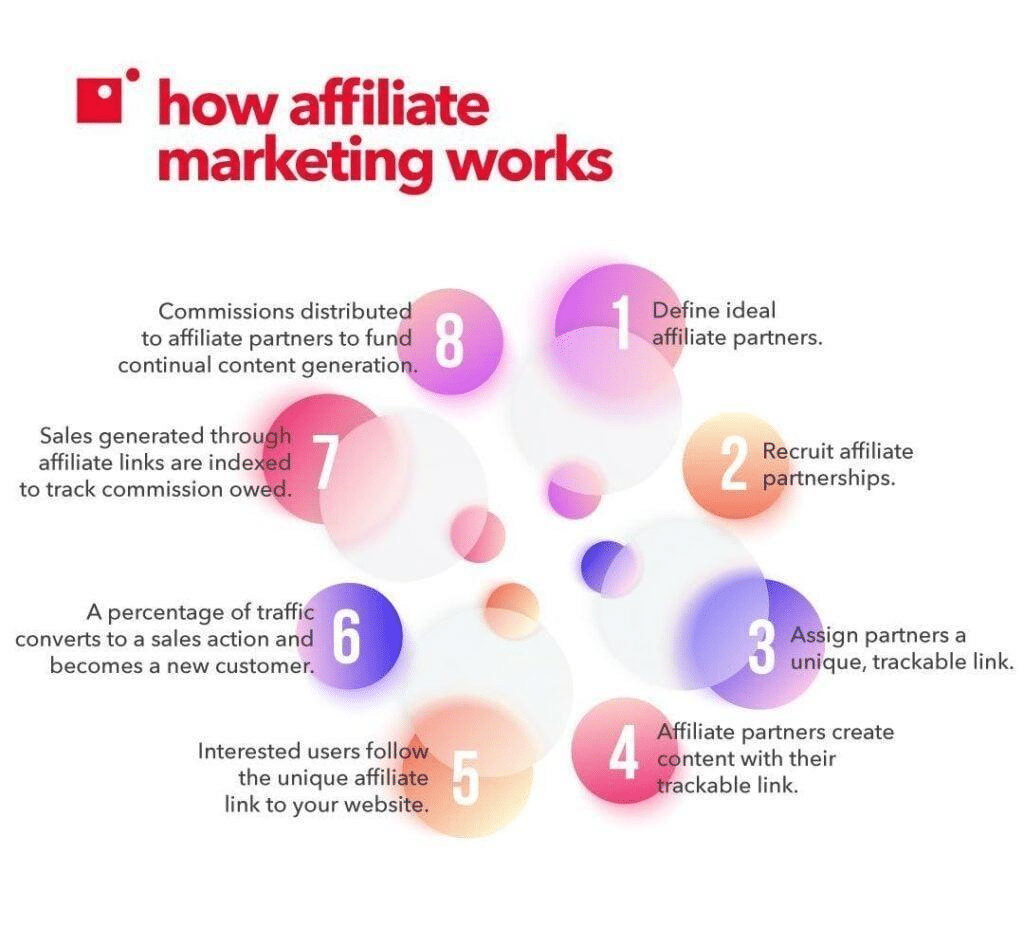
How Affiliate Marketing Works
Affiliate marketing revolves around three players working together:
- Merchants (brands or advertisers): They create products or services and run affiliate programs to expand their reach.
- Affiliates (publishers, influencers, or marketers): They join these programs, receive unique tracking links, and promote the offers through blogs, social media, email, or ads.
- Customers: They engage with affiliate content, click the links, and complete an action such as making a purchase or signing up.
When the customer converts, the affiliate earns a commission, often a percentage of the sale or a flat fee.
This creates a win-win cycle:
- Merchants pay only for measurable performance.
- Affiliates monetize their audience by promoting relevant products.
- Customers discover solutions they might not have found otherwise.
The strength of this system depends on trust. Merchants who provide high-quality assets and transparent tracking empower affiliates, while affiliates who align campaigns with a brand’s audience add genuine value.
The Role of Tracking and Attribution
Tracking is the invisible layer that ensures fairness. It records each click, lead, and sale so the right affiliate receives credit.
Traditionally, affiliate programs relied on last-click attribution, crediting only the final touchpoint before a purchase. Today, modern platforms like Google Analytics 4 and Impact.com use multi-touch attribution, spreading recognition across the entire customer journey.
This shift reflects how decisions are actually made. A blog post might introduce the product, a social ad could reinforce the message, and an email might seal the deal. Multi-touch tracking ensures all of these efforts are acknowledged.
For affiliates, it’s a reminder that content at every stage of the funnel matters — not just the last click.
Choosing Your Niche and Platform
Affiliate marketing for beginners starts with focus. Instead of trying to appeal to everyone, pick a niche where you can provide real value.
Identifying a Profitable Niche
A profitable niche is defined by three criteria:
- Audience demand: Are people actively searching for solutions?
- Purchase intent: Are they ready to buy?
- Manageable competition: Is there space to stand out?
Keyword tools like Google Trends, SEMrush, or Ahrefs can help you spot opportunities. For instance, niches with transactional keywords (e.g., “best invoicing tools for freelancers”) often convert more effectively than generic queries.
Tip: Start with a micro-niche (like “AI tools for freelance designers”) where you can establish authority, then expand into adjacent areas as your influence grows.
Selecting the Right Platform
Once you know your niche, match it to the right platform:
- Blogs: Best for SEO-driven niches (reviews, comparisons).
- YouTube: Great for tutorials and product walkthroughs.
- Instagram/TikTok: Perfect for visually engaging products and short-form storytelling.
- LinkedIn: Effective for B2B or SaaS affiliate programs.
Aligning your niche with the platform where your audience spends time ensures higher engagement and conversions.
Joining Affiliate Programs
Not all affiliate programs are created equal. Choosing the right one can make the difference between steady earnings and wasted effort. Before signing up, it’s worth evaluating how each program is structured and what kind of support it offers.
Commission Structure
Your earning potential depends on the program’s commission model:
- Flat commissions: One-time payouts per conversion. Best for quick, impulse-driven products like eBooks or apparel.
- Recurring commissions: Ongoing payouts for subscriptions or memberships. Common in SaaS, they generate steady, long-term income.
- Tiered commissions: Higher rates as sales volume grows. Ideal for affiliates focused on scaling traffic and revenue.
For long-term growth, recurring and tiered commissions often provide more value than flat payouts.
Cookie Duration
Cookie duration defines how long after a customer clicks your link you can still earn a commission:
- Short cookies (7–14 days): Common for low-cost, fast-decision products.
- Medium cookies (30 days): A balanced option found in many standard programs.
- Long cookies (60–90+ days): Best for high-ticket items or industries where customers need more time to decide.
Longer cookies generally increase your chances of being credited, especially with expensive or slow-decision products.
Attribution Model
Attribution determines how credit is assigned when multiple affiliates or channels influence a customer’s journey:
- Last-click attribution: The final touchpoint before purchase gets full credit. Traditional, but can overlook early influencers.
- First-click attribution: The initial touchpoint receives credit. Useful for rewarding discovery, but not widely adopted.
- Multi-touch attribution: Credit is shared across several touchpoints. This model recognizes affiliates who contribute throughout the funnel, not just at the end.
Multi-touch attribution is becoming the standard in advanced programs because it better reflects real buying behavior.
Support and Resources
Strong affiliate programs provide more than just links. They equip partners with tools and guidance such as:
- Marketing assets: Banners, ad creatives, email templates.
- Analytics dashboards: Real-time tracking and performance reports.
- Affiliate managers: Direct support to help optimize campaigns and solve issues.
The more resources provided, the easier it is to run effective campaigns and scale results.
Make Money With AI
Join our Partner Programs!
Boost your reputation, drive revenue and grow your business with CustomGPT.ai.
Creating and Promoting Content
Content is the engine of affiliate marketing. The more valuable and targeted your content, the more likely it is to drive conversions.
Developing a Content Strategy
A successful affiliate strategy isn’t just about choosing the right products — it’s about creating the right content for the right audience at the right stage of their journey. Effective content aligns directly with the buyer’s journey:
Awareness Stage
At this point, potential customers know they have a problem but are still exploring solutions. Content should focus on education and value rather than hard selling.
- Blog posts that explain concepts or trends
- Social media content that sparks curiosity
- Videos that answer common questions
Consideration Stage
Here, the audience is actively comparing options. Content should help them evaluate choices and position your affiliate offer as a strong contender.
- In-depth comparison guides
- Case studies showing real-world results
- Listicles that highlight best products or services in a category
Decision Stage
When buyers are ready to act, content should reduce friction and make the decision easy.
- Step-by-step tutorials
- Product demos or walkthroughs
- Clear calls-to-action with affiliate links
Using the Pillar-and-Cluster Model
One of the most effective frameworks for organizing affiliate content is the pillar-and-cluster model:
- Pillar content: A comprehensive, evergreen guide that covers a broad topic in depth. Example: “The Complete Guide to AI Tools for Small Businesses.”
- Cluster content: Supporting pieces that dive into subtopics or specific products, all linking back to the pillar. Example: reviews of individual AI tools or comparisons between two popular platforms.
This approach improves SEO, strengthens topical authority, and makes it easier for readers to navigate your content ecosystem — moving naturally from awareness to decision.
This not only builds authority but also strengthens SEO through internal linking.
SEO and Audience Targeting
To make your content discoverable:
- Focus on long-tail keywords with purchase intent.
- Use semantic optimization to cover related queries.
- Analyze behavioral data (bounce rates, dwell time) to refine your content.
The goal is to balance search visibility with audience empathy — satisfying both algorithms and real readers.
Compliance and Performance Tracking
Affiliate marketing isn’t just about promotion, it’s also about responsibility.
Adhering to FTC Guidelines
Regulators require affiliates to disclose financial relationships clearly. Examples include:
- Blog: “This post contains affiliate links.”
- YouTube: A spoken disclaimer at the start of the video.
- Instagram: Hashtags like #ad or #affiliate near the link.
Clear disclosure not only ensures compliance but also builds trust with your audience.
Using Analytics for Optimization
Data-driven affiliates thrive. Tools like Google Analytics 4, affiliate dashboards, and attribution models reveal which touchpoints drive conversions.
Instead of guessing, you can:
- Identify which content converts best.
- Reallocate effort to high-performing channels.
- Spot mid-funnel opportunities often overlooked in last-click models.
Performance tracking turns affiliate marketing from a gamble into a measurable, improvable business.
Emerging Trends and Future Directions
Affiliate marketing is evolving with new tools and channels. Staying ahead means adapting early.
- The Rise of Micro-Influencers
Micro-influencers (creators with smaller but engaged audiences) consistently outperform big-name influencers on engagement. Their authenticity and niche focus make their recommendations highly persuasive — perfect for affiliate partnerships.
- AI and Automation in Affiliate Marketing
AI tools now enable real-time campaign optimization. Instead of static strategies, affiliates can adjust budgets, creatives, or targeting based on live data. Predictive analytics also forecasts where conversions are likely to come from, enabling proactive planning.
Together, these trends point toward a future where automation + human creativity define the most successful affiliate strategies.
FAQs
What are the essential components of affiliate marketing?
Affiliate marketing relies on merchants, affiliates, customers, and the tracking systems that connect them.
How can beginners choose the right affiliate programs?
Focus on programs that match your niche, offer fair commissions, provide strong tracking, and deliver useful resources.
What are the most effective strategies for high-converting content?
Create detailed product reviews, comparison guides, and tutorials. Use long-tail keywords, clear calls-to-action, and distribute across multiple channels.
How do tracking tools and attribution models impact success?
They ensure conversions are accurately credited. Multi-touch attribution rewards affiliates for mid-funnel influence, not just final clicks.
What compliance and ethical considerations should beginners prioritize?
Always disclose affiliate links, respect privacy laws like GDPR, and promote products genuinely aligned with your audience’s needs.
Conclusion
Affiliate marketing remains one of the most accessible and scalable online business models. For beginners, it offers a way to start with minimal costs, build income streams, and scale into a long-term business.
Start small, test what works, and grow consistently. With the right strategy and tools, affiliate marketing can be more than a side hustle — it can become a sustainable business.
Take the Next Step
Ready to apply these insights to your own business? Sign up and start building a high-performing affiliate program today.
And don’t do it alone—join our growing Slack community to connect with other marketers, share strategies, and stay ahead of affiliate marketing trends.
Build a Custom GPT for your business, in minutes.
Drive revenue, save time, and delight customers with powerful, custom AI agents.
Trusted by thousands of organizations worldwide


