
CustomGPT.ai vs OpenAI
In our continuous series comparing leading AI platforms, today we bring you a head-to-head comparison between CustomGPT.ai and OpenAI. Both platforms can help teams build AI experiences, but they are built for different jobs. CustomGPT.ai focuses on no-code, retrieval-powered chatbots trained on your business content, while OpenAI gives developers flexible model APIs for building custom AI products and workflows.
In this guide, we will compare the key features, competitive strengths, ideal use cases, and RAG considerations for both platforms to help you decide which option fits your business best.
CustomGPT.ai vs OpenAI: A Detailed Comparison of both platforms
CustomGPT.ai
- Build AI agents from your business content without a custom engineering project.
- Give customers and employees source-grounded answers from websites, documents, help centers, and other approved knowledge sources.
- Deploy chatbots across website, support, sales, and internal knowledge workflows.
OpenAI
- Build custom AI applications with flexible model APIs.
- Power chat, reasoning, coding, data analysis, content generation, and multimodal product experiences.
- Give developers control over prompts, tools, application logic, and user experience.
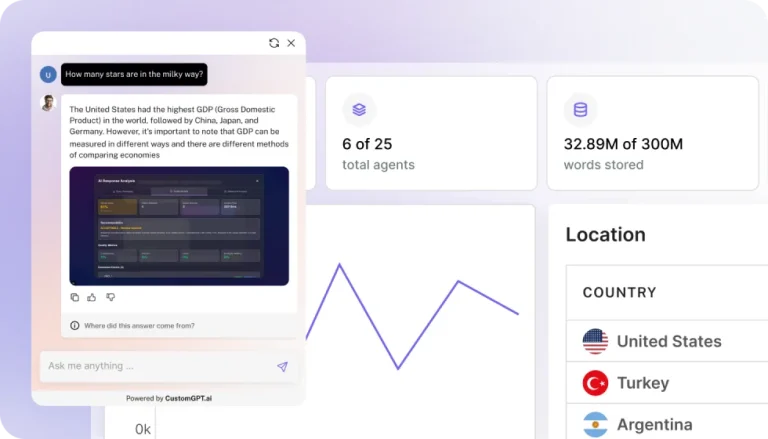
Launch fully-integrated custom AI agents
Increase efficiency, drive revenue, and delight customers with instant answers from your information
Custom GPT is built for
CustomGPT.ai
- Businesses that need an accurate knowledge assistant without building their own RAG stack.
- Customer support, internal knowledge search, onboarding, sales enablement, and documentation use cases.
- Teams that want a faster launch path with less infrastructure to manage.
OpenAI
- Developer teams building custom AI products, internal tools, or advanced automation.
- Organizations that already have engineering resources for retrieval, UI, auth, logging, and deployment.
- Teams that want maximum flexibility over the AI application layer.
Use cases
Here's how startups like yours are leveraging CustomGPT.ai
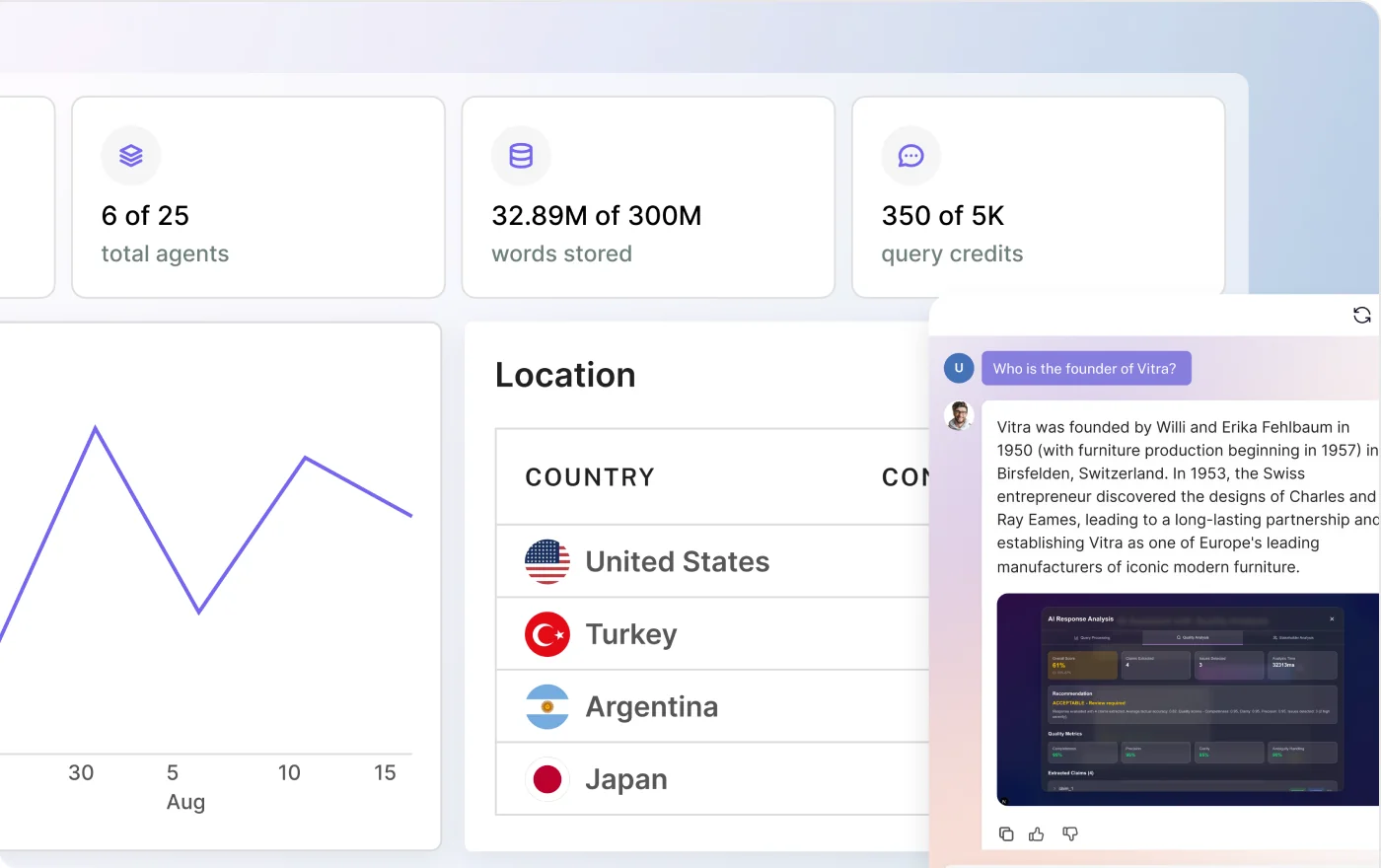
Automate and resolve 93%+ of customer inquiries, instantly
Reduce ticket volume and support costs with AI agents that instantly resolve inquiries—freeing your team to focus on high-value tasks
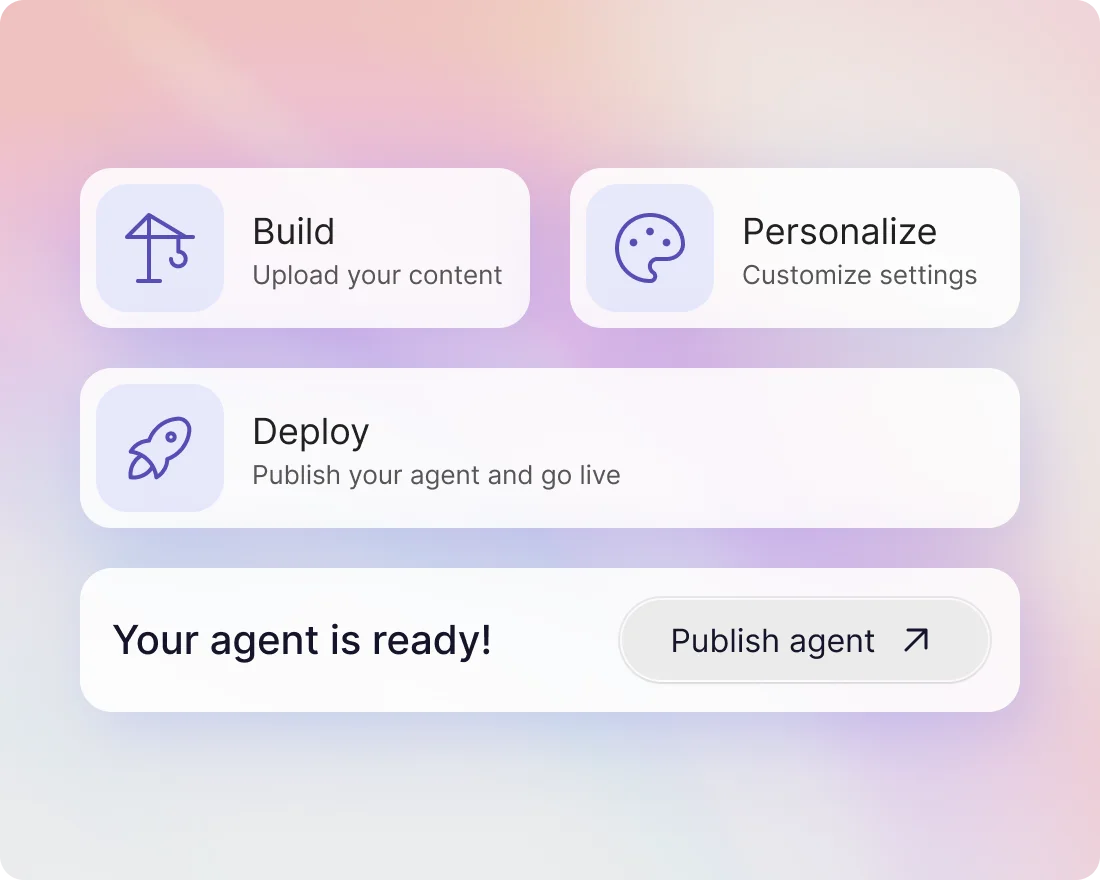
Answer every new-starter question on day one
Turn handbooks, policies and recorded sessions into an agent that answers new joiners directly, in their own words, from your own material.
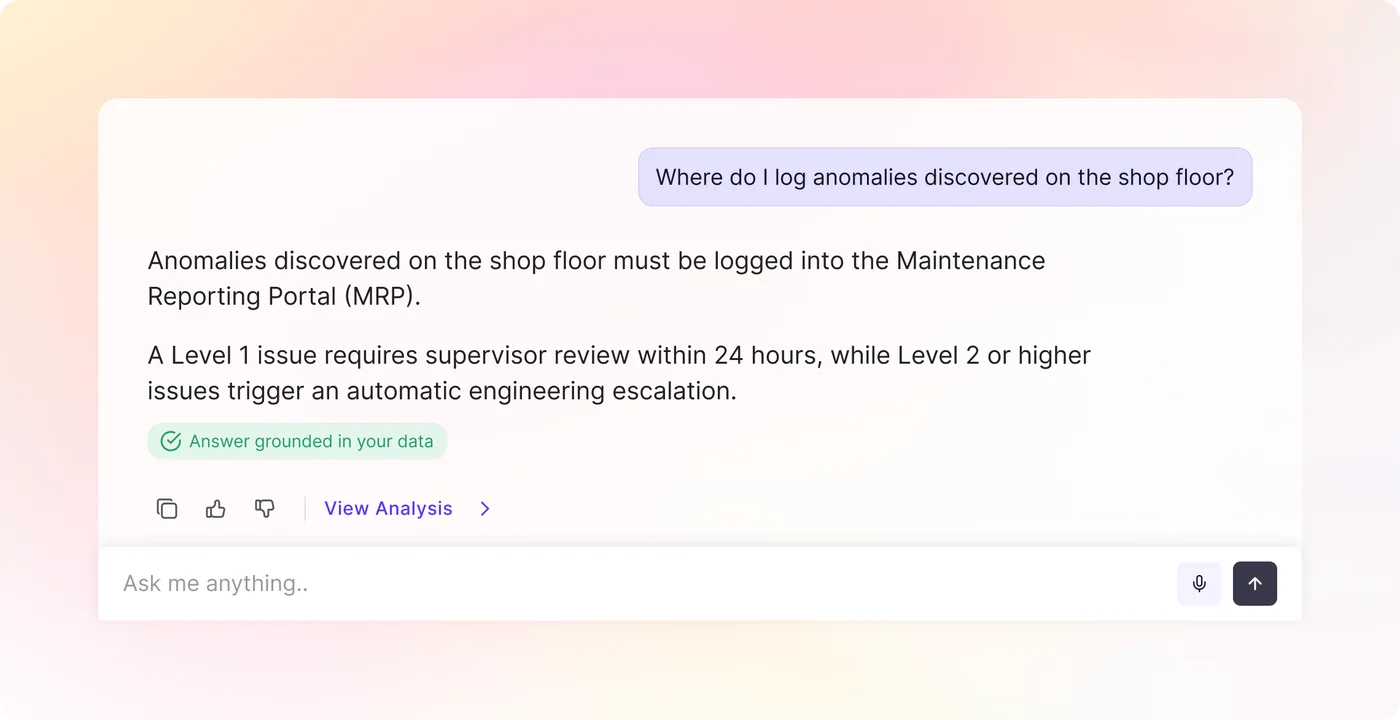
Work faster with instant, accurate information
Give team members exactly the right information — no more, no less — with use-specific assistants and role-based access across everything you have already written down.
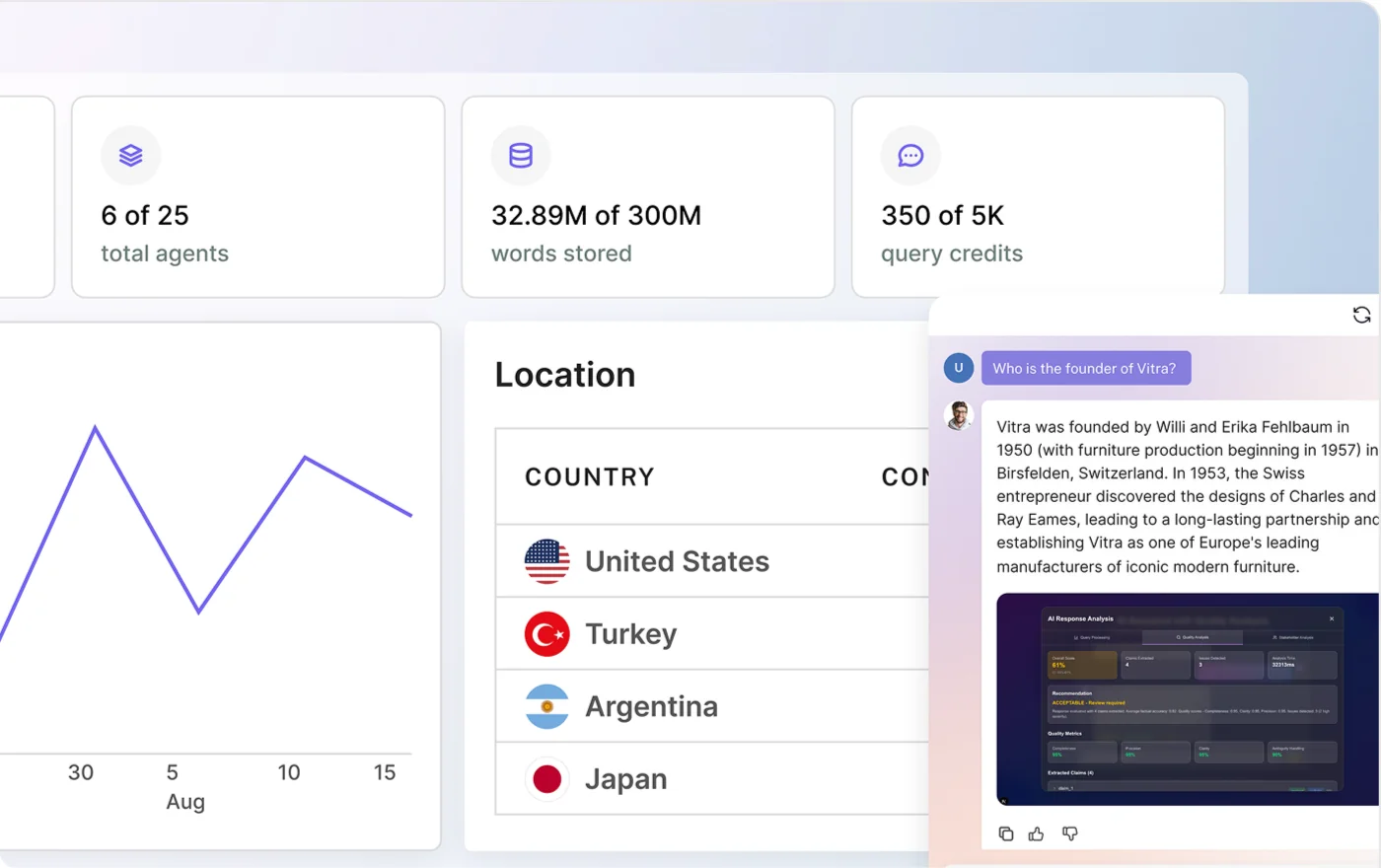
Ask your own library the question
Point an agent at 1,400+ supported file types and dozens of integrations, and get answers that come only from your approved sources, each one linked back to where it came from.
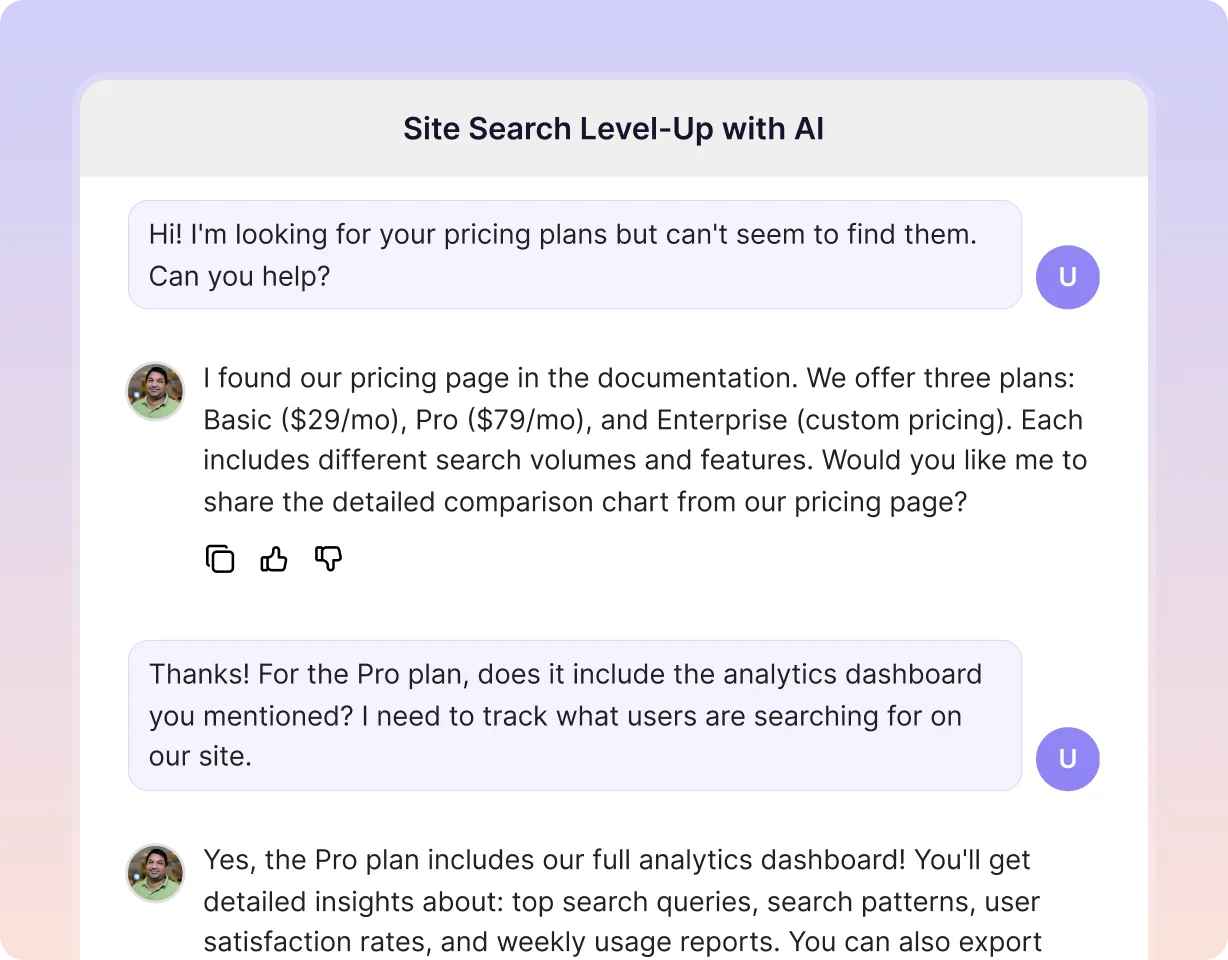
See what your visitors are actually asking
Every conversation is a record of what people came looking for. Read the questions your site is being asked and what it managed to answer.
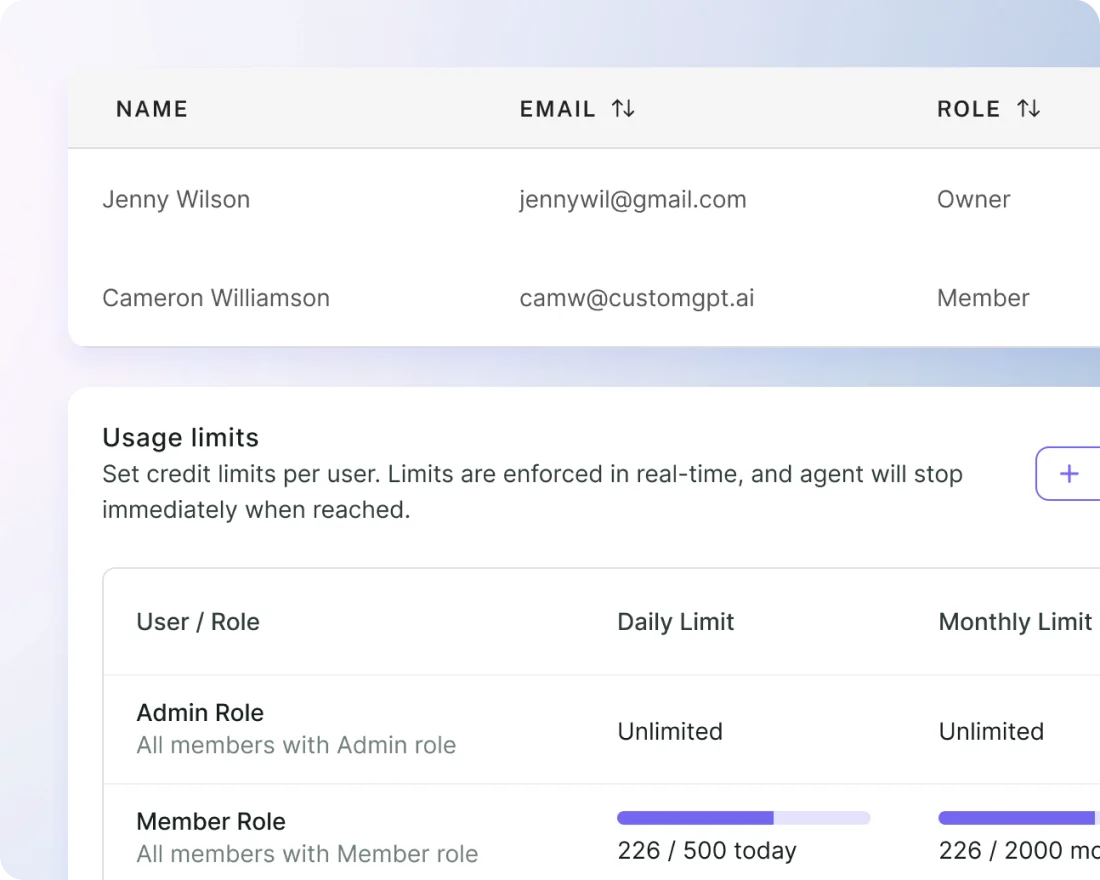
Keep your team current on the market
Collect the reports, transcripts and pages your team relies on into one agent, so a market question gets a sourced answer instead of a search.
Competitive Edge
CustomGPT.ai
- Turnkey business chatbot experience.
- Strong focus on grounded answers and citations.
- No-code setup with developer options when teams need API access.
OpenAI
- A complete business chatbot usually requires custom product work.
- Retrieval quality depends on how your team designs ingestion, chunking, search, prompts, and evaluation.
- You manage the surrounding app, data pipeline, user experience, analytics, and compliance controls.
Frequently Asked Questions
Which platform is better for accurate answers from company content?
CustomGPT.ai is usually the better fit when the priority is accurate answers from approved company content. It is built as a retrieval-powered business chatbot platform with source-grounded responses and citations. OpenAI can also power retrieval workflows, but your team has to design and maintain more of the surrounding pipeline.
Which platform is better for developers building custom AI apps?
OpenAI is usually the better fit when developers want flexible model APIs for a custom product or internal application. It gives engineering teams building blocks for chat, reasoning, retrieval, tool use, and automation. CustomGPT.ai is better when the business wants a finished knowledge chatbot experience with less custom infrastructure work.
Can OpenAI be used for RAG?
Yes. OpenAI can be used to build retrieval-augmented generation systems with embeddings, file search, tools, and custom application logic. The key difference is ownership: with OpenAI, your team designs and operates the RAG system; with CustomGPT.ai, the RAG workflow is packaged into a managed business chatbot platform.
Which platform is easier for a non-technical team to launch?
CustomGPT.ai is easier for non-technical teams because it is designed as a no-code chatbot builder for business content. OpenAI is powerful, but a production chatbot usually requires engineering work for ingestion, prompts, retrieval, UI, permissions, analytics, and deployment.
Which platform is better for a branded website chatbot?
CustomGPT.ai is usually the better fit for a branded website chatbot because it includes chatbot deployment options, customization, source grounding, and business-focused workflows. OpenAI can power a branded chatbot, but your team needs to build or buy the front end and manage the rest of the application layer.
Which platform fits internal knowledge search better?
If the goal is a fast internal knowledge assistant trained on documents, policies, help content, or team resources, CustomGPT.ai is usually the simpler path. If the internal tool needs highly custom workflow logic, proprietary interfaces, or deep integration into a larger application, OpenAI may be a better developer foundation.