

An affiliate marketing funnel is the engine that turns casual clicks into consistent commissions, guiding prospects from first curiosity to confident purchase.

Make Money With AI
Join our Partner Programs!
Boost your reputation, drive revenue and grow your business with CustomGPT.ai.
Instead of relying on luck, a well-structured funnel creates a clear path that nurtures trust and moves users step by step toward conversion.
When done right, this process aligns the right message with the right moment, making every interaction feel intentional rather than pushy.
Understanding how each stage works empowers you to optimize traffic, improve conversions, and build sustainable affiliate income over time.
Understanding the Affiliate Marketing Funnel
An affiliate marketing funnel is more than a simple path from link to sale; it’s a structured journey designed to educate, engage, and convert users over time.
By understanding how prospects move through different funnel stages, marketers can align content and offers with user intent instead of relying on one-off clicks.
This approach improves conversion optimization by focusing on relationship-building rather than instant selling. When each step is intentional, traffic becomes more valuable and affiliate efforts become scalable and predictable.
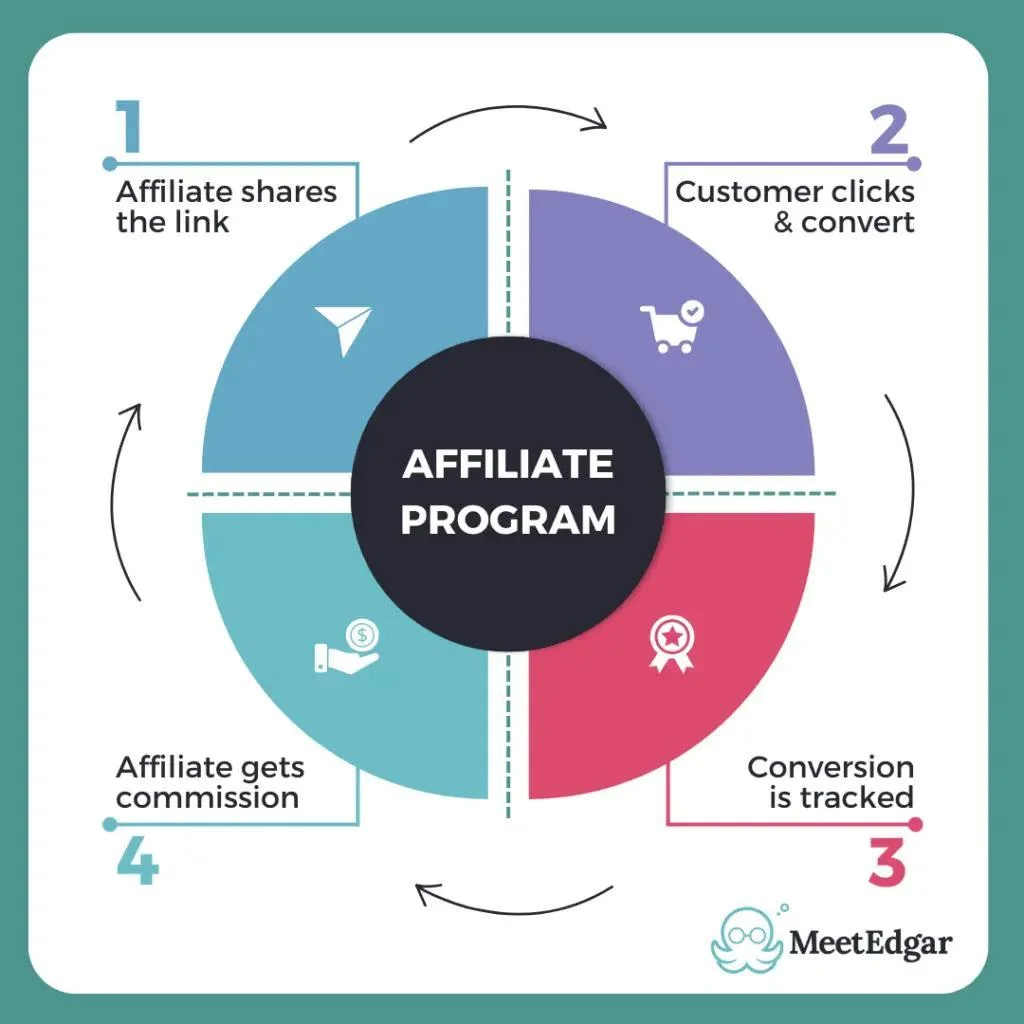
Image source: meetedgar.com
Awareness: Attracting the Right Audience
The top of the funnel is all about visibility and relevance, where potential buyers first discover your content or offer. At this stage, success depends on matching your message with the problems your audience is already searching for.
Building first-touch interest
- Use SEO-driven blog posts, social media content, or short videos to attract attention
- Focus on pain points rather than products to spark curiosity
- Prioritize traffic quality over volume for stronger downstream results
A strong awareness stage sets the foundation for smoother movement through the rest of the affiliate funnel stages.
Interest: Turning Visitors into Engaged Readers
Once users land on your content, the goal shifts from attraction to engagement and trust. This is where lead nurturing begins, helping prospects understand why your recommendation matters.
Creating meaningful engagement
- Provide in-depth guides, comparisons, or tutorials
- Address objections and common questions early
- Introduce affiliate links naturally within helpful content
When interest is built correctly, users stay longer and are more receptive to future calls to action.
Consideration: Building Trust Before the Click
In the consideration phase, users are actively evaluating options and deciding whether to take action. Your role is to reduce friction and position your offer as the most logical next step.
Strengthening purchase confidence
- Share real use cases, benefits, and limitations
- Highlight outcomes rather than features
- Reinforce credibility through transparency and clarity
This stage is critical for improving affiliate conversion rates without sounding overly promotional.
Action: Encouraging the Final Conversion
The bottom of the funnel is where clicks turn into commissions, but only if the transition feels natural and well-timed. Clear direction and minimal distractions make all the difference here.
Driving decisive action
- Use strong but honest calls to action
- Ensure links lead to relevant, high-quality landing pages
- Align messaging between your content and the affiliate offer
When the action stage is optimized, the affiliate marketing funnel works as a seamless system rather than a single conversion attempt.
Driving Traffic into Your Affiliate Marketing Funnel
Traffic is the fuel of any affiliate marketing funnel, but not all traffic converts the same way. The focus should be on attracting users who already show buying intent rather than chasing vanity metrics like raw visitor numbers.
By choosing the right channels and content formats, you can bring in visitors who are more likely to engage, trust your recommendations, and move smoothly through the funnel.
Organic Search Traffic for Long-Term Growth
Organic traffic remains one of the most reliable sources for sustainable affiliate income. It targets users who are actively searching for solutions, making them ideal for affiliate offers.
Why organic traffic works well
- High-intent keywords attract users closer to conversion
- SEO content compounds over time
- Builds authority and trust with search engines and readers
When optimized correctly, organic traffic strengthens every stage of the affiliate funnel stages.
Social Media Traffic for Top-of-Funnel Reach
Social platforms are powerful for awareness and engagement, especially when content feels native rather than promotional. They help introduce your funnel to new audiences who may not yet be searching.
Using social traffic effectively
- Share educational and problem-focused content
- Use short-form posts to spark curiosity
- Drive users to deeper funnel content instead of direct offers
Social traffic works best when combined with strong lead nurturing strategies.
Paid Traffic for Faster Results
Paid ads can accelerate funnel performance when used strategically, especially for testing offers and messaging. However, they require clear tracking and conversion optimization to remain profitable.
Best practices for paid traffic
- Start with small budgets and test creatives
- Match ad copy closely with landing page intent
- Focus on retargeting warm audiences
When aligned properly, paid traffic can quickly reveal what works inside your affiliate marketing funnel and scale winning strategies efficiently.

Image source: impactmybiz.com
Optimizing Conversions at Each Funnel Stage
Attracting traffic is only half the equation; real success comes from improving how users move through your affiliate marketing funnel. Small optimizations at each stage can significantly increase conversions without needing more visitors.
By understanding user behavior and intent, you can remove friction points and guide prospects forward in a way that feels helpful rather than forced.
Optimizing Content for the Awareness Stage
Content at the top of the funnel should focus on clarity and relevance, not selling. The goal is to make users feel understood and eager to learn more.
Improving first impressions
- Use clear headlines that match search intent
- Keep introductions problem-focused
- Avoid overwhelming users with affiliate links early
Strong awareness content increases the likelihood that users continue deeper into the funnel.
Improving Engagement During the Interest Stage
Once users are engaged, your content should encourage interaction and exploration. This stage benefits greatly from structure and value-driven messaging.
Boosting time and attention
- Break content into scannable sections
- Use examples and simple explanations
- Guide users to related resources naturally
Better engagement leads to stronger lead nurturing and improved trust.
Reducing Friction in the Consideration Stage
At this point, users are close to taking action but may still hesitate. Removing uncertainty is key to improving affiliate conversion rates.
Lowering decision barriers
- Clearly explain who the offer is for and who it isn’t
- Address common doubts honestly
- Emphasize outcomes over hype
When friction is minimized, conversions feel like a logical next step rather than a sales push.
Enhancing the Action Stage for More Conversions
The final stage should make clicking and converting as easy as possible. Simplicity and alignment matter more here than persuasion.
Maximizing final clicks
- Use concise and specific calls to action
- Place links where intent is highest
- Ensure consistency between content and offer pages
A well-optimized action stage ensures your funnel performs efficiently from click to commission.
Building Trust and Authority Within the Funnel
Trust is the currency that determines whether your affiliate marketing funnel converts or collapses. Users are far more likely to take action when they believe your recommendations are genuine and experience-based rather than purely promotional.
By consistently delivering value and transparency, you position yourself as a reliable guide instead of just another affiliate link. This authority compounds over time and strengthens every stage of the funnel.
Using Value-Driven Content to Establish Credibility
High-quality content signals expertise and reassures users that your guidance is worth following. When readers consistently gain insights from you, trust develops naturally.
Ways to add real value
- Share actionable tips and practical frameworks
- Focus on solving problems before mentioning solutions
- Keep content updated and accurate
Value-first content reinforces long-term confidence in your affiliate funnel strategy.
Image source: gptexperthub.com
Being Transparent With Affiliate Recommendations
Honesty plays a major role in building trust, especially when money is involved. Clear communication reduces skepticism and improves engagement.
Practicing ethical promotion
- Disclose affiliate relationships clearly
- Explain why you recommend a specific product
- Highlight both pros and limitations
Transparency improves affiliate conversion rates by aligning expectations with reality.
Leveraging Social Proof and Real Experiences
Social proof helps users validate their decisions by seeing how others have benefited. It reduces hesitation and strengthens perceived credibility.
Effective forms of social proof
- Case studies and real-world examples
- User testimonials or reviews
- Personal results and insights
When used authentically, social proof adds depth and trust to your funnel content.
Maintaining Consistency Across Funnel Touchpoints
Consistency reinforces reliability and professionalism throughout the funnel journey. Mixed messages can create doubt and disrupt momentum.
Ensuring a cohesive experience
- Align tone and messaging across all content
- Match expectations between pages and offers
- Keep branding and positioning uniform
A consistent experience makes your affiliate marketing funnel feel intentional and trustworthy from start to finish.
Tools, Tracking, and Scaling Your Affiliate Marketing Funnel
Once your affiliate marketing funnel is structured and converting, the next step is strengthening it with the right tools and data. Tracking performance helps you understand what’s working, what’s leaking, and where small improvements can unlock bigger gains.
Scaling becomes far more predictable when decisions are driven by insights rather than assumptions. With the right setup, you can optimize faster and grow without burning extra traffic or budget.
Essential Tools for Managing Your Funnel
The right tools simplify funnel management and allow you to focus on strategy instead of manual tasks. They also improve visibility across every funnel stage.
Core tools to consider
- Analytics platforms to track clicks, conversions, and drop-offs
- Affiliate link trackers to measure offer performance
- Email marketing tools for lead nurturing and follow-ups
Using reliable tools makes conversion optimization more precise and repeatable. This foundation ensures your funnel decisions are backed by real data, not guesswork.
Tracking Performance Across Funnel Stages
Tracking isn’t just about final sales; it’s about understanding user behavior at every step. This insight allows you to fix weak points before they affect revenue.
Key metrics to monitor
- Click-through rates on content and calls to action
- Engagement metrics like time on page and bounce rate
- Conversion rates at each funnel stage
Consistent tracking helps you fine-tune your affiliate funnel stages over time.
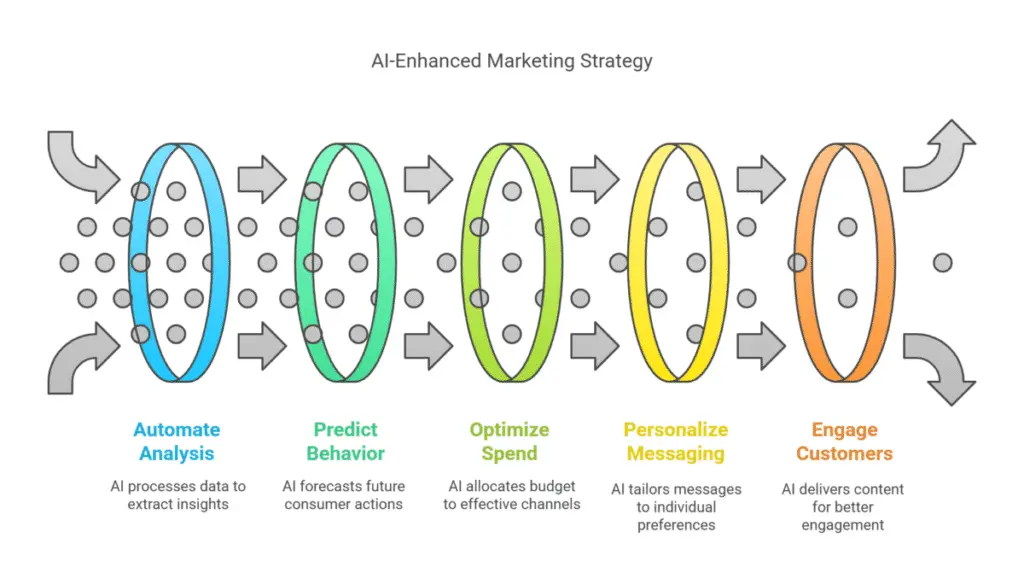
Image source: scalepv.com
Common Mistakes That Hurt Funnel Performance
Even well-designed funnels can fail if common pitfalls are overlooked. Recognizing these mistakes early protects your traffic and earnings.
Mistakes to avoid
- Sending traffic directly to offers without warming users
- Overloading pages with affiliate links
- Ignoring audience intent and content alignment
Avoiding these errors keeps your funnel efficient and user-focused.
Scaling What Works Without Breaking the Funnel
Scaling should amplify success, not introduce instability. The key is expanding proven strategies rather than experimenting blindly.
Smart scaling strategies
- Double down on high-converting content
- Expand traffic sources gradually
- Test changes incrementally instead of all at once
When scaling is intentional, your affiliate marketing funnel grows stronger instead of more fragile.
FAQ
Q: What is an affiliate marketing funnel in simple terms?
A: An affiliate marketing funnel is a structured process that guides a user from first exposure to a final purchase through multiple steps. Each step addresses a different level of awareness and intent. The goal is to build trust before asking for a conversion. It works best when stages are clearly defined.
Q: How does an affiliate marketing funnel turn clicks into conversions?
A: It converts clicks by gradually educating and nurturing users instead of pushing immediate sales. Content and offers are aligned with user intent at each stage. This reduces friction and increases confidence. Results depend on traffic quality and message consistency.
Q: What are the main stages of an affiliate marketing funnel?
A: The common stages are awareness, interest, consideration, and action. Each stage serves a different user mindset. Content should change accordingly. Skipping stages usually lowers conversions.
Q: How do I know if my funnel is leaking conversions?
A: Funnel leaks appear as high bounce rates or low click-throughs between stages. Analytics tools help identify where users drop off. Poor message alignment is a common cause. Fixes usually involve improving clarity or relevance.
Q: How do I align content with funnel stages?
A: Awareness content focuses on problems, not products. Interest content explains solutions. Consideration content compares options. Action content removes friction and clarifies next steps.
Q: When should I stop using a funnel that isn’t converting?
A: Stop after testing meaningful changes. Give the funnel enough data. If intent alignment is poor, rebuilding may be better. Decisions should be data-driven.
Conclusion
A well-designed affiliate marketing funnel is what transforms scattered clicks into consistent conversions by guiding users through trust, relevance, and intent-driven content.
When each stage is aligned with user needs and measured thoughtfully, the funnel becomes a repeatable system rather than a one-time experiment.
If you’re ready to apply these principles and build a funnel that actually converts, explore how CPA-based affiliate strategies fit into a performance-focused funnel approach.
Build a High-Converting Affiliate Funnel.
Create an affiliate marketing funnel that converts traffic into consistent commissions.
Trusted by thousands of organizations worldwide


