

Affiliate marketing KPIs are the foundation of any successful affiliate strategy because they reveal what’s actually driving results behind the scenes.

Make Money With AI
Join our Partner Programs!
Boost your reputation, drive revenue and grow your business with CustomGPT.ai.
When marketers track the right metrics, they gain clear visibility into performance, partner value, and revenue potential.
In a competitive digital landscape, the difference between average and high-performing affiliate programs often comes down to data-driven decision-making.
By monitoring the right KPIs, marketers can refine commission structures, strengthen affiliate relationships, and scale what’s working with confidence.
The metrics you track don’t just report performance — they shape smarter strategies, stronger partnerships, and long-term profitability.
The Role of KPIs in Affiliate Marketing
Affiliate marketing KPIs help marketers translate raw data into meaningful insights that guide smarter decisions and sustainable growth. By aligning goals with measurable outcomes, KPIs ensure affiliate performance metrics stay tied to real business impact rather than vanity numbers.
Why measurement drives better affiliate outcomes
- Enable accurate conversion tracking to identify which affiliates and channels generate real revenue
- Support commission optimization by highlighting top-performing partners and underperforming segments
- Improve affiliate ROI by focusing resources on strategies that consistently convert
- Provide clear benchmarks to evaluate campaign health and scalability
When KPIs are used consistently, they become more than metrics — they act as a strategic framework for building profitable, long-term affiliate programs.
Key Terminology and Concepts
Understanding affiliate marketing KPIs starts with knowing which measurements truly reflect program performance across traffic, conversions, and revenue. These definitions help marketers interpret affiliate performance metrics correctly and avoid drawing conclusions from isolated data points.
Many of these concepts include conversion tracking, click-through rate, and average order value, each offering insight into a different stage of the affiliate funnel. When analyzed together, they reveal how affiliates influence user behavior and purchasing decisions.
These terms also tie directly to commission optimization and overall affiliate ROI, ensuring payouts align with real value rather than surface-level activity. A strong grasp of this terminology allows marketers to refine strategies, strengthen partnerships, and scale affiliate programs with confidence.
Traffic Indicators: Measuring Reach and Engagement
Traffic indicators reveal how effectively affiliate efforts attract and engage potential customers across channels and platforms. Metrics such as impressions, clicks, and click-through rate help marketers evaluate visibility while supporting accurate conversion tracking later in the funnel.
These indicators also highlight the quality of incoming traffic by showing how users interact before converting. When paired with broader affiliate performance metrics, traffic data makes it easier to identify high-impact partners and optimize campaigns for stronger affiliate ROI.
Impressions and Clicks: The Basics
Impressions and clicks form the starting point of affiliate analysis by showing how often offers are seen and acted upon. These foundational indicators set the stage for deeper affiliate performance metrics and effective conversion tracking.
How impressions and clicks inform affiliate insights
- Impressions measure reach by tracking how often affiliate links or ads are displayed
- Clicks indicate initial engagement and signal interest in the promoted offer
- Click-through rate connects impressions and clicks to reveal content effectiveness
- Early traffic data helps identify opportunities for commission optimization
When impressions and clicks are monitored together, they provide essential context for evaluating traffic quality and long-term affiliate ROI.
Click-Through Rate: Evaluating Engagement
Click-through rate highlights how effectively affiliate content motivates users to take action after seeing an offer. As a key engagement indicator, it bridges the gap between traffic volume and deeper affiliate performance metrics.
What click-through rate reveals about affiliate engagement
- Measures the percentage of users who click after viewing an affiliate link or ad
- Indicates how compelling messaging, placement, and audience targeting are
- Supports conversion tracking by identifying traffic with higher intent
- Helps prioritize partners and creatives that contribute to stronger affiliate ROI
When analyzed consistently, click-through rate becomes a powerful signal for refining campaigns and improving overall affiliate program performance.
Conversion Metrics: From Clicks to Customers
Conversion metrics show how effectively affiliate traffic turns interest into measurable action. These indicators move beyond surface-level engagement to reveal whether clicks are translating into real customer outcomes.
Key measurements such as conversion rate, completed purchases, and lead submissions help evaluate the true quality of affiliate traffic.
When paired with accurate conversion tracking, marketers can pinpoint which partners and channels drive meaningful results. These metrics also play a central role in commission optimization and long-term affiliate ROI by tying payouts directly to performance.
Focusing on conversion data allows marketers to scale high-performing affiliates while eliminating inefficiencies across the funnel.
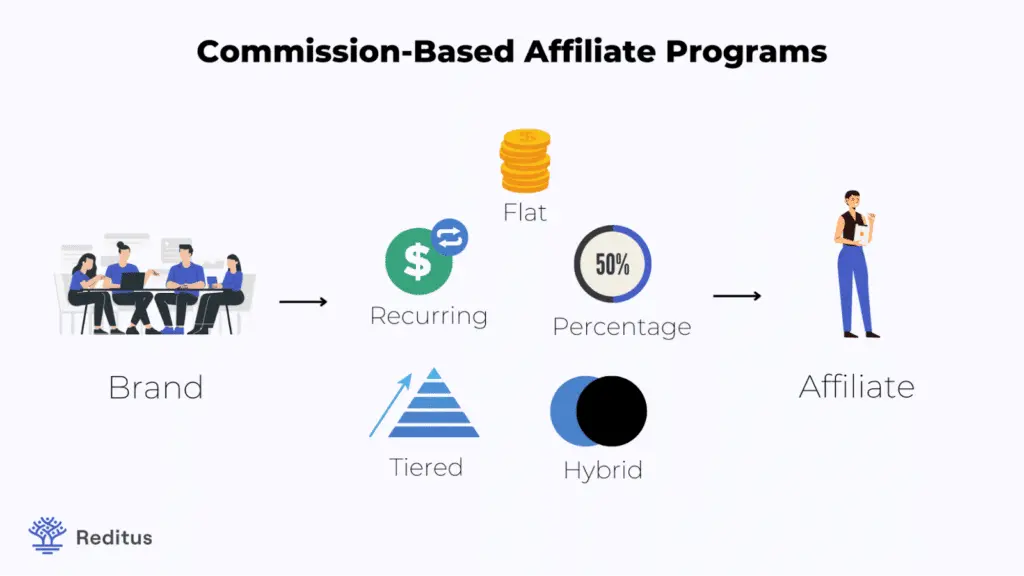
Image source: getreditus.com
Understanding Conversion Rates
Conversion rates are a core indicator of how well affiliate traffic performs after the click. They help marketers understand whether engagement is turning into tangible business results.
How conversion rates guide smarter affiliate decisions
- Measure the percentage of clicks that result in a desired action or purchase
- Reflect traffic quality rather than volume alone
- Support accurate conversion tracking across devices and channels
- Influence commission optimization by identifying high-converting affiliates
When monitored consistently, conversion rates provide clear direction for improving campaign effectiveness and maximizing affiliate ROI.
Practical Applications of Conversion Metrics
Conversion metrics provide actionable insight into how affiliate efforts translate into real business outcomes. They help marketers move beyond traffic volume and focus on performance that drives measurable revenue.
How conversion metrics improve affiliate strategy
- Identify which affiliates and campaigns generate genuine customer actions
- Highlight affiliate performance metrics that directly impact revenue growth
- Enable better targeting, messaging, and landing page optimization through data analysis
- Support commission optimization by rewarding quality conversions over clicks
When applied consistently, conversion metrics strengthen affiliate ROI and guide scalable, performance-focused decisions that balance growth and efficiency.
Revenue Metrics: Assessing Financial Impact
Revenue metrics reveal how affiliate programs contribute directly to overall business income. These indicators help marketers connect affiliate performance metrics to actual financial outcomes rather than engagement alone.
Key measures such as revenue per affiliate, average order value, and total sales clarify which partnerships generate the most value.When paired with reliable conversion tracking, revenue data exposes which channels drive profitable customer behavior.
These insights also guide smarter commission optimization by aligning payouts with revenue contribution instead of surface-level activity. This approach encourages affiliates to focus on quality traffic and high-intent audiences.
Over time, revenue metrics strengthen visibility into affiliate ROI and long-term program sustainability. By monitoring financial impact closely, marketers can scale successful affiliates while protecting profit margins.
Average Order Value and Earnings Per Click
Average Order Value and Earnings Per Click are essential revenue-focused indicators that show how efficiently affiliate traffic generates income. Together, they help marketers evaluate both purchase quality and overall earning potential across campaigns.
| Metric | What It Measures | Why It Matters |
| Average Order Value (AOV) | The average dollar amount spent per completed purchase | Highlights purchasing behavior and helps identify affiliates driving higher-value transactions |
| Earnings Per Click (EPC) | Average revenue earned for each affiliate click | Combines traffic quality and conversion performance into a single profitability metric |
When monitored consistently, AOV and EPC provide clear insight into revenue efficiency and support smarter optimization decisions across affiliate program.
Return on Ad Spend: Measuring Efficiency
Return on ad spend highlights how effectively affiliate investments translate into measurable revenue. This metric helps marketers evaluate financial efficiency across campaigns and partners.
How return on ad spend guides performance decisions
- Measures revenue generated for every dollar spent on affiliate promotions
- Reveals which campaigns deliver profitable results versus wasted spend
- Supports commission optimization by aligning costs with actual returns
- Strengthens analysis of affiliate ROI across channels and time periods
When tracked consistently, return on ad spend becomes a critical indicator for scaling profitable affiliate strategies while maintaining cost efficiency.
Efficiency Calculations: Optimizing Affiliate Programs
Efficiency calculations help marketers evaluate how well affiliate programs convert resources into measurable results. These insights ensure performance improvements are driven by data rather than assumptions.

Image source: scalepv.com
How efficiency calculations strengthen affiliate programs
- Identify cost-effective affiliates using key affiliate performance metrics
- Improve conversion tracking by linking spend, clicks, and revenue outcomes
- Support commission optimization by balancing payouts with performance quality
- Enhance long-term affiliate ROI by reducing waste and scaling profitable efforts
When used strategically, efficiency calculations create leaner, more profitable affiliate programs built for sustainable growth.
Cost Per Acquisition: Evaluating Partner Quality
Cost per acquisition provides a clear view of how much it costs to generate a customer through affiliate partnerships. This metric helps marketers assess partner quality beyond surface-level traffic volume.
How cost per acquisition reflects affiliate value
- Measures the total cost required to acquire a single customer
- Highlights which affiliates deliver efficient, high-quality conversions
- Supports commission optimization by aligning payouts with acquisition costs
- Improves affiliate ROI by identifying partners that balance cost and performance
When monitored closely, cost per acquisition helps marketers strengthen partnerships and invest in affiliates that drive sustainable, profitable growth.
Advanced Tracking Systems for Accurate Metrics
Advanced tracking systems enable marketers to capture precise data across the entire affiliate funnel. These tools reduce blind spots and ensure performance insights are based on accurate, reliable information.
How advanced tracking systems improve affiliate measurement
- Enhance conversion tracking across devices, platforms, and touchpoints
- Provide deeper visibility into affiliate performance metrics in real time
- Support commission optimization with accurate attribution data
- Strengthen affiliate ROI analysis by eliminating data gaps and errors
When implemented effectively, advanced tracking systems create a more transparent, data-driven foundation for optimizing affiliate program.
FAQ
What are affiliate marketing KPIs?
Affiliate marketing KPIs are measurable metrics used to evaluate the performance, profitability, and effectiveness of affiliate campaigns and partners.
Which KPIs matter most for affiliate programs?
Key KPIs include conversion rate, earnings per click, average order value, cost per acquisition, and overall affiliate ROI.
How often should affiliate KPIs be reviewed?
KPIs should be monitored regularly—weekly or monthly—to catch performance shifts early and optimize campaigns quickly.
Why is conversion tracking important for affiliates?
Conversion tracking shows which clicks turn into real actions, helping marketers focus on high-quality traffic and partners.
How do KPIs improve affiliate program profitability?
By guiding commission optimization and resource allocation, KPIs ensure spend is focused on affiliates that deliver real revenue.
Conclusion
Tracking the right affiliate marketing KPIs transforms affiliate programs from guesswork into predictable, scalable revenue engines.
By focusing on meaningful metrics like conversion performance, efficiency, and profitability, marketers can optimize partnerships, improve decision-making, and drive long-term growth with confidence.
To take a deeper dive into the metrics that truly matter and learn how to apply them effectively, explore this comprehensive guide on affiliate performance metrics and start building a more data-driven affiliate strategy today.