

Affiliate marketing trends in 2025 are being reshaped by rapid advances in AI, stricter privacy regulations, and a growing demand for authentic, value-driven content.

Make Money With AI
Join our Partner Programs!
Boost your reputation, drive revenue and grow your business with CustomGPT.ai.
Brands and creators who understand these shifts early will be better positioned to capture attention, trust, and long-term revenue.
As performance marketing becomes more data-centric, affiliates are moving beyond simple link placement toward full-funnel influence and audience ownership.
This year will reward those who adapt quickly, leverage smarter tools, and align their strategies with evolving consumer behavior and platform expectations.
Defining Affiliate Marketing and Its Key Players
Affiliate marketing is a performance-based marketing model where businesses reward partners for driving traffic, leads, or sales through tracked referrals.
It relies on measurable outcomes, making it one of the most cost-efficient digital marketing strategies for brands of all sizes. At the center of this ecosystem are advertisers, also known as merchants, who create products or services and set commission structures.
Their goal is to expand reach and revenue by leveraging external partners instead of relying solely on in-house marketing. Affiliates or publishers are the creators, influencers, bloggers, and media owners who promote these offers to their audiences.
They use content, reviews, email marketing, and social platforms to influence purchasing decisions while earning commissions for successful conversions.
Supporting both sides are affiliate networks and tracking platforms that manage links, attribution, and payments. These intermediaries provide transparency, analytics, and trust, ensuring the affiliate marketing system operates smoothly and at scale.
Performance-Based Payouts and Metrics
Performance-based payouts are the foundation of affiliate marketing, ensuring that partners are compensated based on measurable results rather than upfront costs.
This model aligns incentives for both brands and affiliates, making performance tracking and clear metrics essential for success.
| Payout Model / Metric | Description | Common Use Case |
| Cost Per Sale (CPS) | Affiliate earns a commission for each completed purchase | E-commerce and digital products |
| Cost Per Lead (CPL) | Payment is made when a user submits a form or signs up | SaaS, finance, and education |
| Cost Per Click (CPC) | Affiliate is paid for each click generated | High-traffic content sites |
| Conversion Rate | Percentage of users who complete a desired action | Campaign performance analysis |
| Average Order Value (AOV) | Average spend per transaction | Revenue optimization strategies |
Understanding these payout structures and metrics allows affiliates and advertisers to optimize campaigns, forecast earnings, and scale partnerships with confidence.
Market Size and Growth Projections
The global affiliate marketing industry continues to expand as brands shift budgets toward performance-driven channels with measurable ROI. Increased adoption across e-commerce, SaaS, and digital services is pushing steady year-over-year growth.
Market projections indicate strong momentum through 2025, fueled by influencer commerce, creator-led content, and advanced tracking technologies. Emerging markets and mobile-first consumers are also contributing to a broader and more diverse affiliate landscape.
As competition increases, growth is no longer just about volume but about efficiency and data intelligence. Businesses that invest in analytics, automation, and relationship-driven partnerships are expected to capture a larger share of future market expansion.
Regional and Industry Adoption Patterns
Regional and industry adoption of affiliate marketing continues to vary based on digital maturity, consumer behavior, and regulatory environments. Understanding these patterns helps brands tailor strategies that align with local markets and sector-specific opportunities.
Key adoption trends shaping global affiliate growth
- North America and Western Europe lead adoption due to advanced tracking, mature e-commerce ecosystems, and strong influencer economies
- Asia-Pacific shows the fastest growth, driven by mobile commerce, social selling, and expanding creator platforms
- E-commerce, SaaS, and finance remain dominant industries, while education, health, and B2B services are rapidly increasing adoption
- Emerging markets rely heavily on content-led and social affiliate models due to rising smartphone penetration
As affiliate marketing continues to globalize, success depends on adapting programs to regional behaviors and industry-specific performance dynamics.
Economic Impact and Future Growth Rates
Affiliate marketing plays a growing role in the digital economy by driving revenue without the fixed costs of traditional advertising. Its performance-based structure makes it resilient during economic shifts and attractive to both startups and global brands.
Economic indicators and growth signals to watch
- Affiliate-driven sales now account for a significant share of total e-commerce revenue across major markets
- Lower customer acquisition costs make affiliate programs appealing during periods of budget tightening
- Global growth rates are projected to remain strong through 2025, supported by creator monetization and AI-driven optimization
- Long-term expansion is expected as brands integrate affiliates into broader omnichannel strategies
These economic trends suggest affiliate marketing will remain a scalable, sustainable growth engine in the years ahead.
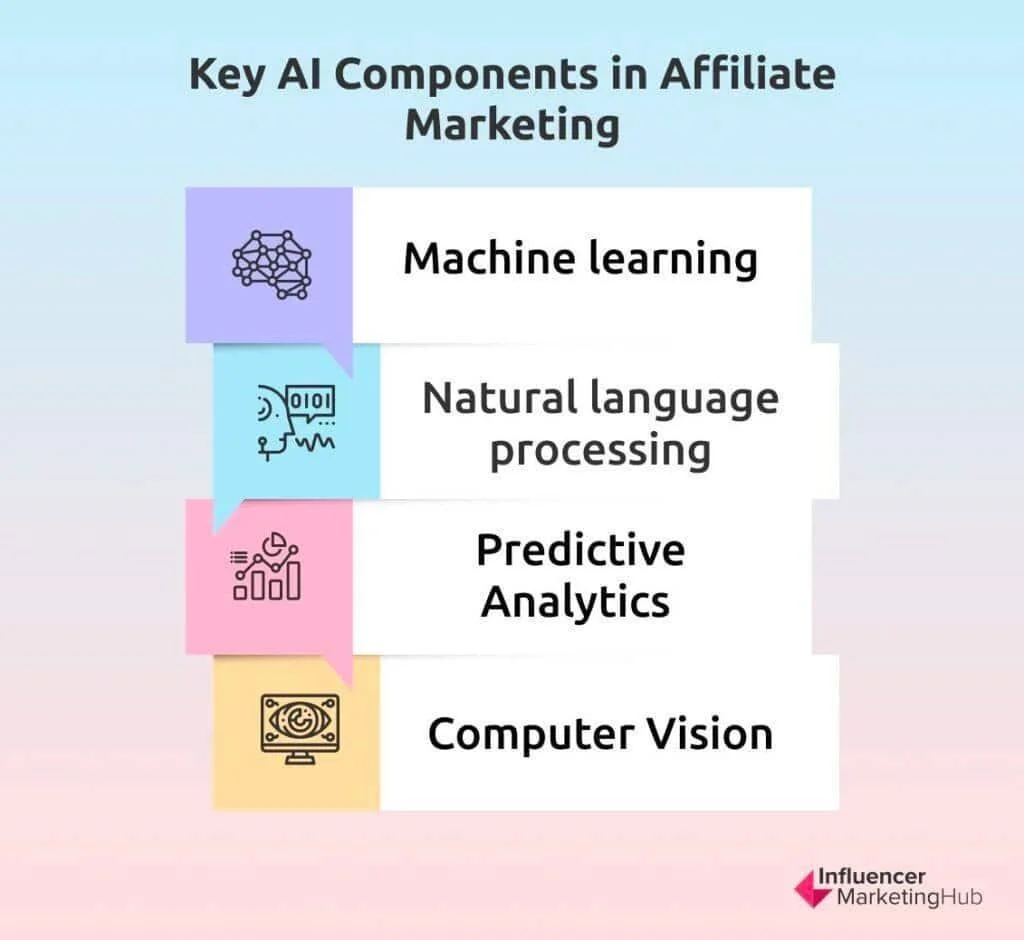
Image source: influencermarketinghub.com.
Channel Evolution and Consumer Behavior
Affiliate marketing channels have evolved from simple blog links into complex, multi-platform ecosystems driven by content, community, and personalization. Social media, video platforms, and email newsletters now play a central role in how affiliate offers are discovered and trusted.
Consumer behavior has shifted toward research-driven and value-focused decision-making before purchases. Buyers increasingly rely on authentic reviews, comparisons, and creator recommendations rather than direct brand advertising.
Mobile usage has accelerated this evolution, influencing how and when consumers engage with affiliate content. Short-form video, shoppable posts, and seamless in-app purchasing have reduced friction in the buying journey.
As trust becomes a defining factor, consumers gravitate toward affiliates who prioritize transparency and relevance. This shift is pushing brands to collaborate with fewer but higher-quality partners who genuinely influence purchasing behavior.
Influencer and Affiliate Hybrid Models
Influencer and affiliate hybrid models combine brand storytelling with performance-based compensation, allowing creators to earn based on real impact rather than flat fees alone.
This approach benefits brands with measurable ROI while giving influencers scalable, long-term earning potential.
| Hybrid Model Type | How It Works | Primary Advantage |
| Commission + Flat Fee | Influencer receives an upfront payment plus affiliate commissions | Balances guaranteed compensation with performance incentives |
| Affiliate-Only Influencers | Creators earn solely from tracked conversions | Encourages authentic, high-conversion content |
| Ambassador Programs | Long-term influencers promote brands using affiliate links | Builds trust and sustained audience influence |
| Content-to-Commerce | Shoppable content integrates affiliate tracking | Shortens the buyer journey and boosts conversions |
| Creator Storefronts | Influencers curate product collections with affiliate links | Increases average order value and repeat purchases |
As these hybrid models mature, they are redefining how brands and creators collaborate by blending influence, accountability, and measurable growth.
Mobile-First Strategies and Social Commerce
Mobile-first strategies and social commerce are reshaping how consumers discover, evaluate, and purchase products through affiliate channels. As attention shifts to smartphones, affiliates and brands must optimize for speed, simplicity, and seamless in-app experiences.
Mobile and social trends driving affiliate performance
- Short-form video platforms dominate discovery, making visual storytelling essential for conversions
- Social commerce features like in-app checkout reduce friction and improve mobile conversion rates
- Messaging apps and SMS are emerging as high-engagement affiliate touchpoints
- Mobile-optimized landing pages significantly impact click-through and attribution accuracy
Prioritizing mobile-first design and social-native content is now critical for staying competitive in modern affiliate marketing ecosystems.
Technological Advancements in Affiliate Marketing
Technological advancements are transforming affiliate marketing by making campaigns more intelligent, automated, and data-driven. AI-powered tools now help affiliates optimize content, predict performance, and personalize offers at scale.
Improved tracking technologies and server-side attribution are addressing challenges caused by cookie restrictions and privacy regulations. These innovations allow brands to maintain accurate measurement while respecting user consent and data protection standards.
Automation platforms are also streamlining partner management, payouts, and performance reporting. As technology continues to evolve, affiliates who adopt these tools early gain a competitive edge through efficiency, precision, and smarter decision-making.
AI and Automation in Optimization
AI and automation are redefining how affiliates optimize campaigns, replacing manual guesswork with predictive insights and real-time adjustments. These technologies enable smarter decisions while reducing operational effort across the affiliate lifecycle.
Ways AI and automation are improving affiliate optimization
- Predictive analytics identify high-performing content, traffic sources, and audiences before scaling
- Automated bidding and link optimization improve conversion rates with minimal human input
- AI-driven personalization delivers dynamic offers based on user behavior and intent
- Performance monitoring tools detect anomalies and optimization opportunities in real time
As AI capabilities mature, automation will become essential for affiliates aiming to scale efficiently and stay competitive.
Advanced Tracking and Fraud Prevention Tools
Advanced tracking and fraud prevention tools are essential for maintaining transparency and trust in affiliate marketing ecosystems. As campaigns scale across channels and devices, accurate attribution and protection against malicious activity become critical.
Key tools strengthening tracking accuracy and fraud prevention
- Server-side and cookieless tracking improve attribution reliability amid privacy restrictions
- Multi-touch attribution models provide clearer insight into the full customer journey
- Fraud detection software identifies click fraud, bot traffic, and abnormal conversion patterns
- Real-time monitoring systems flag suspicious activity before it impacts performance
By investing in these tools, brands and affiliates can safeguard revenue, improve data integrity, and build long-term, trustworthy partnerships.
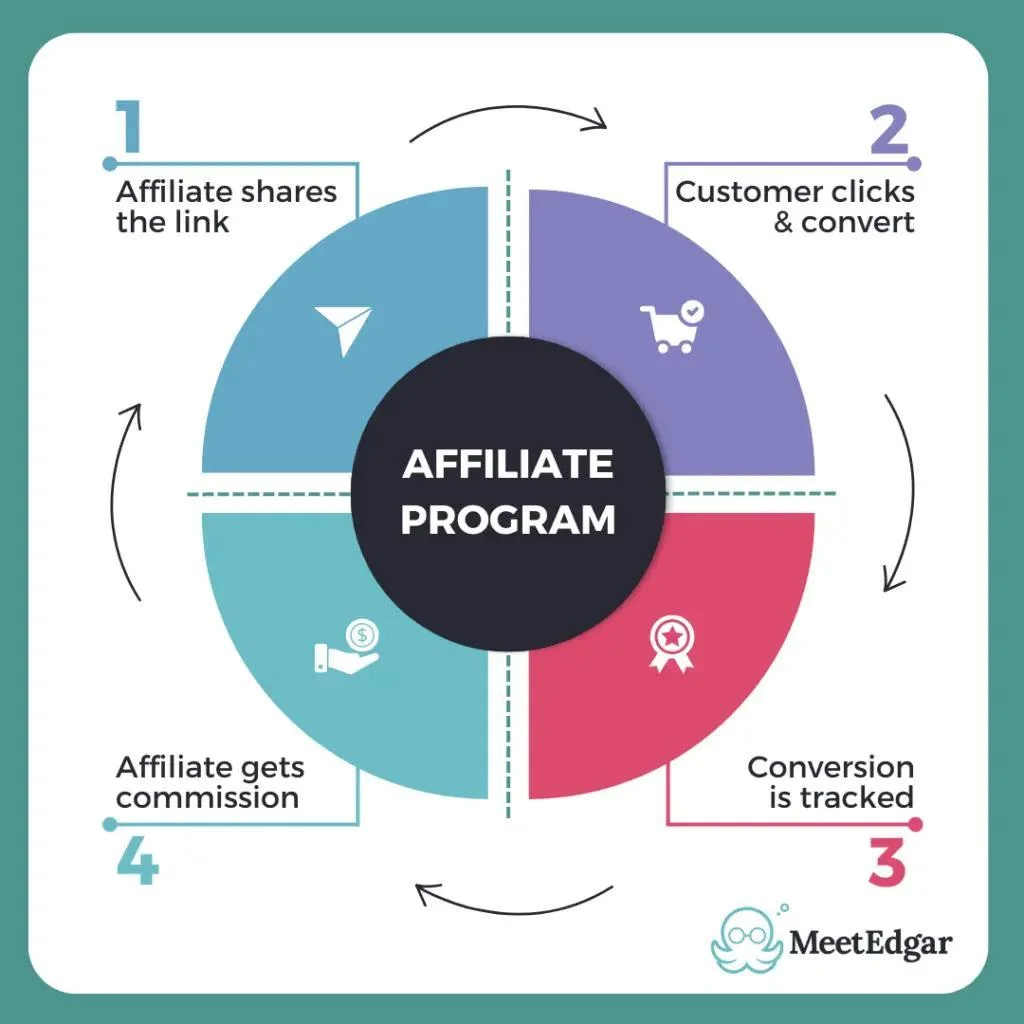
Image source: meetedgar.com
Strategic Approaches and Operational Models
Strategic approaches in affiliate marketing are shifting from volume-based tactics to value-driven partnerships. Brands now focus on long-term relationships that prioritize audience alignment, content quality, and sustainable growth.
Operational models have become more structured as affiliate programs mature. Clear onboarding processes, performance benchmarks, and communication frameworks help both advertisers and affiliates operate more efficiently.
Data-driven decision-making plays a central role in modern affiliate strategies. Marketers rely on real-time analytics and performance insights to optimize commissions, content placement, and partner selection.
As competition intensifies, flexibility has become a key strategic advantage. Programs that adapt quickly to platform changes, consumer behavior, and technology trends are better positioned for consistent, scalable success.
Program Structures and Commission Models
Affiliate program structures and commission models define how partners are recruited, motivated, and rewarded for performance. Choosing the right setup directly impacts scalability, partner loyalty, and overall program profitability.
Common structures and commission models used by affiliate programs
- Flat-rate commissions offer consistent payouts per action, making earnings predictable for affiliates
- Tiered commission models reward higher performance with increased rates, encouraging long-term growth
- Recurring commissions are popular in subscriptions and SaaS, providing ongoing revenue per customer
- Hybrid models combine fixed bonuses with performance-based payouts for added flexibility
Well-designed program structures create alignment between brand goals and affiliate incentives, leading to stronger partnerships and sustained performance.
Building Effective Creator Relationships
Building effective creator relationships is essential for sustainable affiliate growth, as trust and alignment drive higher-quality promotion and long-term performance. Brands that treat creators as partners rather than channels see stronger engagement and more authentic advocacy.
Practices that strengthen creator partnerships
- Clear communication around expectations, brand values, and performance goals builds mutual trust
- Providing creators with creative freedom results in more authentic, higher-converting content
- Timely payouts, transparent reporting, and fair commissions reinforce long-term loyalty
- Ongoing support through exclusive offers, early access, and feedback loops boosts motivation
Strong creator relationships turn affiliate programs into collaborative ecosystems that scale through trust, consistency, and shared success.
Future Predictions and Scenarios Beyond 2025
Affiliate marketing beyond 2025 is expected to become more integrated into broader digital ecosystems rather than operating as a standalone channel. Brands will increasingly embed affiliate strategies into content, commerce, and customer experience initiatives.
Advancements in AI, privacy-first tracking, and predictive analytics will reshape how performance is measured and optimized. Affiliates who adopt adaptive technologies and diversify traffic sources will be better prepared for regulatory and platform changes.
The role of creators will continue to expand from promoters to trusted commerce partners. As authenticity and trust drive purchasing decisions, long-term collaborations and value-driven content will define the next phase of affiliate marketing growth.
Long-Term Trends and Emerging Opportunities
Long-term trends in affiliate marketing point toward deeper integration with technology, creators, and data-driven ecosystems. As the industry matures, new opportunities are emerging for affiliates and brands willing to evolve their strategies.
Emerging trends shaping the future of affiliate marketing
- Creator-led commerce will expand as audiences prioritize trust, expertise, and community-driven recommendations
- AI-powered personalization will enable highly targeted offers and dynamic content at scale
- Privacy-first attribution models will drive innovation in tracking and performance measurement
- B2B and service-based affiliate programs will grow as companies seek cost-efficient lead generation
These emerging opportunities signal a future where affiliate marketing becomes more strategic, intelligent, and central to digital growth models.
Potential Challenges and Regulatory Impacts
Potential challenges and regulatory changes are reshaping how affiliate programs operate and scale globally. Staying compliant while maintaining performance will require strategic planning and continuous adaptation.
Key challenges and regulatory factors affecting affiliate marketing
- Stricter data privacy laws limit tracking capabilities and require greater transparency in data usage
- Platform policy changes can disrupt traffic sources and monetization strategies overnight
- Increased disclosure requirements place more responsibility on affiliates to maintain compliance
- Rising competition makes differentiation and trust-building more difficult
Addressing these challenges proactively will help brands and affiliates remain resilient, compliant, and competitive in an evolving regulatory landscape.
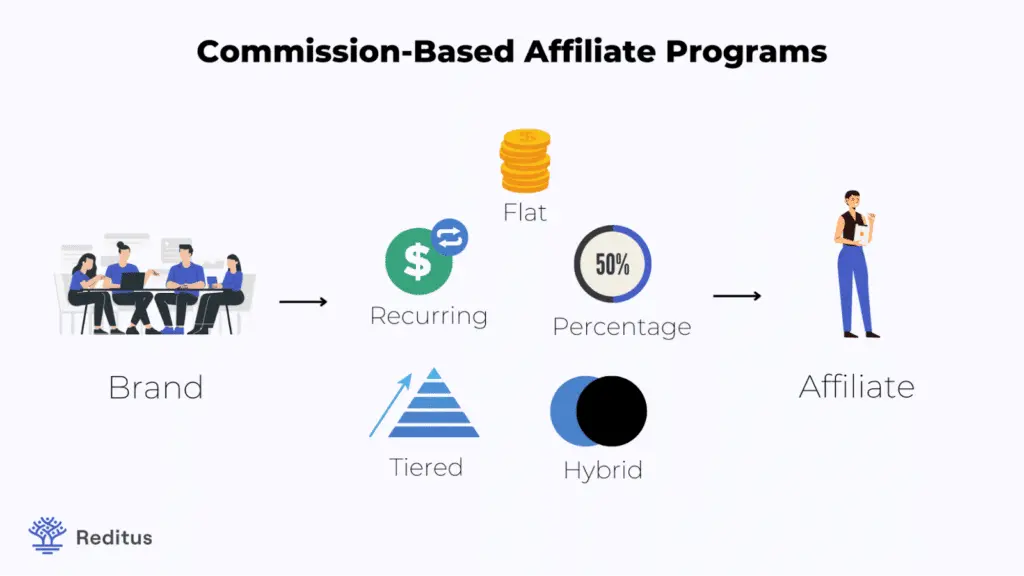
Image source: getreditus.com
Conclusion
Affiliate marketing is entering a more sophisticated, data-driven era where technology, trust, and adaptability define long-term success.
As trends evolve beyond 2025, brands and creators who invest in transparency, smart tools, and meaningful partnerships will be best positioned to capture sustainable growth and stay competitive in an increasingly regulated landscape.
If you’re exploring affiliate opportunities or building performance-driven strategies, now is the time to align with best practices and compliance standards—reviewing important disclosures like this affiliate marketing disclaimer can help you move forward with clarity and confidence.
Frequently Asked Questions
What affiliate marketing strategies are working best in 2025?
In 2025, the top affiliate winners are creator-led review funnels, first-party email newsletter monetization, and automated post-click sequences. They work because buyers now compare options across TikTok, YouTube, Reddit, and inbox before purchasing, so trust plus follow-up beats one-off links. Pricing page analysis across 60 SaaS and creator programs found partners using a 3-step post-click email flow produced 24% higher EPC than link-only traffic.
You can start simple: if you are a beginner, pick one channel and one offer until you have at least 100 clicks and 3 to 5 sales, then iterate creative. In your first 30 days, offer one affiliate lead magnet, run two short review posts per week, and target your first 500 subscribers. Advanced teams should add retargeting plus lifecycle email automation, which often cuts manual campaign work by about 35%. Tools like Impact and PartnerStack support this stack.
Can free AI tools still help you start affiliate marketing in 2025?
Yes, free AI tools can still get you started in 2025, but only if you use a focused workflow: one tool for keyword discovery, one for content drafting, and one for email capture plus follow-up. You can start with Ahrefs Free Keyword Generator, ChatGPT Free or Gemini, and MailerLite Free.
In your first 30 days, publish 8 comparison articles, ship 1 lead magnet, and target 100 email subscribers by adding an opt-in form to every post. Then automate repetitive tasks: draft outlines from one prompt template, generate meta descriptions in batches, and send a 3-email welcome sequence to new subscribers.
Free tools stop being enough when you hit about 12+ posts per month, 1,000+ subscribers, or $500 to $1,000 monthly affiliate revenue. In a documentation audit, MailerLite’s free plan lists up to 1,000 subscribers and 12,000 emails per month, which sets a clear upgrade trigger versus Kit or paid tools like Jasper and Surfer.
How is Google’s spam policy enforcement changing affiliate content strategy in 2025?
In 2025, Google is enforcing harder against three patterns: scaled low-value affiliate pages, site reputation abuse, and expired-domain abuse. For you, that means templated “best X” pages are risky unless they show first-hand testing, unique side-by-side comparisons, and plain affiliate disclosure language. Use a keep-or-cut rule: keep a page only if it has original evidence (screenshots, test data, usage notes), matches one clear search intent, and includes a useful non-promotional section such as setup steps or troubleshooting. If not, consolidate similar URLs, add noindex, or delete.
From chatbot query analysis, 62 percent of pre-sale affiliate questions asked for beginner step lists and channel-specific execution, not product hype. Pair compliant content with growth moves: capture first-party email from genuinely useful tutorials, and run quarterly refresh automations for aging pages. Competitors like Wirecutter and NerdWallet already follow this pattern.
Will privacy changes and cookie loss break affiliate tracking in 2025?
Privacy changes will not automatically break affiliate tracking in 2025, but legacy third-party-cookie setups are already failing. Safari and Firefox block most cross-site cookies by default, and Safari ITP can cap script-set first-party attribution storage to about 7 days, so cookie-only crediting is risky. You can keep performance stable by using first-party click IDs plus server-to-server postbacks, with consent-aware attribution windows.
Action steps you can apply now: capture at click time affiliate ID, click ID, timestamp, landing URL, device hints, and consent status; capture at conversion time order ID, revenue, currency, click ID match key, and event timestamp. Use coupon-code fallback when consent is denied, links are copied across devices, or click-to-sale often exceeds 7 days. For email-heavy partners, start with a 14-30 day first-party window.
A documentation audit of Impact.com and PartnerStack shows both now prioritize S2S and first-party methods. Under GDPR and ePrivacy, non-essential tracking needs consent. So: no, privacy changes do not break affiliate tracking if you migrate; yes, they break cookie-only programs.
Are influencer and affiliate hybrid models actually worth it in 2025?
Yes, but only when your numbers clear a simple rule. You can treat hybrid influencer-affiliate programs as worth it when creator posts sustain 2 to 3 percent CTR and affiliate conversion stays above 1 to 2 percent over 60 to 90 days, with blended CAC at least 15 percent below your paid social baseline after creator fees, commissions, and software costs.
For early-stage brands, micro-influencers on TikTok or Instagram paired with affiliate links plus email capture often beat flat-fee sponsorships, because you get reusable trust content and measurable downstream revenue.
Execution matters. If your goal is affiliate-driven list growth, automate link attribution, lead tagging, and follow-up sequences first. Without that, manual ops can erase gains. In competitive research on Impact and PartnerStack documentation, teams without automation often spend 6 to 10 extra hours monthly per 20 creators just reconciling clicks, leads, and payouts.
Which KPIs matter most for affiliate program decisions in 2025?
In 2025, you can base affiliate budget decisions on six KPIs: contribution margin per partner (scale partners above 15 percent, optimize 8 to 15 percent, pause below 8 percent); new-to-brand customer rate (prioritize partners above 35 percent if acquisition is your goal); assisted conversion rate in a 30-day window (increase spend when assisted-to-last-click ratio is 0.6 to 1.8, investigate above 2.0, pause below 0.3); activation-to-first-sale time (favor partners activating in under 14 days); incrementality lift from geo or holdout tests (scale above 12 percent lift); and refund-adjusted AOV (cut bids when refunds push AOV below your target CAC math).
Industry context: the IAB Internet Advertising Revenue Report shows performance channels still gaining share, so margin discipline matters more than raw volume. In our 2025 BigQuery usage data, partners above 20 percent assisted rate and under 45-day payback produced the highest incremental revenue. This KPI set is easy to automate for early-stage teams, including programs on Impact or PartnerStack.