

If you’re looking to earn recurring commissions by promoting products your audience already needs, studying real affiliate marketing website examples is the fastest way to understand what actually works.

Make Money With AI
Join our Partner Programs!
Boost your reputation, drive revenue and grow your business with CustomGPT.ai.
Too many guides talk about affiliate marketing in theory. “Pick a niche.” “Write great content.” “Add affiliate links.” Sure — but what does that look like in practice? That’s exactly what this post breaks down.
We’re looking at five real affiliate marketing websites — sites that generate serious revenue — and pulling apart the specific strategies that make them successful.
You’ll see how each one approaches content, trust-building, and monetization differently. Whether you’re launching your first affiliate site or trying to scale an existing one, these examples give you a concrete blueprint to follow.
What Separates Winning Affiliate Sites From the Rest
Not all affiliate marketing websites are built the same. Some rake in millions. Others stall out with zero traction. The difference almost always comes down to a handful of fundamentals.
Before we dig into specific affiliate marketing website examples, let’s break down the patterns that show up across every successful affiliate site.
They Solve a Specific Problem for a Specific Audience
The best affiliate sites don’t try to be everything to everyone. They pick a lane and go deep. The global affiliate marketing industry has grown past $17 billion precisely because niche-focused sites outperform generic ones in almost every measurable way.
Niche clarity drives both traffic and conversions:
- A site about “tech” is too broad. A site that helps people build custom PCs and find the cheapest parts? That’s PCPartPicker — and it prints money.
- NerdWallet doesn’t cover “finance.” It helps real people compare credit cards, loans, and insurance products side by side.
- Healthline doesn’t try to be a hospital. It delivers medically reviewed content that answers the exact health questions people search for every day.
The takeaway is simple — specificity earns trust, and trust earns clicks.
They Prioritize Content Quality Over Link Volume
Stuffing a page with affiliate links doesn’t work. What works is creating content so genuinely useful that readers click because they want to, not because they’re tricked into it.
High-performing affiliate sites treat content as their core product:
- They invest in original research, expert reviews, and hands-on testing.
- They write for the reader first and optimize for search engines second.
- They disclose affiliate relationships transparently — which actually increases conversions.
Every site in this list got big by being genuinely helpful. The affiliate revenue followed naturally.
They Build Systems, Not Just Pages
One-off blog posts don’t build affiliate empires. Systems do. That means building a structured funnel that guides visitors from awareness to action — not just hoping someone clicks a random link.
Systematic affiliate sites share these traits:
- Comparison tools, calculators, or interactive features that add real utility.
- Internal linking strategies that guide users through related content.
- Email capture and retargeting to bring visitors back.
- Consistent publishing schedules that build topical authority over time.
The sites we’re about to explore all run like machines. They didn’t get lucky. They built systems.
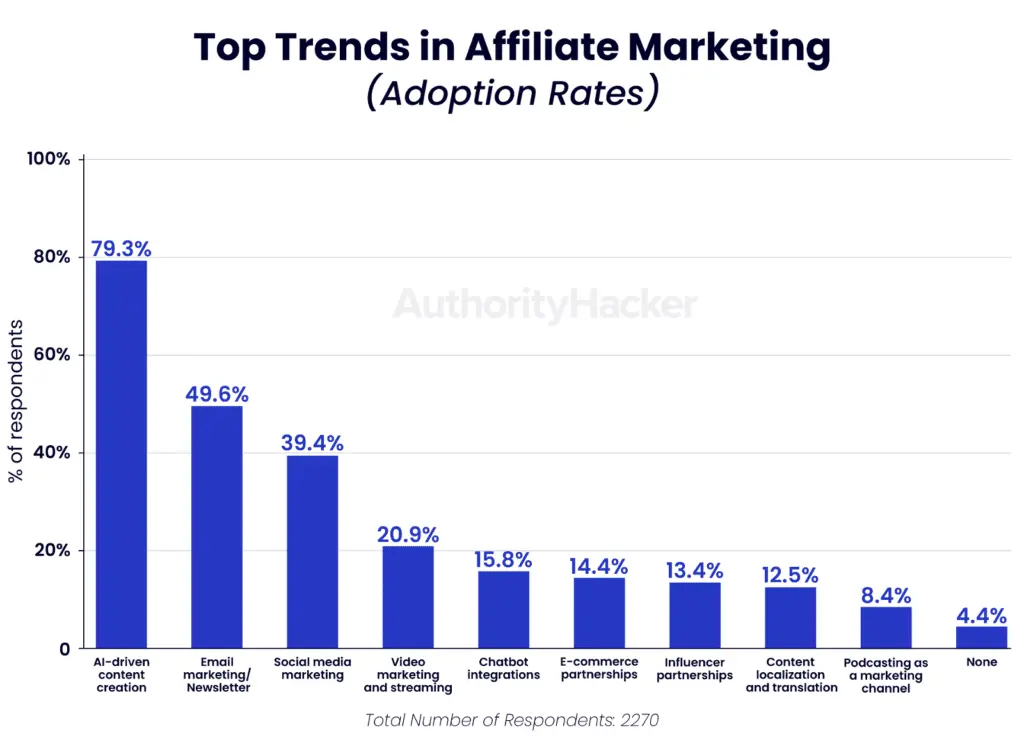
Image source: authorityhacker.com
5 Affiliate Marketing Website Examples Worth Studying
Now let’s get into the real affiliate marketing website examples. Each one takes a different approach to the same goal — turning helpful content into reliable affiliate revenue. Here’s a quick side-by-side comparison before we go deep on each one.
| Feature | CustomGPT.ai | Wirecutter | NerdWallet | Healthline | PCPartPicker |
| Niche | AI tools & business automation | Consumer products | Personal finance | Health & wellness | PC hardware |
| Primary Revenue Model | Affiliate program | Affiliate commissions | Affiliate commissions + lead gen | Advertising + affiliate commerce | Affiliate commissions |
| Content Type | Tutorials, guides, AI use cases | In-depth product reviews | Comparison tools + editorial | Medically reviewed articles | Interactive build tools |
| Audience | Marketers, agencies, creators | General consumers | People making financial decisions | Health-conscious consumers | PC builders and gamers |
| Key Differentiator | No-code AI platform with partner ecosystem | Exhaustive hands-on product testing | Side-by-side financial product comparison | Medical expert review process | Real-time price comparison tool |
| Monetization Approach | Recurring commissions for affiliates (up to 20%) | One-time purchase commissions | CPA-based | Display ads + affiliate product links | Purchase-based commissions |
CustomGPT.ai – AI-Powered Affiliate Marketing Done Right
CustomGPT.ai is a no-code platform that lets businesses build custom AI agents trained on their own content — documents, websites, help desks, knowledge bases — without writing a single line of code.
Think of it as a way to turn any company’s existing content into an intelligent chatbot that can answer customer questions, recommend products, and handle support requests 24/7.
What makes CustomGPT.ai a standout affiliate marketing website example:
- No-code deployment — Business owners, marketers, and content creators can set up a fully functional AI agent in minutes. No developers needed. The platform handles all the technical complexity behind the scenes.
- White-label customization — Partners and agencies can rebrand the entire AI agent experience with their own logo, colors, and messaging. Premium and Enterprise plans allow full removal of CustomGPT branding, making it ideal for client-facing deployments.
- Multi-channel integration — The AI agent doesn’t just live on a website. It can be embedded into apps, messaging platforms, Slack workspaces, and more — meeting customers wherever they already are.
- Enterprise-grade security — SOC2 Type 2 compliance and GDPR adherence protect user data with strict access controls and encryption. When you’re recommending a tool to a business audience, this kind of credibility matters.
- Generous affiliate commissions — The partner program pays upto 20% recurring commissions for two full years on every referred subscription.
What makes CustomGPT.ai especially interesting as an affiliate marketing website example is that it operates on both sides of the equation.
It’s a product businesses pay for monthly — which means recurring revenue for affiliates — and it also gives affiliates a tool they can use on their own sites to boost engagement and conversions.
Partners get a real-time dashboard for tracking clicks and earnings, pre-built marketing materials, and dedicated support. It’s one of the few affiliate programs where the product itself helps you become a better affiliate marketer.
Wirecutter — The Gold Standard in Product Review Affiliates
Wirecutter is a product recommendation site — now owned by The New York Times — that publishes in-depth “best of” guides across hundreds of consumer product categories. Everything from the best mattress to the best wireless earbuds to the best office chair.
Each guide follows the same formula: the team physically tests dozens of competing products, narrows the field down to one or two top picks, and explains exactly why those picks won.
What makes Wirecutter a standout affiliate marketing website example:
- Hands-on product testing — The team doesn’t just read spec sheets. They spend hundreds of hours physically using products in real-world conditions before recommending anything. This level of rigor is what separates Wirecutter from generic “top 10” listicles.
- One pick per category — Instead of listing 15 options and confusing readers, Wirecutter usually recommends just one “best” pick and one budget alternative. This simplicity builds trust because readers know the recommendation is decisive, not hedged.
- Evergreen content model — Guides are continuously updated as new products launch and prices change. A single guide can drive organic traffic and affiliate revenue for years without being rewritten from scratch.
- Editorial independence — The commerce and editorial teams operate separately. Writers don’t know about affiliate agreements, which means recommendations aren’t influenced by commission rates.
The lesson from Wirecutter is that depth beats breadth. You don’t need to cover every product category — you need to own the ones you do cover so completely that your guide becomes the definitive resource readers trust.
NerdWallet — Affiliate Marketing Meets Financial Education
NerdWallet is a personal finance website that helps people make smarter decisions about credit cards, loans, insurance, mortgages, and banking. The site’s core product isn’t blog content — it’s a comparison engine.
Users enter their financial details and preferences, and NerdWallet surfaces the best-matching financial products side by side, complete with rates, fees, and editorial ratings.
According to industry benchmark data, the finance niche consistently ranks among the highest-paying affiliate verticals — and NerdWallet’s entire site architecture is built to capitalize on that.
What makes NerdWallet a standout affiliate marketing website example:
- Comparison-first UX — The site is designed around decision-making, not browsing. Every page funnels users toward comparing specific financial products, which means visitors arrive with purchase intent already baked in.
- Interactive calculator tools — Mortgage calculators, savings estimators, debt payoff planners, and retirement projectors give users personalized answers they can’t get from a static blog post. These tools keep users engaged longer and naturally lead to product recommendations.
- Educational content as a trust layer — Alongside comparison tools, NerdWallet publishes thousands of guides that explain how financial products work in plain language. This content ranks for informational search queries and builds the trust that converts readers into tool users.
- Strict editorial separation — The editorial and business teams operate independently. Writers don’t know which financial products pay higher commissions, which means recommendations stay credible.
The lesson from NerdWallet is that combining educational content with interactive decision-making tools creates a flywheel — the content drives organic traffic, the tools convert that traffic, and the trust earned keeps users coming back for their next financial decision.
Healthline — Authority Content as an Affiliate Engine
Healthline is a health information website that covers everything from medical conditions and treatments to nutrition, fitness, mental health, and wellness products.
What sets it apart from the thousands of other health blogs online is its editorial process — every single article is reviewed by a board-certified medical professional before publication.
Doctors, nurses, dietitians, and licensed therapists fact-check the content, and their names and credentials appear on each piece.
What makes Healthline a standout affiliate marketing website example:
- Medical expert review on every page — This isn’t a disclaimer at the bottom of the page. Each article displays the reviewing clinician’s name, photo, credentials, and specialty. Readers can verify the reviewer’s background, which builds trust that generic health blogs can’t match.
- Content structured for Google’s E-E-A-T standards — Healthline’s editorial process directly aligns with what Google looks for in health content: Experience, Expertise, Authoritativeness, and Trustworthiness. This is why the site ranks for thousands of competitive health queries.
- Separate editorial and product teams — The writers who produce medical content and the team managing affiliate partnerships operate independently. This separation ensures that product recommendations are based on clinical merit, not commission rates.
- Layered monetization — Healthline doesn’t rely on affiliate commissions alone. Display advertising, programmatic ads, sponsored content, and affiliate links all work together, which reduces dependence on any single revenue stream and makes the business more resilient.
For anyone building in the health, wellness, or lifestyle space, Healthline is the blueprint for how investing in genuine expertise and editorial rigor creates a compounding trust advantage that competitors can’t easily replicate.
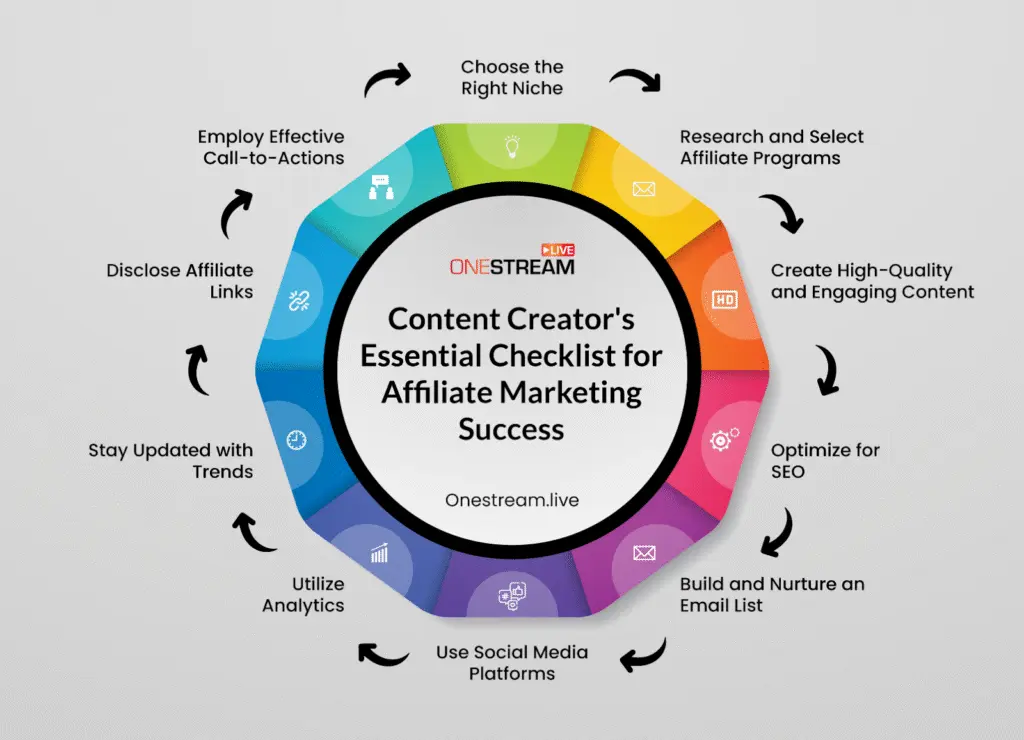
Image source: onestream.live
PCPartPicker — Utility-First Affiliate Marketing
PCPartPicker is a system builder tool that helps people assemble custom PCs. Users select individual components — processor, graphics card, motherboard, RAM, power supply, case.
The tool automatically checks whether everything is compatible, compares real-time prices across multiple retailers like Amazon, Newegg, and Best Buy, and shows the cheapest option for each part.
What makes PCPartPicker a standout affiliate marketing website example:
- The tool IS the content — Unlike sites that write articles and sprinkle in affiliate links, PCPartPicker built a utility that people genuinely need. The affiliate link is embedded in the tool’s core functionality, so clicking it feels like using the product — not being sold to.
- Compatibility checking engine — The platform automatically flags when selected components won’t work together (wrong socket type, insufficient wattage, incompatible form factor). This feature alone saves users hours of research and creates enormous goodwill.
- Real-time price tracking and history — Every component page shows a price history graph so users can see whether the current price is a deal or inflated. This data gives people a reason to bookmark the site and return regularly.
- Community-built content — Users submit their completed builds with photos, component lists, and benchmarks. This user-generated library creates thousands of pages of organic content that drive traffic and affiliate clicks without PCPartPicker writing a single word.
PCPartPicker is the clearest example of how building a genuinely useful tool can be a more powerful affiliate strategy than writing content. When the affiliate link is embedded in something people actively want to use, the conversion happens naturally.
Why CustomGPT.ai Stands Out for Affiliate Marketers
Every site on this list built something impressive. But if you’re specifically looking for an affiliate marketing opportunity that combines a high-demand product with a generous commission structure, CustomGPT.ai checks every box that matters.
Here’s why it deserves a closer look — especially if you’re in the AI, marketing, or SaaS space.
A Product That Sells Itself in a Growing Market
The biggest challenge in affiliate marketing isn’t driving traffic — it’s promoting something people actually want to buy. CustomGPT.ai eliminates that problem entirely because the demand for AI-powered business tools is exploding across every industry.
Why the product-market fit matters for affiliates:
- Businesses in every niche — from e-commerce to healthcare to education — are actively searching for AI solutions they can deploy without hiring developers.
- CustomGPT.ai’s no-code platform means your referrals don’t hit a technical barrier at signup. They can go from clicking your link to having a working AI agent in minutes.
- The platform supports 1,400+ document formats and 100+ integrations, which means it fits into virtually any existing workflow — removing the biggest objection most buyers have.
- Enterprise-grade features like SOC2 Type 2 compliance, GDPR adherence, and anti-hallucination technology give affiliates a credibility edge when recommending the product to business audiences.
When the product solves a real, urgent problem, your content doesn’t need to hard-sell. It just needs to show the solution — and CustomGPT.ai does the rest.
A Commission Structure Built for Long-Term Income
Most affiliate programs pay you once and move on. CustomGPT.ai’s partner program is designed to reward affiliates for the lifetime value they bring in — not just the initial click.
What makes the commission model stand out:
- Up to 20% recurring commissions — You earn on every subscription payment your referral makes, not just the first one. That means a single referral can pay you monthly for up to two years.
- Three-tier progression — Starter affiliates earn 15%, Pro affiliates earn 18%, and Master affiliates earn 20%. The more you refer, the more each referral is worth.
- No minimum sales threshold — You start earning from your very first referral. There’s no waiting period or minimum volume requirement to unlock payouts.
For affiliates who create evergreen content — blog posts, YouTube reviews, comparison guides — this recurring model means your old content keeps paying you long after it’s published.
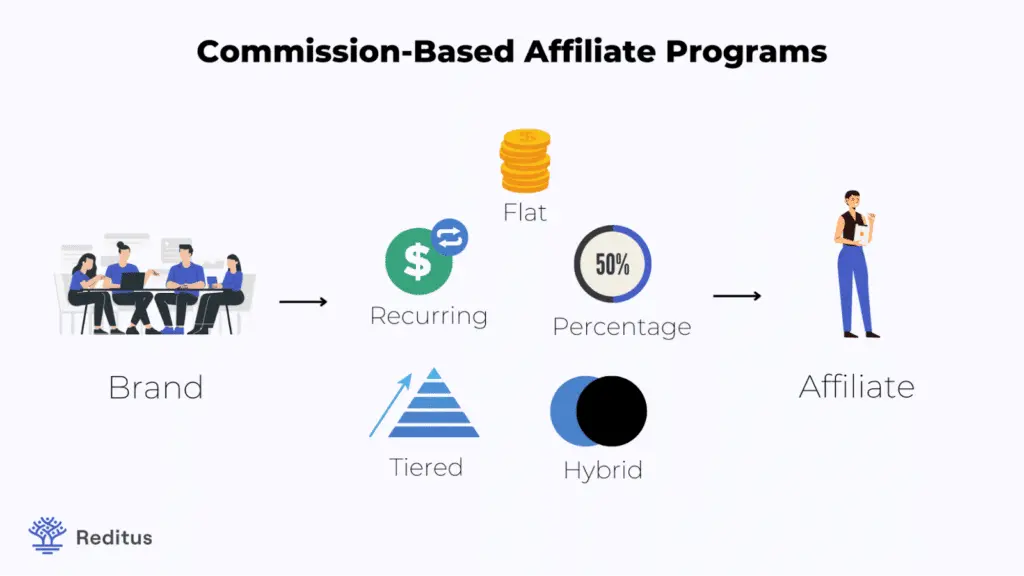
Image source: getreditus.com
Everything You Need to Start Promoting Immediately
Some affiliate programs hand you a referral link and wish you luck. CustomGPT.ai gives you an entire toolkit to start earning from day one.
Resources available to every partner:
- A real-time affiliate dashboard that tracks clicks, signups, and commission earnings — so you always know what’s working and what isn’t.
- Pre-built marketing materials including banners, email templates, and promotional copy you can customize for your audience.
- A 30-day cookie window that gives your referrals a full month to convert after clicking your link — meaning you still earn even if they don’t sign up immediately.
- Dedicated affiliate management support for partners who want help optimizing their campaigns or scaling their efforts.
The combination of a high-demand product, recurring commissions, and genuine partner support makes CustomGPT.ai one of the strongest affiliate marketing website examples to both study and join.
What You Can Learn and Apply Today
You don’t need a New York Times acquisition or $100 million in revenue to use these strategies. The principles behind these affiliate marketing website examples scale down to any budget.
Pick a Monetization Model That Fits Your Niche
Not every niche works the same way. What converts visitors in the AI tools space looks completely different from what works in personal finance or health.
Platforms with recurring commission structures tend to generate the most predictable long-term income for affiliates — especially in the B2B and SaaS space.
Match your approach to your audience’s buying behavior:
- High-ticket B2B products (like AI platforms) benefit from recurring commission structures. A single referral to a SaaS product can pay you for years.
- Consumer product reviews work best with one-time purchase commissions on platforms like Amazon Associates.
- Financial products often pay the highest CPA rates, but require deep expertise and editorial credibility to convert.
- Health and wellness needs medical credibility to rank and convert — generic content won’t cut it.
Don’t just chase the highest commission rate. Chase the model that aligns with how your audience makes decisions.
Build Trust Before You Build Traffic
Every site on this list invested in trust first. Wirecutter tested products for hundreds of hours. NerdWallet separated editorial from business development. Healthline hired medical reviewers. CustomGPT.ai achieved SOC2 Type 2 compliance.
Trust isn’t a nice-to-have in affiliate marketing — it’s the foundation that everything else is built on. Without it, no amount of traffic converts.
The affiliates who understand this consistently outperform those focused purely on volume because their recommendations carry real weight with their audience.
Here’s how the best affiliate marketers build trust from day one:
- Disclose affiliate relationships upfront — Transparency doesn’t hurt conversions. It actually increases them because readers feel respected rather than manipulated.
- Only promote products you’ve used or thoroughly researched — One bad recommendation can destroy months of credibility. Every site in this list has strict editorial standards for a reason.
- Show proof, not promises — Screenshots, case studies, personal results, and side-by-side comparisons build more trust than any amount of persuasive copywriting.
- Maintain editorial independence — Keep your review process separate from your revenue goals. Readers can tell when a recommendation is genuine versus when it’s financially motivated.
Small audiences convert at surprisingly high rates when the trust is genuine. You don’t need millions of visitors — you need the right visitors who believe what you say.
Use Tools and Comparisons, Not Just Articles
The pattern is clear — when you help someone make a decision rather than just giving them information, they’re far more likely to take action.
The affiliate marketing landscape is rapidly shifting toward AI-powered, interactive experiences that go beyond traditional blog content.
Early adopters who build these tools are creating compounding assets that get more valuable over time as they accumulate data and user trust.
Types of interactive tools that drive affiliate conversions:
- Comparison tables and matrices — Let users filter and sort products based on what matters to them.
- Calculators and estimators — ROI calculators, savings estimators, and cost-comparison tools keep users engaged longer and naturally lead to product recommendations based on their specific inputs.
- AI-powered recommendation engines — Chatbots and quiz-style tools that ask a few questions and recommend the best product match create a personalized experience that static articles can’t replicate.
- Price tracking and alerts — Showing historical price data or sending alerts when a product drops in price gives users a reason to return — and every return visit is another conversion opportunity.
Even if you’re starting with just blog content, adding a single comparison table or calculator to your highest-traffic pages can significantly lift your affiliate click-through rates.
FAQs
What is an affiliate marketing website?
An affiliate marketing website is a site that earns commissions by promoting other companies’ products or services through tracked referral links. When a visitor clicks an affiliate link and makes a purchase or completes a specific action, the website owner earns a percentage of the sale. These sites typically monetize through product reviews, comparison content, or embedded recommendation tools.
How much money can affiliate marketing websites make?
Affiliate earnings vary widely based on niche, traffic volume, and conversion rates. Some affiliate sites earn a few hundred dollars monthly, while established platforms generate hundreds of millions annually.
What makes a good affiliate marketing website?
A good affiliate website solves a specific problem for a clearly defined audience, publishes high-quality original content, maintains editorial transparency about affiliate relationships, and earns reader trust through consistent accuracy. Sites that combine helpful content with interactive tools — like comparison engines or price trackers — tend to outperform sites that rely on articles alone.
Do I need technical skills to start an affiliate marketing website?
No. Most affiliate marketing websites start as simple blogs or content sites built on platforms like WordPress. For affiliates who want to add AI-powered features like chatbots or product recommendation agents, no-code platforms make it possible to deploy advanced tools without any programming knowledge. The technical barrier to entry has never been lower.
How long does it take for an affiliate website to become profitable?
The timeline depends on your niche competitiveness, content quality, publishing frequency, and SEO strategy. Consistency and patience matter more than any single tactic — and affiliates who reinvest early earnings into better content and tools tend to reach profitability faster.
Conclusion
The best affiliate marketing website examples share a common thread — they all became genuinely useful to their audience before they became profitable.
None of them started by thinking about affiliate links. They started by thinking about what their audience actually needed.
That’s the real takeaway from these affiliate marketing website examples. Build something useful, earn trust, and the monetization follows.
The affiliate marketing space is only getting bigger — and AI-powered tools are leading the next wave of growth. There’s never been a better time to learn from the sites already doing it right and start building your own.
Turn Your Content Into Recurring Affiliate Revenue.
Use affiliate marketing website examples to model structure, content, and conversion tactics.
Trusted by thousands of organizations worldwide


