

You step into the world of affiliate marketing YouTube and suddenly realize how simple it is to turn your voice, ideas, and reviews into real passive income.

Make Money With AI
Join our Partner Programs!
Boost your reputation, drive revenue and grow your business with CustomGPT.ai.
You don’t need fancy gear or expert editing skills—you just need consistency, authenticity, and a clear plan.
You grab attention fast by focusing on content that solves problems, answers questions, or reviews products people already search for.
You create value first, then let your affiliate links do the quiet earning in the background.
You build trust by showing your real experience with products, keeping your recommendations honest, and speaking the language of your viewers.
You turn each video into a mini funnel that works for you even while you sleep.
You begin to scale by experimenting with niches, testing thumbnails, and tracking analytics until you know exactly what makes your audience click.
You put yourself in the perfect position to grow recurring, effortless income from a channel that works 24/7.
Defining YouTube Affiliate Marketing
YouTube affiliate marketing is the process where you create videos that recommend or review products, and you earn a commission whenever viewers buy through your affiliate links. You essentially act as a content-driven bridge between the product and the consumer.
You create videos that provide value—such as tutorials, comparisons, or demonstrations—and then strategically place affiliate links in your description box. You earn money passively as your content continues attracting views over time.
You don’t need to own any products or manage customer support because your role is strictly to influence purchase decisions through helpful content. You turn your channel into a monetizable engine simply by aligning viewer intent with relevant affiliate offers.
Key Terminology and Concepts
Understanding the core language of YouTube affiliate marketing helps you navigate strategies, track performance, and communicate like someone who knows what they’re doing in this space.
Important Terms You Should Know
- Affiliate Link: A unique tracking URL that records purchases made through your recommendation.
- Commission Rate: The percentage or fixed amount you earn per sale or action.
- Conversion: When a viewer takes the desired action, such as clicking or buying.
- CTR (Click-Through Rate): The percentage of viewers who click on your affiliate link.
- Niche: A focused topic or category your channel consistently targets.
- Passive Income: Earnings generated continuously from content you’ve already created.
These foundational concepts make it easier for you to build smarter strategies and scale your earning potential.
Core Strategies for Success
Mastering YouTube affiliate marketing becomes much easier when you understand the core strategies that consistently drive traffic, trust, and conversions for creators in any niche.
Essential Methods to Apply
- Focus on problem-solving videos that match high-intent search queries.
- Use persuasive yet honest product demonstrations to increase viewer trust.
- Optimize your titles, thumbnails, and descriptions for search visibility.
- Add clear CTAs guiding viewers toward your affiliate links.
- Test multiple video formats like comparisons, tutorials, and listicles.
- Track analytics to refine what content brings the highest conversions.
These strategies give you a strong foundation to grow predictable and scalable affiliate revenue.
Aligning Products with Audience Interests
You start by understanding what your audience actually cares about, because the right product only performs well when it aligns with real needs and real pain points. You study viewer comments, search behavior, and engagement patterns to see what sparks curiosity and action.
You match those insights with products that genuinely solve problems or improve your viewers’ daily routines. You avoid forcing random offers and instead choose items that feel like a natural extension of your content.
You also test how different product categories resonate by monitoring click-through rates and watch time on specific reviews or tutorials. You let data shape your direction so every product you promote feels relevant, valuable, and worth your audience’s trust.
Optimizing Link Placement and Conversion
Optimizing where and how you place your affiliate links helps you turn casual viewers into active buyers without disrupting the natural flow of your content.
Smart Placement Techniques
- Add primary affiliate links at the top of your description for easy access.
- Use pinned comments to highlight your most important recommendations.
- Mention the link verbally during key moments in the video.
- Pair links with concise value statements explaining why viewers should click.
- Include multiple related product links to increase conversion opportunities.
- Track link performance with UTM parameters or affiliate dashboards.
These techniques help you boost both clicks and conversions with minimal extra effort.
Advanced Techniques for Passive Income
Building long-lasting passive income on YouTube becomes far easier when you apply advanced techniques that let your videos keep earning long after they’re uploaded.
Next-Level Approaches
- Create evergreen content that stays relevant and searchable for years.
- Build automated playlists that guide viewers through multiple monetized videos.
- Use AI tools to script, optimize, and repurpose high-performing videos.
- Integrate multiple affiliate programs to diversify income sources.
- Leverage keyword clusters to dominate related search terms.
- Refresh old videos with updated links, titles, and descriptions for renewed traction.
These advanced methods help you turn your channel into a compounding engine of passive revenue growth.

Image source: funnel-media360.tumblr.com
Building Automated Sales Funnels
You build automated sales funnels by designing a viewer journey that moves people from discovering your video to clicking your affiliate link without needing your constant involvement. You structure each step so curiosity naturally leads to action.
You guide viewers through value-heavy content, strategic calls to action, and well-placed links that lead them toward products that solve their immediate problems. You let automation handle the follow-through while your videos keep earning on their own.
You strengthen the funnel by connecting videos, pinned comments, descriptions, and even email sequences into a seamless conversion pathway. You create a system where every new viewer enters a predictable flow that consistently drives passive affiliate sales.
SEO Optimization for Long-Term Traffic
Strong SEO helps your videos continue attracting new viewers for months or even years, turning your content into a steady source of passive affiliate clicks and sales.
Long-Term Visibility Methods
- Target low-competition keywords that match high purchase intent.
- Optimize titles with clear relevance and natural keyword placement.
- Add keyword-rich descriptions that reinforce search context.
- Use tags strategically to help YouTube categorize your video.
- Improve retention with strong hooks and structured storytelling.
- Analyze search analytics to refine topics that keep ranking over time.
These SEO practices help your channel maintain consistent traffic without constant uploading.
Common Misconceptions and Challenges
Many creators enter YouTube affiliate marketing with unrealistic expectations, not realizing that sustainable results come from strategy, patience, and consistent optimization.
Reality Checks You Should Know
- Thinking affiliate income is instant when it actually builds over time.
- Believing you need expensive gear instead of focusing on valuable content.
- Expecting every video to convert instead of testing multiple formats.
- Ignoring analytics and guessing what the audience wants.
- Choosing random products instead of aligning offers with viewer intent.
- Underestimating the importance of trust and transparent recommendations.
Recognizing these challenges early helps you avoid setbacks and build a more resilient strategy.
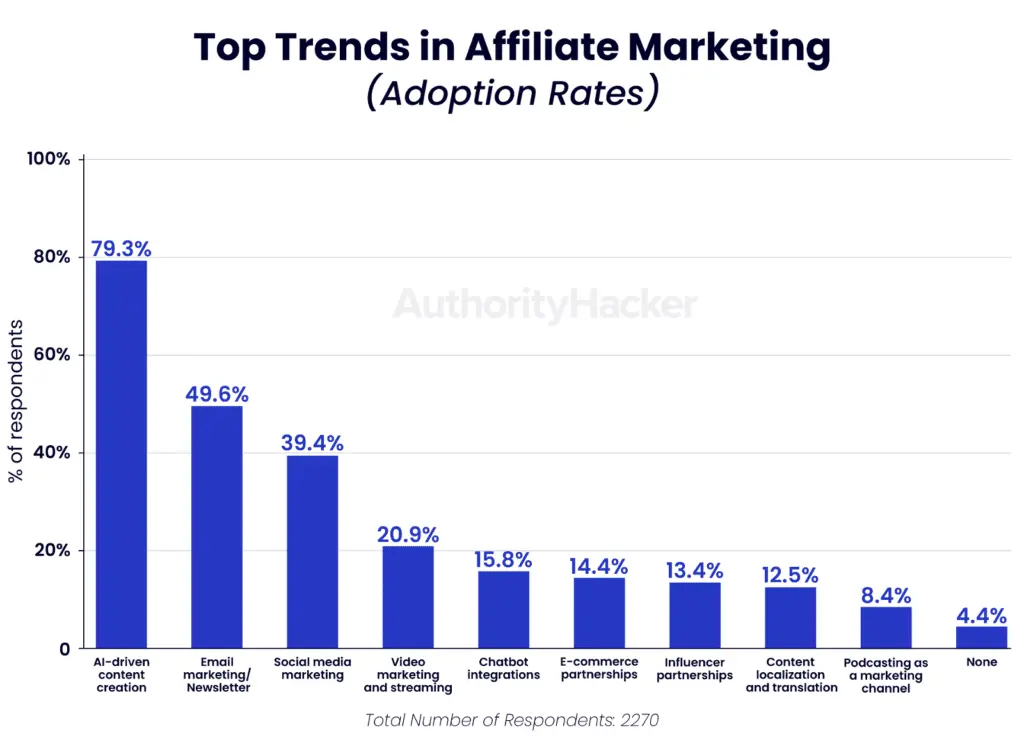
Image source: authorityhacker.com
Clarifying the Passive Income Myth
You often hear people talk about passive income on YouTube as if it appears the moment you upload your first affiliate video, but the reality is different. You need upfront effort, smart planning, and consistent refinement before the “passive” part begins.
You create long-lasting earning potential by building content that stays searchable, trustworthy, and relevant, which takes time and experimentation. You eventually reach a point where older videos keep working for you, but only because you built a solid foundation first.
You achieve true passive income when your content library, SEO strategy, and affiliate links work together without constant manual involvement. You let the system you built do the heavy lifting while you continue improving your channel at a sustainable pace.
Overcoming Initial Content Creation Hurdles
Getting started with YouTube affiliate marketing can feel overwhelming, especially when you’re unsure what to film, how to speak on camera, or whether your content is “good enough” to attract viewers.
Practical Ways to Move Forward
- Start with simple review or comparison videos to build confidence.
- Use scripts or bullet outlines to stay focused and reduce camera anxiety.
- Record with basic equipment and upgrade only when needed.
- Repurpose existing knowledge or experiences into valuable content.
- Study top-performing videos in your niche to understand structure and pacing.
- Practice small improvements each upload instead of aiming for perfection.
These steps help you push past early struggles and build momentum more easily.
Conclusion
You’ve seen how YouTube affiliate marketing can turn simple, value-driven videos into a long-term income engine, even without a massive audience.
You build momentum by understanding your viewers, choosing the right products, and applying proven strategies that keep your content discoverable.
You give yourself a massive advantage when you combine SEO, smart link placement, and consistent optimization to turn each video into a passive sales asset. You stay focused on trust, relevance, and clarity so your recommendations genuinely help your audience.
You ultimately create a channel that grows your influence and income simultaneously, allowing your content to earn for you long after it’s uploaded. To understand the income ranges your channel can realistically reach, check this earning breakdown.
It shows how creators scale from first clicks to long term revenue.
Frequently Asked Questions
Can you make money on YouTube with affiliate links?
Yes, you can make money on YouTube with affiliate links, even if you are not in the YouTube Partner Program. But you only earn when viewers click your link and buy, so results depend on relevant products and videos that help people choose.
A smart first step is to join one affiliate program in your niche, such as Amazon Associates or ShareASale, then publish a review, tutorial, or comparison for that product and place your affiliate link in the description. Be sure to add a clear disclosure. The FTC requires affiliate relationships to be disclosed, and YouTube allows affiliate links as long as they follow platform policies. Trust matters too: recommend products you have actually used or researched well, because vague or low-fit promotions get fewer clicks and conversions. In practice, channels usually do better with buyer-intent content like “best microphone for Zoom calls” than broad, non-purchase topics.
Where do you put affiliate links on YouTube?
Put affiliate links in your YouTube video description, ideally near the top. Match each link to the exact product, tool, or tutorial shown in the video so viewers immediately understand why it is there.
Affiliate links usually perform best in tutorial, comparison, demo, and review videos because viewer intent is already product-focused. In broad entertainment or opinion videos, unrelated links tend to get fewer clicks and lower conversions. A practical rule is to place the main affiliate link above the fold, before the “Show more” cutoff, then add one short line explaining what the link is for. Label it clearly as an affiliate link and include any disclosure required by YouTube, the FTC, or the affiliate program. The FTC’s guidance is that disclosures should be hard to miss, not buried after a wall of text or hashtags. Creators often promote tools like TubeBuddy or vidIQ this way, and platforms such as CustomGPT.ai can follow the same relevance-first approach.
How can you track affiliate performance from YouTube videos?
Create a unique affiliate link for each YouTube video and place it in the description and pinned comment. Then compare clicks, conversion rate, and revenue by video to see which videos actually generate sales.
Use sub-ID tracking in networks like Impact or CJ Affiliate so each video, Shorts post, or campaign has its own link. Review four numbers together: clicks, link click-through rate, conversion rate, and earnings per click. If a video gets high views but few link clicks, improve the call to action, link placement, or how you frame the offer. If it gets clicks but few sales, the landing page, audience match, or merchant offer is the issue. Also check attribution rules: many programs use last-click attribution and cookie windows, and Amazon Associates typically uses a 24-hour cookie. Track these metrics in your affiliate dashboard alongside YouTube Analytics so you can connect watch time, audience retention, and traffic source data with affiliate conversions.
How do you build toward $100 a day with YouTube affiliate marketing?
Choose one narrow buyer-intent niche, publish 20 videos on questions buyers already search, and attach one affiliate offer that directly solves that problem. Build for steady clicks and a few daily conversions, not one viral hit.
Start with topics close to purchase: product comparisons, setup tutorials, “best X for Y,” and problem-solving reviews. A simple math check helps: $100 a day is about $3,000 a month, so at a 5 percent commission you need about $60,000 in referred sales. Double down on videos that reach roughly 4 to 8 percent click-through rate, 35 percent or better average view duration, and actual sales from link clicks. Amazon Associates uses a 24-hour cookie, so high-intent tutorials usually beat broad awareness content. As traffic grows, repeat one research process, one review template, and one topic-matched email opt-in. TubeBuddy, vidIQ, or CustomGPT.ai can help keep that system consistent.
Can AI help with YouTube affiliate marketing?
Yes. AI can help with YouTube affiliate marketing by speeding up keyword research, video outlines, title testing, description drafts, and affiliate disclosure copy, but it will not replace real product testing or audience trust.
A practical workflow is to turn one hands-on product review into a script, five thumbnail headline options, a description with affiliate links, a pinned-comment CTA, and a simple lead-magnet email, which can save hours each week. Tools like vidIQ, Jasper, or CustomGPT.ai are strongest at research and first drafts. For claims about speed, pricing, or product fit, rely on your own testing and the brand’s official specs, because that is what makes viewers trust you enough to click and buy. Also keep disclosures clear: the FTC says viewers must be told when you may earn a commission, and because YouTube descriptions are often truncated on mobile, put the disclosure and main link near the top.
What types of YouTube videos work best for affiliate marketing?
The best YouTube videos for affiliate marketing are the ones aimed at viewers who are close to buying. Product reviews, comparison videos, demos, and problem-solving tutorials usually work best because the viewer is already deciding what to purchase.
A simple way to choose formats is by intent: reviews help people comparing options, tutorials help people asking how to use a product, and comparison videos help people deciding between two tools. For example, “ConvertKit vs Mailchimp for beginners” or “How I use a standing desk for back pain” will usually outperform a broad opinion video because the searcher has clearer purchase intent. If you are just starting, make one beginner tutorial and one comparison video about a product you already use, then add the affiliate link only where it naturally supports the next step. Also, the FTC requires affiliate disclosures to be clear and hard to miss, both in the video and the description.
How do you promote affiliate links on YouTube without losing audience trust?
Promote affiliate links on YouTube by matching the offer to the exact problem in the video, disclosing the affiliate relationship clearly in the video and description, and recommending only products you have used long enough to name one result you liked and one limitation. That keeps the link useful instead of pushy.
Start with one product tied to a recurring viewer problem. Build a tutorial around your real workflow, explain who the tool is for, what it costs, and when you would not recommend it, then invite viewers to join your email list for the full setup guide. Use a simple filter: if the product does not solve the main problem covered in the video, do not link it. If you cannot explain buyer fit in one sentence, leave it out. The FTC says disclosures must be clear and easy to notice, not hidden in a long description. The same trust rule applies whether you mention TubeBuddy, vidIQ, or CustomGPT.ai.