
2025 is shaping up as a turning point for AI consulting business, as more companies shift from experimenting with AI to actively searching for practical, high-impact applications.

Make Money With AI
Join our Partner Programs!
Boost your reputation, drive revenue and grow your business with CustomGPT.ai.
Yet many still struggle to translate early prototypes into real, scalable business results that move the needle.
This is where consultants thrive—by helping organizations move beyond isolated tools and into systems that genuinely reshape workflows and unlock measurable outcomes.
Smaller firms that understand industry pain points can compete surprisingly well, because the advantage in this landscape isn’t size—it’s clarity, speed, and relevance.
And when you deliver that clarity, your first few clients often turn into long-term partnerships rooted in trust, momentum, and shared transformation.
The Role of AI in Modern Business
AI’s most transformative role in modern business lies in its ability to enhance decision-making through adaptive predictive analytics, helping companies anticipate trends, optimize operations, and personalize customer experiences.
A shift reflected in research by MIT Center for Information Systems Research showing that companies operating in the top quartile of “real-time-ness” delivered 22% better operational efficiency than their peers.
Here’s what truly shapes AI’s effectiveness inside real organizations:
- Seamless integration into existing workflows so AI enhances processes rather than disrupts them.
- High-quality, context-rich data that allows predictive models to make decisions aligned with real business conditions.
- Hybrid human-AI oversight, which research consistently shows reduces errors and increases stakeholder confidence.
- Clear strategic goals that ensure AI solutions contribute to growth, resilience, and long-term competitive advantage.
Identifying Opportunities in AI Consulting
Successful opportunity identification begins with uncovering routine inefficiencies in data-heavy workflows and mapping out where bottlenecks limit performance.
By auditing operations, validating data readiness, and applying strong governance, consultants can pinpoint high-impact areas where tailored AI solutions generate measurable improvements—positioning themselves as strategic partners rather than short-term problem solvers.
Key Points
- Audit operations to map data flows and uncover inefficient or overlooked workflows.
- Prioritize tailored AI solutions that address specific pain points for stronger ROI.
- Assess data readiness, integration requirements, and system compatibility early.
- Build governance frameworks to ensure data quality and model reliability.
- Focus on measurable outcomes—cost reduction, efficiency gains, error reduction—to strengthen long-term strategic value.
Defining Your AI Consulting Niche
Selecting a niche in AI consulting means aligning your expertise with a specific, underserved problem rather than chasing broad industry trends.
Focusing on precise needs—like compliance-ready analytics for mid-sized clinics or predictive maintenance for logistics teams—immediately sets you apart from generic competitors.
Strong niches blend technical skill with real industry insight, using simple tools like value-effort mapping to target high-impact opportunities.
Centering your work on clear outcomes such as reduced downtime or improved accuracy positions you as a strategic partner and makes both client acquisition and delivery far more focused.
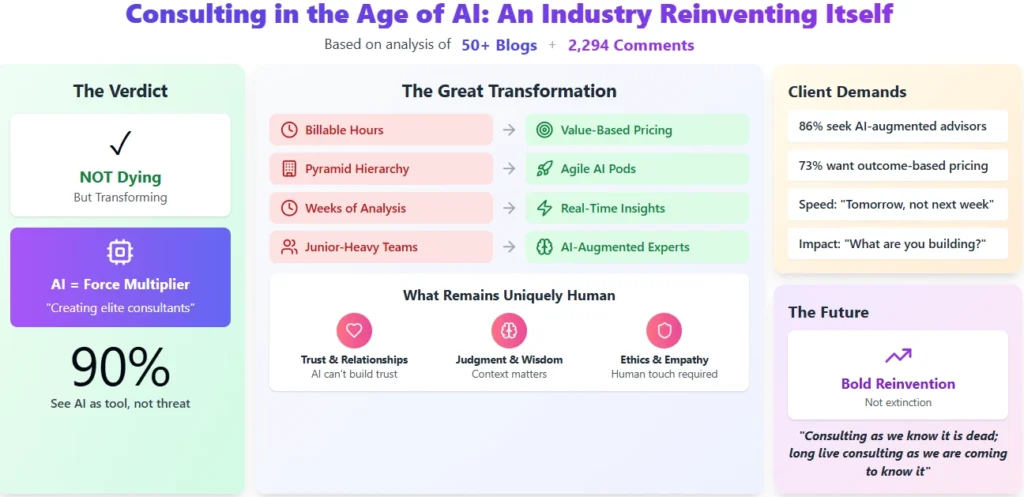
Image source: medium.com
Crafting a Unique Value Proposition
Clearly linking your solution to a client’s most urgent business challenges and showing how it drives measurable outcomes rather than simply listing technical features; you position yourself as a partner who brings clarity, efficiency, and strategic advantage.
- Identify the client’s hidden inefficiencies through structured pain-point mapping.
- Translate technical capabilities into tangible outcomes like reduced costs or improved accuracy.
- Tailor your UVP to industry realities such as regulations, data constraints, or compliance requirements.
- Highlight how your approach integrates with existing workflows rather than disrupting them.
- Continuously refine your UVP using client feedback and real-world performance results.
Target Market Analysis and Selection
Target market analysis in AI consulting works best when you zoom in on narrow segments with clear, by identifying specific pain points—like maintenance issues in mid-sized manufacturers or forecasting gaps in retail—you place yourself exactly where AI can create fast, visible impact.
- Target micro-segments, not entire industries.
- Focus on one clear, costly pain point.
- Check data readiness before committing.
- Run small pilots to prove ROI early.
- Choose markets where impact is quick and measurable.
Building a Solid Business Foundation
Building a solid foundation for an AI consulting business starts with getting the basics right—choosing a legal structure that protects you, setting up simple financial systems, and defining how you’ll price your work.
A straightforward model like cost-plus pricing helps you stay profitable without overcomplicating proposals, and it scales well as projects grow in scope.
Equally important is preparing for the realities of data work by putting clear governance practices in place.
When you show clients you understand compliance, security, and responsible data handling, you build trust early and remove barriers that often slow AI projects down. With these fundamentals in place, your consulting firm becomes far easier to grow, manage, and adapt over time.
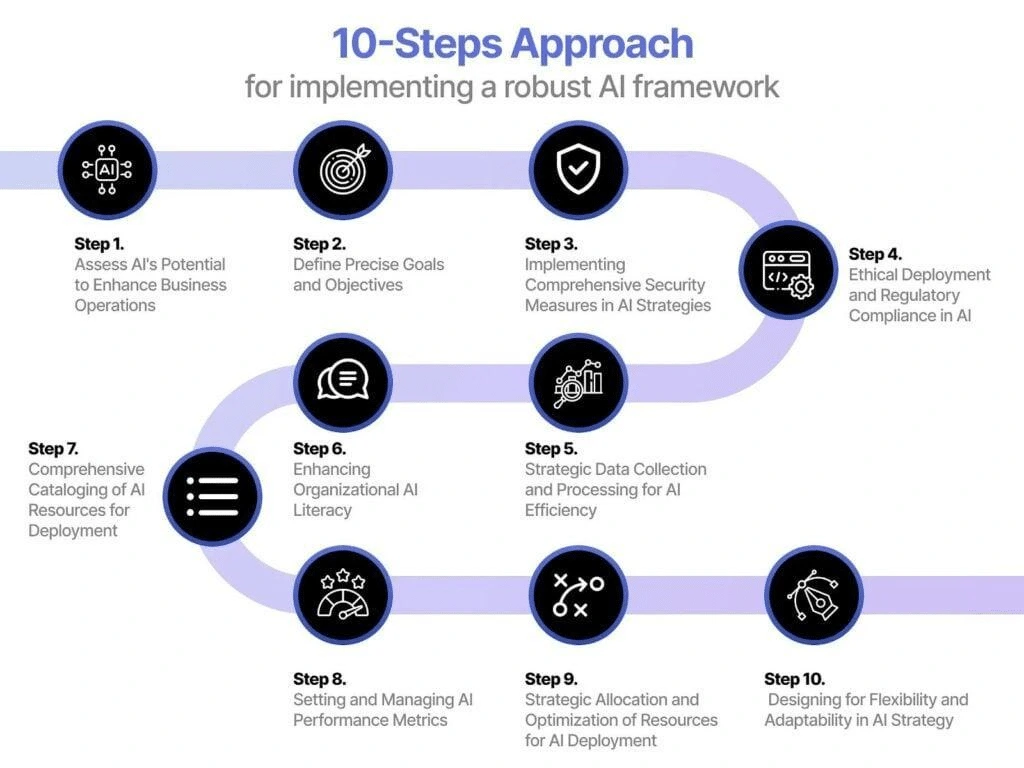
Image source: markovate.com
Choosing the Right Business Model
Choosing the right business model for an AI consulting firm means balancing predictable revenue with the flexibility clients expect.
A simple hybrid approach—using retainers for stability and value-based pricing for outcome-driven projects—keeps incentives aligned, supports long-term relationships, and adapts easily across industries with different regulatory or data constraints.
- Use retainers for steady baseline income.
- Apply value-based pricing when impact is measurable.
- Track performance with clear KPIs and simple reporting.
- Match pricing to industry realities like compliance or data quality.
- Keep your model flexible so it grows with your clients and your firm.
Legal and Financial Structures
Establishing solid legal and financial structures helps AI consultants manage risk and scale efficiently. Forming an LLC offers liability protection and tax flexibility, shielding personal assets while simplifying compliance through pass-through taxation.
Clear financial systems also strengthen client trust, particularly when sensitive data or IP is involved. Using a cost-plus pricing model promotes transparency by accounting for labor, software, and compliance costs before adding a margin.
Accurate expense tracking—supported by automated accounting tools—prevents underpricing and ensures tax alignment. For cross-border work, considering international tax rules and data protection laws further reinforces operational resilience and long-term growth.
Developing and Marketing Your AI Services
To position AI services effectively, break offerings into modular components—such as strategy workshops, custom model development, and integration support—to simplify decisions and enable tiered pricing models that increase revenue potential.
Framing these capabilities within broader AI solutions also strengthens your value proposition for organizations seeking scalable, white-label-ready expertise.
Marketing should emphasize measurable outcomes rather than technical features, using impact-driven language that resonates with business leaders. Pair this with thought-leadership content—case studies, webinars, and practical guides—to build authority and attract high-value clients.
This blend of modular design and outcome-focused messaging helps agency partners differentiate in a competitive market while nurturing long-term client relationships.
Service Definition and Pricing Strategies
A streamlined, modular service structure paired with a hybrid cost-plus and value-based pricing model helps consultants stay efficient while capturing true client impact.
Adjusting for factors like regulations and data quality ensures accuracy, and positioning these offerings within an AI partner framework strengthens credibility and long-term trust.
Key Points
- Break services into modular phases to simplify scoping and maintain operational flexibility.
- Use cost-plus pricing to cover core expenses and value-based pricing to reflect tangible client outcomes.
- Justify premium pricing with real-world ROI examples, reinforcing the strategic value delivered.
- Adjust pricing for factors like regulatory requirements and data quality variations.
- Iterate based on client feedback and project metrics to refine competitiveness and trust.
Effective Marketing Techniques for AI Consultants
Educational content that directly addresses client pain points is a powerful driver of trust and faster sales cycles.
By focusing on clear, outcome-driven examples and using simple, business-friendly language supported by strong proof points, consultants turn complex AI capabilities into relatable value that resonates with decision-makers.
Practical Takeaways
- Build short, targeted webinars, whitepapers, and demos that solve specific client challenges.
- Highlight measurable business outcomes—cost reductions, efficiency gains, or error decreases.
- Use real ROI metrics and case studies to strengthen credibility and decision-maker confidence.
- Keep explanations accessible without oversimplifying technical value.
- Repurpose educational content across channels for consistent authority building.
- Align messaging with industry pain points to make content immediately relevant.
Client Acquisition and Management
Securing clients in AI consulting relies on demonstrating industry-specific expertise and offering low-risk pilot projects that deliver quick, measurable wins.
Tailored outreach helps establish credibility early, while pilots—such as predictive analytics that cut stockouts or downtime—provide tangible proof of value and make it easier to convert prospects into long-term engagements.
Effective client management hinges on clear KPIs, transparent communication, and consistent relationship-building.
By aligning goals through measurable metrics, maintaining regular check-ins, and providing proactive updates, consultants strengthen trust and turn initial successes into durable partnerships that support sustainable growth.
Strategies for Landing Your First Clients
Specializing in a narrowly defined industry micro-niche helps AI consultants win their first clients by signaling deep expertise and addressing a specific, high-value problem.
When paired with pain-point-driven outreach and a quick validation of both technical feasibility and expected business impact, this focus enables early pilot wins that showcase measurable ROI and build the trust needed for long-term engagements.
Actionable Points
- Select a micro-niche with a clear, urgent operational challenge you can solve.
- Tailor outreach to highlight the exact inefficiencies your solution addresses.
- Confirm data quality, integration needs, and feasibility before pitching.
- Present expected outcomes with concise, quantifiable KPIs.
- Use early pilot successes to demonstrate credibility and secure ongoing work.
- Keep messaging industry-specific to differentiate from generalist AI providers.

Image source: linkedin.com
Onboarding and Retaining Clients
Effective onboarding begins with a shared success framework that outlines milestones, deliverables, and KPIs, ensuring alignment and reducing miscommunication from the start.
A phased rollout of AI capabilities—supported by consistent feedback loops—helps clients see early results, increases confidence, and sets the stage for long-term partnerships reinforced by proactive engagement and continuous value delivery.
Implementation Steps
- Collaboratively define goals, milestones, and KPIs during initial onboarding.
- Introduce AI capabilities in stages to minimize disruption and boost early adoption.
- Maintain frequent feedback cycles to adapt quickly to changing client needs.
- Demonstrate early wins to build momentum and trust.
- Schedule recurring review sessions to track progress and identify new opportunities.
- Keep communication proactive to strengthen long-term client relationships.
Scaling Your AI Consulting Business
Scaling an AI consulting business depends on building repeatable frameworks, using modular architectures, adopting continuous model learning, tailoring no-code tools to client environments, and embedding compliance-by-design from the start.
When these elements work together, firms can deliver faster, maintain accuracy as data shifts, integrate smoothly with legacy systems, and meet evolving regulations—all while strengthening client trust and long-term partnership potential.
Core Points
- Use modular, reusable system components to reduce delivery time and handle more clients efficiently.
- Maintain model accuracy with continuous learning, automated monitoring, and scheduled retraining.
- Apply no-code AI platforms to accelerate development while customizing integrations for each client.
- Iterate deployments based on real-world performance to ensure consistent, measurable outcomes.
- Build adaptive compliance frameworks that evolve with shifting regulations and support audit readiness.
- Embed governance early in the development process to turn risk management into a strategic advantage.
FAQ
What are the essential steps to launch a profitable AI consulting business in 2025?
Start by choosing a high-demand niche and defining a clear value proposition tied to measurable outcomes. Build a strong operational foundation with scalable workflows, data governance, and compliance. Use content-driven marketing to showcase expertise, and secure early clients through pilot projects that demonstrate ROI and build long-term trust.
How can AI consultants identify high-value niches effectively?
Analyze industry pain points where AI delivers clear ROI, focusing on micro-niches with strong demand and low competition. Validate opportunities through market research, feasibility checks, and collaboration with domain experts. Align solutions with specific operational challenges to position yourself as a specialized partner.
What pricing models work best for AI consulting?
Value-based pricing tied to measurable outcomes is often most effective, supported by retainer, project-based, or hybrid models for flexibility. Usage-based pricing suits variable workloads. Communicate ROI clearly and tailor pricing to each industry’s expectations to ensure both sustainability and competitiveness.
What strategies help secure the first three clients?
Offer focused pilot projects that show quick, tangible ROI, and leverage networks and platforms like LinkedIn to reach decision-makers. Publish thought leadership to build authority, partner with complementary providers, and tailor proposals to specific pain points to establish trust and credibility.
How can AI consultants ensure compliance with regulations like GDPR and HIPAA?
Embed privacy-by-design into every project using methods such as anonymization, differential privacy, and federated learning. Implement strong governance, access controls, and encryption, and conduct regular audits. Work with legal experts to address regional requirements and maintain clear, audit-ready documentation.
Conclusion
A thriving AI consulting practice in 2025 depends on sharp specialization, repeatable service frameworks, and the ability to tie every engagement to meaningful, measurable outcomes.
Consultants who master niche clarity, streamline delivery, and maintain strong client relationships quickly rise above generalists and become trusted partners in long-term transformation.
With organizations urgently seeking practical guidance for real-world AI adoption, the opportunity is wide open for those who bring focus, speed, and strategic value.
If you’re wondering how to take your growth even further by forming stronger alliances and collaborative opportunities, this in-depth guide on building strategic AI partnerships offers a powerful next step.