

AI in healthcare marketing is transforming how agencies understand patient intent and deliver personalized experiences at scale.

Make Money With AI
Join our Partner Programs!
Boost your reputation, drive revenue and grow your business with CustomGPT.ai.
It’s reshaping traditional tactics by enabling hyper-targeted messaging that adapts intelligently to patient needs.
Agencies are moving beyond broad, one-size-fits-all campaigns and tapping into AI models that uncover deep behavioral and contextual signals.
This shift empowers teams to craft trustworthy, compliant, and emotionally resonant communication in a sensitive industry.
Machine intelligence is giving healthcare marketers a powerful toolkit for speed, precision, and continuous optimization.
As competition accelerates, agencies that adopt these AI-driven workflows gain a decisive edge in delivering smarter and more effective strategies.
The Shift from Assumption-Based to Evidence-Driven Strategies
Healthcare marketing is moving away from assumption-based planning as AI exposes how inaccurate gut-driven decisions can be in a complex patient landscape.
Data-rich insights now guide strategy, revealing real behavior patterns rather than perceived ones. Agencies no longer rely on anecdotal trends or outdated personas to shape campaigns.
Instead, machine-learning models decode live patient signals, enabling decisions rooted in measurable evidence. This evolution allows marketers to pinpoint what actually works instead of guessing which messages might resonate.
AI-driven validation closes the loop between strategy and outcomes, turning every interaction into actionable proof. The shift empowers teams to adapt faster, test smarter, and eliminate wasted effort across channels.
As evidence becomes the core driver of strategy, marketing moves closer to scientific rigor rather than creative speculation.
Key Terminologies in AI-Driven Healthcare Marketing
AI-driven healthcare marketing introduces a new vocabulary that helps agencies understand how intelligent systems interpret patient behavior and optimize outreach.
Mastering these terms enables teams to communicate clearly, design smarter workflows, and align strategy with modern data-driven practices.
Key Terminologies
- Predictive Analytics – Models that forecast patient actions, needs, or engagement levels.
- NLP (Natural Language Processing) – AI techniques that analyze and interpret human language across patient queries and clinical content.
- Segmentation Models – Algorithms that group patients based on behavioral, demographic, or intent-based features.
- Personalization Engine – Systems that tailor content, channels, and timing to each patient’s specific context.
- Attribution Modeling – AI methods that determine which marketing touchpoints influenced a patient’s decision.
- Medical Knowledge Graphs – Structured networks connecting symptoms, conditions, medications, and patient profiles for contextual targeting.
- Compliance Automation – AI tools that scan content for regulatory adherence before campaigns go live.
A solid grasp of these concepts strengthens collaboration and ensures every AI-driven initiative operates with clarity and precision.
Machine Learning and Data Pattern Recognition
Machine learning enables healthcare marketers to detect subtle patterns in patient behavior that traditional analytics would completely overlook. These models continuously learn from new data, allowing strategies to evolve with real-time market dynamics.
By recognizing recurring signals across search queries, engagement trends, and demographic attributes, machine learning uncovers what truly motivates different patient segments.
This depth of insight helps agencies build messaging that aligns with real intent rather than surface-level assumptions. Advanced pattern-recognition techniques can identify early indicators of patient interest, hesitation, or readiness to convert.
These predictive signals empower marketers to intervene at the right moment with highly relevant content. As algorithms map relationships across vast datasets, they expose hidden correlations that refine targeting and optimize media allocation.
This data-driven clarity enhances both efficiency and precision across the entire marketing funnel.
Limitations of Traditional Demographic Targeting
Traditional demographic targeting often collapses diverse patient behaviors into broad categories, leading to campaigns that miss real intent and waste budget.
It relies on static assumptions that fail to capture how individuals search, decide, and engage within healthcare’s uniquely nuanced environment.
Limitations
- Oversimplified Grouping – Age, gender, and location ignore deeper behavioral and contextual differences.
- Low Predictive Power – Demographics rarely indicate actual patient needs or readiness to act.
- No Real-Time Adaptation – Static segments cannot adjust to changing health behaviors or emerging trends.
- High Waste in Spend – Broad targeting increases impressions but reduces meaningful engagement.
- Weak Personalization – Messages feel generic because they aren’t based on individual intent signals.
Recognizing these constraints highlights why modern healthcare marketing must evolve toward behavior- and intent-driven intelligence.
Intermediate Applications of AI in Marketing Operations
AI is streamlining mid-level marketing operations by automating repetitive decision layers such as bid adjustments, audience refresh cycles, and creative rotation. These systems free teams from manual tinkering and allow them to focus on strategic experimentation and narrative design.
Improved sentiment and intent classification models help agencies refine message positioning with far greater accuracy. By interpreting subtle linguistic cues from patient interactions, AI ensures campaigns react intelligently to emotional tone and context.
Predictive routing engines are strengthening omnichannel orchestration by determining the ideal channel, timing, and frequency for each patient touchpoint. These engines adapt dynamically based on behavior shifts, ensuring outreach remains relevant as conditions evolve.
AI-driven QA and compliance scanners now serve as real-time safeguards against regulatory risk. They evaluate claims, language, and formatting before launch, reducing delays and minimizing human error in a tightly controlled healthcare environment.
Automation of Routine Marketing Tasks
Automation of routine marketing tasks is reshaping operational efficiency by offloading repetitive workflows to intelligent systems that execute faster and with higher accuracy.
This shift enables teams to allocate more time to creative strategy, experimentation, and high-impact decision-making.
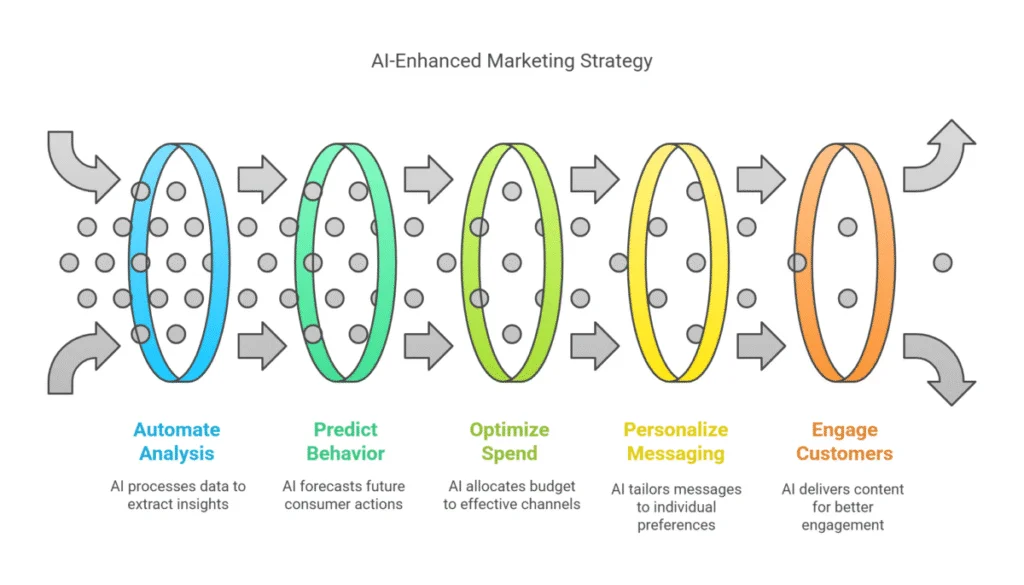
Image source: scalepv.com
Automated Tasks
- Campaign Scheduling – AI tools launch, pause, and adjust campaigns based on performance signals.
- Lead Scoring – Models rank patient prospects automatically using engagement and behavioral indicators.
- Content Tagging – NLP systems classify and label assets for easier retrieval and workflow automation.
- Reporting & Dashboards – Automated pipelines generate performance summaries without manual data pulls.
- Audience Refreshing – AI updates segments continuously as new behavioral data emerges.
- Email Triggering – Automated workflows send messages in response to user actions or health-related signals.
With these tasks automated, marketers can operate with greater precision while focusing their energy on innovation rather than maintenance.
Personalization and Predictive Analytics
Personalization in healthcare marketing is becoming far more dynamic as AI interprets patient behavior, context, and preferences to shape individualized experiences. These systems tailor messaging with precision, ensuring each interaction feels relevant and clinically aligned.
Predictive analytics elevates this personalization by forecasting patient intent, readiness, and potential outcomes before they fully materialize. With these insights, agencies can time their outreach strategically, improving engagement and reducing wasted impressions.
As both capabilities mature, marketing teams gain the power to anticipate needs rather than merely react to them. This shift from passive response to proactive intelligence creates stronger patient connections and more efficient campaign performance.
Advanced AI Techniques in Healthcare Marketing
Advanced AI techniques in healthcare marketing are unlocking deeper insights by interpreting complex patient signals, connecting clinical context with behavioral data, and enabling campaigns to adapt autonomously.
These capabilities push beyond basic automation and into true decision-grade intelligence.
Advanced Techniques
- Deep Learning Models – Extract high-resolution patterns from large, multimodal healthcare datasets.
- Generative AI – Creates compliant content variations, message drafts, and personalized educational material.
- Reinforcement Learning – Optimizes campaigns through continuous feedback loops that learn ideal actions.
- Graph Neural Networks – Map relationships between symptoms, conditions, and patient journeys.
- Anomaly Detection – Flags unusual behavior shifts, helping teams respond quickly to patient intent changes.
- Multimodal Fusion – Combines text, behavior, and structured clinical data for richer segmentation.
Leveraging these advanced methods empowers agencies to build smarter, more adaptive, and more clinically aligned marketing strategies.
Patient Journey Mapping and Predictive Accuracy
Patient journey mapping is becoming a cornerstone of modern healthcare marketing as agencies seek to understand every touchpoint a patient experiences.
By visualizing interactions from awareness to decision-making, marketers can identify gaps and optimize messaging at each stage. Integrating AI enhances this process by analyzing massive datasets to uncover hidden patterns in patient behavior.
Predictive models can anticipate the next steps in a journey, enabling proactive outreach before patients disengage or make alternative choices.
These insights allow for highly tailored interventions, such as delivering educational content precisely when a patient is evaluating treatment options. By aligning timing and messaging with predicted behavior, campaigns achieve higher engagement and conversion rates.
As predictive accuracy improves, healthcare marketers can continuously refine journey maps in real time. This dynamic approach reduces guesswork, increases efficiency, and ensures that every patient interaction is informed by evidence rather than assumption.
Privacy-Compliant Personalization and HIPAA
Privacy-compliant personalization in healthcare marketing ensures that AI-driven strategies deliver tailored experiences without compromising patient data or violating regulations like HIPAA.
By embedding compliance into every layer of data collection, analysis, and messaging, agencies can maintain trust while still leveraging powerful personalization techniques.
Key Practices for Privacy-Compliant Personalization
- Data Anonymization – Remove or mask personally identifiable information before analysis.
- Secure Data Storage – Implement encryption and access controls for all patient data.
- Consent Management – Track and respect patient permissions for communications and data use.
- HIPAA-Compliant Platforms – Use marketing tools and CRM systems certified for healthcare data protection.
- Audit Trails – Maintain records of data usage and processing for regulatory verification.
- Contextual Personalization – Tailor content using behavioral insights without exposing sensitive health information.
Adopting these practices allows agencies to deliver relevant, individualized campaigns while ensuring full compliance with healthcare privacy standards.
Integrating AI with Clinical Care Systems
Integrating AI with clinical care systems allows healthcare marketers and providers to leverage real-time data for smarter, more personalized patient engagement.
By connecting AI tools directly to clinical workflows, agencies can bridge the gap between care delivery and patient-centered marketing.
Key Applications
- EHR/EMR Connectivity – Link AI tools to electronic health records for instant patient insights.
- Clinical Decision Support – Provide predictive recommendations to support clinicians in care planning.
- Workflow Automation – Streamline scheduling, follow-ups, and patient reminders.
- Data Interoperability – Enable seamless communication across multiple platforms and formats.
- Outcome Tracking – Monitor patient responses and treatment effectiveness for continuous optimization.
- Personalized Outreach – Deliver tailored educational content or reminders based on clinical history.
- Compliance Monitoring – Ensure all AI integrations adhere to HIPAA and regulatory standards.
These integrations enhance both operational efficiency and patient engagement while maintaining compliance and data security.
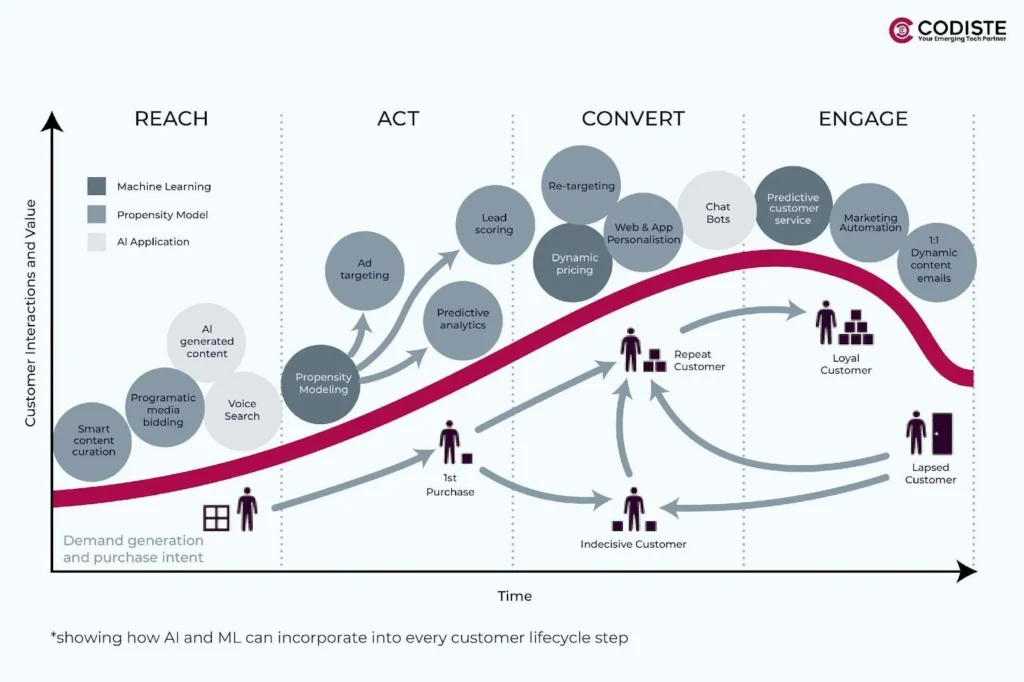
Image source: codiste.com
AI as a Creative Partner, Not a Replacement
AI is increasingly being recognized as a creative partner in healthcare marketing rather than a replacement for human expertise. By handling data-driven insights, repetitive tasks, and pattern recognition, AI frees marketers to focus on strategy, storytelling, and innovation.
Rather than generating campaigns independently, AI augments creative teams by suggesting content variations, identifying trends, and highlighting what resonates with target audiences. This collaboration ensures that messaging remains both relevant and human-centered.
Marketers can leverage AI to test multiple approaches rapidly, learn from engagement patterns, and refine creative outputs in real time. The technology acts as a co-pilot, accelerating iteration cycles without diminishing the importance of human intuition and judgment.
Ultimately, framing AI as a partner reinforces a balance between analytical rigor and creative artistry. Agencies that embrace this approach harness the strengths of both machine intelligence and human creativity to deliver more impactful and meaningful campaigns.
Addressing Privacy Concerns with Anonymized Data
Using anonymized data allows healthcare marketers to gain valuable insights while protecting patient identities and complying with privacy regulations. By removing personally identifiable information, agencies can analyze patterns and trends safely without risking sensitive data exposure.
Strategies for Addressing Privacy Concerns
- Data Masking – Replace identifiable details with pseudonyms or coded identifiers.
- Aggregation – Combine individual records into larger datasets to prevent tracing back to specific patients.
- Differential Privacy – Introduce controlled noise into datasets to protect individual identities while preserving analytical value.
- Limited Access Controls – Restrict data access to authorized personnel only.
- Compliance Checks – Ensure anonymization practices meet HIPAA and other regulatory standards.
- Audit Trails – Track data handling and processing for accountability and transparency.
By implementing these methods, agencies can leverage data-driven insights while maintaining trust and full compliance with privacy regulations.
FAQ
What is AI in healthcare marketing?
AI in healthcare marketing uses machine learning, predictive analytics, and automation to optimize campaigns, personalize patient outreach, and improve engagement.
How does predictive analytics benefit patient engagement?
It forecasts patient behavior and intent, enabling timely, relevant messaging that increases conversion and satisfaction.
Is patient data safe when using AI tools?
Yes, when agencies follow privacy-compliant practices like anonymization, HIPAA-compliant platforms, and secure data storage.
Can AI replace human marketers?
No, AI serves as a creative partner, augmenting human expertise by providing insights, automation, and optimization.
What are the limitations of traditional demographic targeting?
It oversimplifies patient segments, lacks predictive power, and often results in generic messaging with lower engagement.
Conclusion
AI is revolutionizing healthcare marketing by transforming how agencies understand patient behavior, optimize campaigns, and deliver personalized experiences.
From predictive analytics to advanced automation, these tools empower marketers to move beyond assumptions and base decisions on real data-driven insights.
The integration of AI with clinical systems, privacy-compliant personalization, and creative collaboration demonstrates that technology enhances rather than replaces human expertise.
By leveraging these capabilities responsibly, agencies can build more effective, patient-centered strategies while maintaining regulatory compliance.
As healthcare marketing continues to evolve, agencies that adopt AI-driven approaches will gain a competitive edge, improving efficiency, engagement, and outcomes.
To explore how your team can leverage AI for growth and partnership opportunities, check out this AI Reseller Program Partners Checklist and start integrating intelligent solutions today.