

Building an AI-ready future starts with a solid foundation, and AI infrastructure for IT providers is quickly becoming the backbone of modern digital services.

Make Money With AI
Join our Partner Programs!
Boost your reputation, drive revenue and grow your business with CustomGPT.ai.
As AI workloads demand more from compute, storage, and networks, IT providers must rethink how their infrastructure supports scalability, security, and performance.
Beyond hardware, building AI-ready systems is about designing environments that can adapt to rapid innovation and growing data complexity.
IT providers that invest early in flexible, resilient infrastructure position themselves to deliver smarter solutions and stay competitive as AI adoption accelerates.
Designing the Foundation for AI-Ready Systems
Building infrastructure for AI starts with thoughtful design that balances performance, scalability, and long-term flexibility.
For IT providers, the goal is to create environments that can reliably support diverse AI workloads while remaining manageable and cost-efficient as client demands grow.
A well-designed foundation also reduces friction when deploying new AI applications or scaling existing ones.
By aligning infrastructure decisions with data flows, compute requirements, and operational realities, IT teams can deliver scalable AI systems that are resilient and future-ready.
Assessing Client AI Workload Requirements
Understanding the nature of AI workloads is the first step toward effective infrastructure design. Different use cases—from predictive analytics to real-time inference—place very different demands on compute, storage, and networking.
Key workload factors to evaluate
- Type of AI model (training vs. inference)
- Data volume, velocity, and sensitivity
- Latency and performance expectations
- Regulatory or compliance constraints
A clear workload assessment ensures the infrastructure is purpose-built rather than over- or under-engineered.
Selecting Compute Architecture for AI Applications
Choosing the right compute layer is critical for supporting modern AI applications. IT providers must balance CPUs, GPUs, and accelerators based on performance needs and budget realities.
Compute architecture comparison
| Compute Type | Best Use Case | Considerations |
| CPU | General AI orchestration | Cost-efficient, lower parallelism |
| GPU | Model training and inference | High performance, higher cost |
| AI Accelerators | Specialized AI workloads | Vendor lock-in risks |
Matching compute architecture to workload patterns is essential for efficient machine learning infrastructure.
Designing Storage Systems for AI Data Pipelines
AI systems depend heavily on fast, reliable access to large datasets. Storage design must support both high-throughput training workloads and consistent access for inference and analytics.
Core storage design principles
- High IOPS for training datasets
- Scalable object storage for raw data
- Tiered storage for cost optimization
- Strong data governance and backup policies
Well-architected storage reduces bottlenecks and improves overall AI performance.
Planning Network Architecture for AI Performance
Network design often determines whether AI systems feel responsive or sluggish. For IT providers, low latency and high bandwidth are essential when supporting distributed training and real-time AI services.
Network design priorities
- High-speed interconnects between compute nodes
- Low-latency paths for inference workloads
- Secure segmentation for multi-tenant environments
- Support for hybrid and edge deployments
Strong networking underpins effective AI workload management and keeps AI applications running smoothly at scale. By starting with a solid infrastructure design, IT providers set the stage for reliable, scalable AI environments that can evolve alongside client needs.
Building Scalable AI Infrastructure
Once the foundation is designed, IT providers must focus on building infrastructure that can scale seamlessly with client AI initiatives. AI workloads are rarely static, and infrastructure must handle rapid growth in data, models, and user demand without disruption.
Scalability is not just about adding more resources—it’s about building systems that expand efficiently while maintaining performance and cost control.
A scalable approach ensures AI infrastructure for IT providers can support both early-stage experimentation and enterprise-grade deployments.
Implementing Modular Infrastructure Components
Modularity allows IT providers to scale AI environments incrementally instead of through costly overhauls. By breaking infrastructure into reusable components, teams can adapt faster to changing requirements.
Why modular design matters
- Faster expansion without downtime
- Easier upgrades and replacements
- Improved fault isolation
- Better alignment with evolving AI workloads
Modular infrastructure enables predictable growth while reducing operational complexity.
Leveraging Cloud and Hybrid AI Architectures
Cloud and hybrid models offer flexibility that traditional infrastructure cannot match. IT providers can use public cloud resources for burst workloads while maintaining control over sensitive data on-premises.
Key architecture options
- Public cloud for rapid scaling
- Private cloud for compliance and control
- Hybrid environments for balanced flexibility
- Edge deployments for low-latency AI use cases
This approach supports hybrid AI infrastructure strategies that meet diverse client needs.
Automating Resource Scaling for AI Workloads
Manual scaling cannot keep pace with dynamic AI demands. Automation ensures infrastructure responds in real time to workload fluctuations, improving performance and efficiency.
Automation focus areas
- Auto-scaling compute resources
- Dynamic storage provisioning
- Policy-based workload placement
- Real-time performance monitoring
Automation transforms scaling from a reactive task into a proactive capability.
Managing Cost Efficiency at Scale
As AI systems grow, infrastructure costs can escalate quickly. IT providers must design scaling strategies that balance performance with financial sustainability.
Cost optimization strategies
- Right-sizing compute and storage
- Using spot or reserved instances
- Monitoring unused resources
- Aligning infrastructure spend with business value
Effective cost management ensures scalable AI systems remain profitable and sustainable over time. With scalable infrastructure in place, IT providers can confidently support expanding AI workloads while maintaining performance, reliability, and control.
Managing and Operating AI Infrastructure
After AI infrastructure is built, consistent management becomes critical to ensuring reliability and performance. For IT providers, operational excellence determines whether AI systems deliver long-term value or become difficult to maintain.
Effective operations focus on visibility, automation, and proactive maintenance. By adopting structured processes, providers can simplify AI operations management while meeting client expectations for uptime and performance.
Monitoring Performance and AI Workloads
Continuous monitoring provides insight into how AI systems behave in real-world conditions. It allows IT teams to identify bottlenecks, failures, and inefficiencies before they impact clients.
What to monitor in AI environments
- Compute and GPU utilization
- Storage throughput and latency
- Model inference response times
- System errors and failures
Proactive monitoring ensures AI services remain stable and predictable.

Image source: microsoft.com
Implementing Security and Compliance Controls
AI infrastructure often handles sensitive data, making security a core operational priority. IT providers must integrate protection mechanisms without degrading performance.
Essential security measures
- Data encryption at rest and in transit
- Role-based access controls
- Secure model and data pipelines
- Continuous compliance auditing
Strong controls protect both infrastructure and client trust while supporting enterprise AI infrastructure standards.
Maintaining and Updating AI Systems
AI environments evolve quickly as models, frameworks, and dependencies change. Regular maintenance prevents technical debt from undermining performance.
Maintenance best practices
- Scheduled updates and patching
- Model version management
- Infrastructure health checks
- Rollback and recovery planning
Ongoing maintenance keeps AI platforms resilient and adaptable.
Managing Incidents and Downtime
Despite best efforts, incidents can occur in complex AI systems. Preparedness minimizes disruption and speeds recovery.
Incident response essentials
- Clear escalation procedures
- Automated alerts and diagnostics
- Defined recovery objectives
- Post-incident analysis and improvement
Structured incident management helps IT providers maintain reliability even under pressure. Strong operational management ensures AI infrastructure continues to perform, scale, and deliver value long after deployment.
Optimizing and Future-Proofing AI Infrastructure
As AI technologies evolve, IT providers must ensure their infrastructure remains adaptable and efficient over time. Optimization and future-proofing are about extending the value of existing investments while staying ready for new AI frameworks, models, and client expectations.
By continuously refining infrastructure design and operations, providers can support long-term innovation without frequent rebuilds. This approach strengthens AI infrastructure for IT providers by aligning performance, flexibility, and sustainability.
Optimizing Performance Across AI Pipelines
Performance tuning helps AI systems run faster and more efficiently without adding unnecessary resources. Small improvements across pipelines can significantly enhance overall outcomes.
Performance optimization focus areas
- GPU and accelerator utilization tuning
- Data pipeline optimization
- Reducing model inference latency
- Eliminating resource contention
Consistent optimization ensures AI workloads operate at peak efficiency.
Adopting Emerging AI Infrastructure Technologies
New technologies continue to reshape how AI workloads are deployed and managed. Staying informed allows IT providers to adopt innovations strategically rather than reactively.
Emerging trends to watch
- AI-specific hardware accelerators
- Serverless AI execution models
- Advanced container orchestration
- Intelligent workload scheduling
Selective adoption supports innovation while minimizing disruption.
Designing Infrastructure for Long-Term Scalability
Future-proof infrastructure anticipates growth rather than reacting to it. Designing with expansion in mind reduces rework as AI demands increase.
Scalability design principles
- Loose coupling between components
- Standardized interfaces and APIs
- Vendor-agnostic architectures
- Support for multi-cloud environments
These principles strengthen scalable AI systems over the long term.
Aligning Infrastructure with Client AI Roadmaps
Infrastructure planning should reflect where clients are headed, not just where they are today. Close alignment ensures infrastructure investments remain relevant.
Key alignment considerations
- Expected AI maturity growth
- Industry-specific AI requirements
- Data expansion forecasts
- Regulatory and compliance changes
When infrastructure evolves alongside client strategies, IT providers deliver lasting value. By focusing on optimization and future readiness, IT providers can ensure their AI environments remain competitive, resilient, and ready for what comes next.
Delivering AI Infrastructure as a Managed Service
As AI adoption matures, many clients prefer outcomes over ownership, creating opportunities for IT providers to offer AI infrastructure as a managed service. This model shifts the focus from one-time builds to ongoing value, reliability, and optimization.
Managed services allow IT providers to standardize delivery while tailoring environments to individual client needs. When executed well, this approach strengthens client relationships and positions providers as long-term partners in AI infrastructure for IT providers.
Defining Service Models and SLAs
Clear service definitions set expectations and ensure consistent delivery across clients. Well-structured SLAs align technical performance with business outcomes.
Core elements of AI infrastructure SLAs
- Uptime and availability targets
- Performance benchmarks for AI workloads
- Incident response and resolution times
- Security and compliance responsibilities
Strong SLAs build trust and reduce operational ambiguity.
Standardizing Deployment and Management Processes
Standardization enables scalability across multiple client environments without sacrificing quality. Repeatable processes reduce errors and accelerate onboarding.
Areas to standardize
- Infrastructure templates and configurations
- Deployment pipelines for AI workloads
- Monitoring and alerting frameworks
- Backup and recovery procedures
Standardized operations improve efficiency while supporting enterprise AI infrastructure delivery.
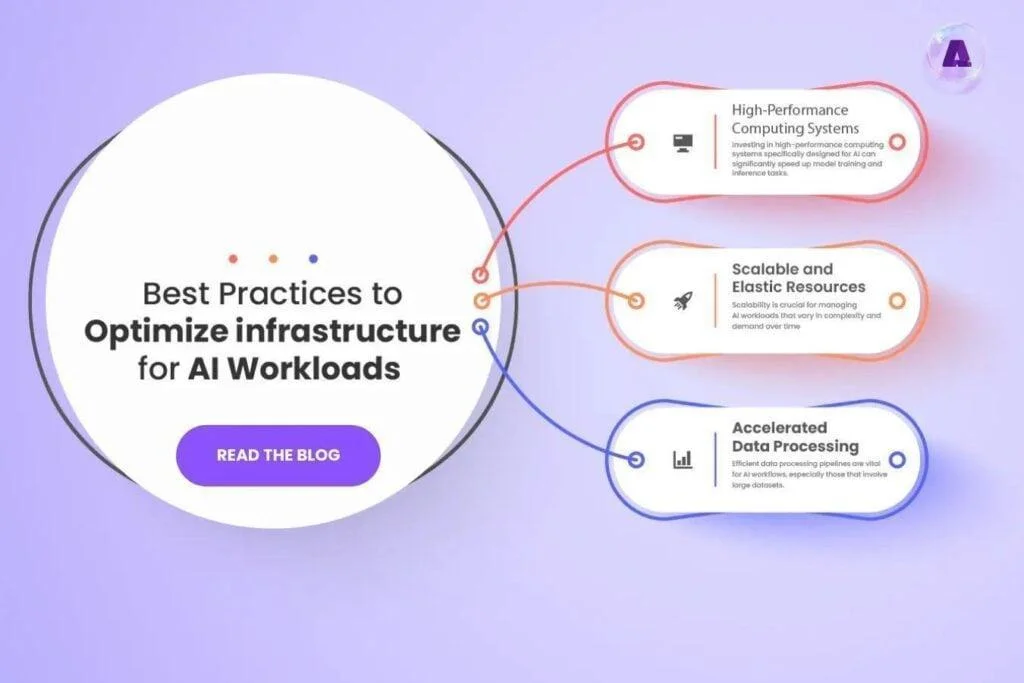
Image source: aptlytech.com
Providing Continuous Optimization and Support
Managed AI infrastructure requires ongoing tuning as workloads and models evolve. Continuous optimization ensures clients receive consistent performance over time.
Ongoing support activities
- Performance and cost optimization reviews
- Capacity planning and forecasting
- Model and infrastructure compatibility checks
- Proactive issue identification
Continuous support transforms infrastructure from a static asset into a dynamic service.
Enabling Client Visibility and Reporting
Transparency is essential when managing AI infrastructure on behalf of clients. Clear reporting helps clients understand value, usage, and performance.
Reporting best practices
- Resource utilization dashboards
- Performance and availability metrics
- Cost and efficiency insights
- Compliance and security summaries
When clients can see how their AI systems perform, confidence in managed services grows. By delivering AI infrastructure as a managed service, IT providers create scalable revenue streams while helping clients focus on innovation rather than operations.
FAQ
What is AI infrastructure for IT providers?
AI infrastructure for IT providers refers to the compute, storage, networking, and management systems designed to support AI model training, deployment, and operations for clients.
How is AI infrastructure different from traditional IT infrastructure?
AI infrastructure requires higher compute density, faster data pipelines, and optimized networking to handle data-intensive and parallel AI workloads.
Should IT providers choose on-prem, cloud, or hybrid AI infrastructure?
The choice depends on client requirements, with hybrid AI infrastructure often offering the best balance between scalability, control, and compliance.
How can IT providers manage costs in AI environments?
Costs can be controlled through automation, right-sizing resources, monitoring utilization, and aligning infrastructure capacity with actual AI workload demand.
Can AI infrastructure be offered as a managed service?
Yes, many IT providers deliver AI infrastructure as a managed service, providing ongoing monitoring, optimization, security, and support for client AI applications.
Conclusion
Building and managing AI-ready environments is no longer optional for IT providers—it is a strategic capability that defines competitiveness in a rapidly evolving market.
From designing scalable foundations to delivering AI infrastructure as a managed service, providers that invest in the right architecture, operations, and optimization strategies are best positioned to support client innovation and long-term growth.
For IT providers looking to turn technical expertise into a repeatable, revenue-generating offering, the next step is learning how to package, position, and sell AI services effectively.
This guide on how to sell AI services offers practical insights to help transform AI infrastructure capabilities into scalable client solutions and sustainable business growth.