

Calculating the true value of AI can feel abstract, which is why an AI ROI calculator becomes an essential tool for turning innovation into measurable impact.

Make Money With AI
Join our Partner Programs!
Boost your reputation, drive revenue and grow your business with CustomGPT.ai.
For partners advising clients, it bridges the gap between AI potential and business reality by translating efficiency gains, cost savings, and revenue growth into numbers decision-makers trust.
As a trusted advisor, your credibility grows when you can clearly show how AI investments pay off over time, not just promise transformation.
A structured approach to ROI helps clients move beyond experimentation and confidently connect AI initiatives to tangible business outcomes that justify long-term adoption.
Building a Repeatable AI ROI Framework for Clients
A repeatable AI ROI framework allows partners to move faster while maintaining consistency across different client engagements. Instead of rebuilding calculation logic for every engagement, you establish a structured approach that can be applied across industries and client types.
This framework also strengthens trust by making assumptions transparent and defensible. When ROI inputs are clearly labeled as client-specific or illustrative, stakeholders can distinguish between real operational data and modeling examples.
Mapping Client Objectives to AI Outcomes
Every ROI calculation should begin by clearly linking business objectives to AI-driven outcomes. This alignment ensures the analysis focuses on strategic priorities rather than isolated technical improvements.
Key questions to align AI with client goals
- What operational or revenue challenge is the client prioritizing right now?
- Which KPIs leadership already tracks and relies on for decisions?
- Where does manual effort currently limit scale or consistency?
- What financial impact does this challenge create over time?
- How will success be evaluated after AI adoption?
Strong objective mapping keeps ROI discussions grounded in business reality.
Establishing Baseline Performance Metrics
Baseline metrics define the current state of performance and act as the reference point for measuring AI impact. The values used at this stage should come directly from the client’s internal systems or be clearly marked as illustrative when used for modeling.
| Metric Type | Sample Current State* | Typical Data Source |
| Labor hours per month | 120 | Time tracking systems |
| Cost per task | $15 | Finance or payroll reports |
| Error or rework rate | 8% | QA audits or CRM data |
*Sample values shown for demonstration purposes only.
Actual ROI calculations should use client-verified operational and financial data. Clear baselines ensure AI-driven improvements can be validated with confidence.
Modeling Short-Term and Long-Term Gains
AI value often unfolds in stages, which makes it important to separate immediate operational improvements from longer-term strategic gains.
Types of gains to include in ROI projections
- Near-term efficiency improvements from automation or assistance
- Progressive cost savings as adoption stabilizes
- Productivity gains from reduced rework and delays
- Revenue enablement through increased capacity or speed
- Risk reduction from improved accuracy and consistency
Time-based modeling helps clients view AI as a sustained investment rather than a one-time upgrade.
Stress-Testing ROI Assumptions
Stress-testing ensures ROI projections remain realistic under varying conditions. Assumptions should be adjusted using conservative, client-informed inputs or validated against third-party research when available.
Ways to validate ROI assumptions responsibly
- Reference internal pilot or proof-of-concept results
- Compare assumptions with published industry research
- Adjust projections based on change-management readiness
- Recalculate outcomes using lower-bound performance scenarios
Well-tested assumptions protect credibility and strengthen the overall business case.
The Downloadable AI ROI Template: What Partners Get and How to Use It
The downloadable AI ROI template is designed to help partners move from theory to execution without starting from scratch. It provides a structured, client-ready format for capturing inputs, modeling outcomes, and presenting ROI in a clear, defensible way.
Rather than acting as a benchmark or calculator with preset assumptions, the template serves as a guided worksheet. Every value is meant to be populated with client-specific data or clearly labeled as illustrative during early-stage modeling.
What the Template Includes
The template is intentionally structured to mirror how business stakeholders evaluate investments. This makes it easier to socialize internally and reduces friction during approval cycles.

Image source: linkedin.com
Core sections included in the template
- Client context and business objectives
- Baseline performance inputs (client-sourced or sample-labeled)
- AI solution scope and assumptions
- Cost categories and investment timeline
- Modeled efficiency, cost, and capacity outcomes
This structure keeps ROI discussions grounded and repeatable.
How Partners Should Use the Template in Client Conversations
The template is most effective when used as a collaborative working document rather than a final deliverable. Partners should position it as a shared tool for exploration and validation.
Best practices for using the template
- Walk through sections live with client stakeholders
- Populate inputs using client-owned systems where possible
- Flag placeholders clearly during early discovery
- Validate assumptions before finalizing outputs
- Revisit and update the template post-implementation
Used this way, the template builds alignment instead of pressure.
What the Template Is—and Is Not
Setting expectations around the template is critical to maintaining trust. It should support decisions, not replace them.
How to frame the template responsibly
- It is a modeling aid, not a guarantee of results
- It supports scenario planning, not fixed forecasts
- It evolves as adoption and data maturity improve
- It complements, rather than replaces, internal analysis
- It enables transparency, not sales shortcuts
Clear framing ensures the template strengthens credibility.
Turning the Template Into a Long-Term Asset
When reused over time, the ROI template becomes more valuable with each iteration. It evolves alongside the client’s AI maturity and business priorities.
Partners can use updated versions of the same template to support renewals, expansions, and optimization discussions. This continuity reinforces the partnership and positions ROI as an ongoing strategic tool rather than a one-time justification.
Using the AI ROI Template to Build a Stronger Client Business Case
An AI ROI template helps partners move from abstract discussions to structured, data-backed conversations. By standardizing how value is calculated, you reduce friction in the sales process and create a clear path from discovery to decision.
More importantly, a reusable template ensures consistency across engagements. Clients gain confidence when they see a familiar, logical structure guiding how assumptions, costs, and outcomes are evaluated.
Customizing the Template for Each Client
An effective ROI template should never feel generic. Customization ensures the model reflects the client’s unique workflows, constraints, and priorities.
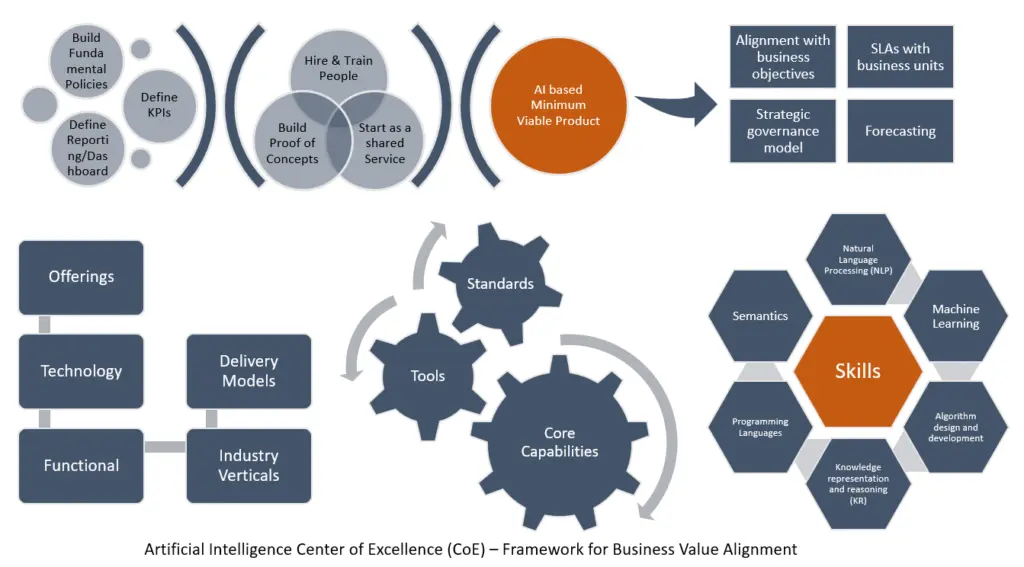
Image source: medium.com
Ways to tailor the ROI template
- Adjust inputs to match client-specific processes and volumes
- Use client-defined KPIs instead of generic performance indicators
- Align terminology with how the client already reports internally
- Exclude irrelevant cost or benefit categories to maintain focus
- Validate assumptions collaboratively with client stakeholders
Customization transforms the template from a worksheet into a strategic tool.
Inputting Client-Verified Data
The credibility of any ROI model depends on the quality of data entered. Wherever possible, inputs should come directly from client-owned systems or documented reports.
Best practices for data inputs
- Pull operational data from systems the client already trusts
- Confirm financial figures with finance or operations teams
- Clearly label any placeholder values as sample-only
- Keep notes on data sources for transparency
- Revisit inputs as new information becomes available
Verified data reduces objections and speeds up stakeholder approval.
Interpreting ROI Outputs Responsibly
ROI outputs should be treated as decision-support signals, not guarantees. Partners add value by explaining what the results mean—and what they don’t.
| Output Category | What It Represents | How to Use It |
| Cost impact | Modeled change in expenses | Budget planning |
| Productivity impact | Modeled efficiency change | Capacity forecasting |
| Payback period | Time to recover investment | Risk evaluation |
Clear interpretation prevents overstatement and builds long-term trust.
Turning ROI Results Into a Decision Narrative
Numbers alone rarely close deals. ROI becomes persuasive when translated into a story that aligns with executive priorities.
How to present ROI results effectively
- Lead with the business problem before the numbers
- Highlight conservative scenarios first
- Connect outcomes to strategic initiatives
- Use visuals or summaries to simplify complexity
- Reinforce next steps rather than just projections
A strong narrative turns ROI analysis into confident action.
Positioning AI ROI as a Long-Term Partnership Asset
AI ROI should be treated as an evolving measurement rather than a one-time justification tool. When partners frame ROI as something that grows alongside adoption, it reinforces AI as a long-term strategic investment.
This approach shifts client conversations from initial approval to continuous improvement. Over time, ROI becomes a shared reference point for optimization, expansion, and deeper collaboration.
Revisiting ROI as AI Adoption Matures
As AI becomes embedded in daily workflows, its impact naturally changes. Regularly revisiting ROI ensures the model reflects real usage rather than early assumptions.
When to reassess AI ROI
- After onboarding and initial rollout are complete
- When user adoption stabilizes across teams
- Following workflow or process refinements
- During quarterly or annual performance reviews
- Before expanding AI into new use cases
Ongoing evaluation keeps ROI aligned with operational reality.
Using ROI Insights to Identify Expansion Opportunities
ROI analysis often highlights areas where AI solution is delivering more value than expected. These insights create natural entry points for expanding scope without forcing upsells.
Signals that indicate expansion readiness
- Consistent efficiency gains in core workflows
- Increased capacity without additional staffing
- Strong internal user adoption and advocacy
- New bottlenecks emerging outside the original scope
- Clear alignment between AI outcomes and business goals
Expansion driven by evidence feels consultative rather than sales-driven.
Aligning ROI With Strategic Business Reviews
Embedding AI ROI into existing business reviews strengthens its relevance at the executive level. It positions AI alongside other strategic initiatives rather than as a standalone experiment.
Ways to integrate ROI into reviews
- Tie AI outcomes to operational KPIs leadership already tracks
- Use ROI trends instead of one-time snapshots
- Discuss optimization opportunities alongside results
- Connect insights to budgeting and planning cycles
- Align next steps with broader business priorities
This alignment reinforces AI as part of long-term planning.
Reinforcing Trust Through Transparent ROI Reporting
Transparency is essential for sustaining long-term partnerships. Clear reporting builds confidence by showing how results are measured and where assumptions remain.
Practices that build long-term trust
- Separate actual performance data from projections
- Clearly label any illustrative or modeled figures
- Document data sources and calculation logic
- Update ROI models as conditions change
- Invite client input into future assumptions
Transparent reporting turns ROI into a shared asset rather than a sales artifact.
Turning AI ROI Into a Repeatable Sales and Advisory Motion
When used consistently, AI ROI becomes more than an analytical exercise—it turns into a repeatable motion that supports both sales and long-term advisory relationships. Partners who operationalize ROI frameworks reduce sales friction and increase deal confidence.
This approach also shortens discovery cycles by giving every client conversation a familiar structure. Instead of debating whether AI delivers value, discussions focus on how quickly that value can be realized.
Using ROI Early in the Sales Process
Introducing ROI early helps qualify opportunities and align expectations from the first conversation. It ensures AI discussions are grounded in business outcomes rather than feature comparisons.
How ROI supports early-stage conversations
- Frames AI as an investment, not an experiment
- Establishes credibility with data-driven discovery
- Surfaces budget and approval criteria sooner
- Aligns stakeholders around shared success metrics
- Filters out low-fit use cases early
Early ROI framing accelerates serious buying conversations.
Standardizing ROI Across Client Segments
Consistency is critical when scaling AI services across multiple clients. A standardized ROI approach allows AI partners to maintain quality while increasing speed.
Benefits of standardizing AI ROI
- Faster proposal development
- Easier internal enablement for sales teams
- More predictable client expectations
- Stronger comparability across engagements
- Reduced risk of overpromising
Standardization turns ROI into an operational advantage.

Image source: a3logics.com
Supporting Renewals and Upsells With ROI Data
ROI data becomes especially powerful during renewals and expansion discussions. It shifts conversations from pricing to performance.
Ways ROI strengthens renewals
- Anchors discussions in proven outcomes
- Justifies continued or increased investment
- Highlights underutilized value opportunities
- Reinforces partnership value over cost
- Reduces renewal friction
Outcome-driven renewals feel earned rather than negotiated.
Positioning ROI as a Differentiator in Competitive Deals
In competitive sales environments, ROI clarity can be the deciding factor. Partners who quantify value stand out against feature-led pitches.
How ROI differentiates your offering
- Demonstrates business fluency, not just technical expertise
- Reduces perceived risk for decision-makers
- Makes value comparisons easier for stakeholders
- Strengthens executive-level conversations
- Positions the partner as a strategic advisor
Clear ROI positioning consistently outperforms generic AI promises.
Avoiding Common Pitfalls When Calculating AI ROI
Even well-structured ROI frameworks can lose credibility if common mistakes aren’t addressed early. Partners who proactively manage these risks are far more likely to earn trust and secure long-term buy-in.
By anticipating objections and setting realistic expectations, you protect both the client relationship and your advisory position. Strong ROI work is as much about what you don’t overstate as what you do quantify.
Overestimating Early-Stage Impact
One of the most frequent mistakes in AI ROI modeling is assuming immediate, full-scale impact. In reality, adoption and performance improve over time.
How to keep projections realistic
- Separate pilot-phase results from steady-state performance
- Account for onboarding and learning curves
- Avoid assuming organization-wide adoption from day one
- Model value in stages rather than all at once
- Clearly label projections versus actuals
Conservative early estimates preserve credibility and reduce disappointment.
Ignoring Change Management Costs
AI ROI often focuses on technology benefits while underestimating human and process factors. Ignoring these elements can distort the business case.
Costs that are commonly overlooked
- Time spent on training and onboarding
- Temporary productivity dips during transition
- Internal coordination and approvals
- Process redesign or documentation updates
- Ongoing optimization efforts
Including these factors results in a more honest and defensible ROI model.
Using Generic Benchmarks Without Context
Industry benchmarks can be useful, but only when applied carefully. Generic figures without context can weaken trust if they don’t reflect the client’s reality.
Best practices for using benchmarks
- Treat benchmarks as directional references, not guarantees
- Clearly cite sources when using third-party data
- Adjust assumptions based on client maturity and scale
- Combine benchmarks with client-specific inputs
- Label all non-client data as illustrative
Contextualized benchmarks support—not replace—client data.
Presenting ROI as a Guaranteed Outcome
ROI models are decision-support tools, not promises. Overstating certainty creates risk and can damage long-term partnerships.
How to present ROI responsibly
- Use ranges or scenarios instead of single outcomes
- Clearly distinguish modeled results from measured performance
- Emphasize assumptions and dependencies
- Reinforce that results improve with adoption and optimization
- Position ROI as a learning and refinement process
Responsible framing turns ROI into a trust-building asset rather than a liability.
FAQ
Will downloading the template give access to my Google account or Drive?
No. The file downloads locally as an Excel spreadsheet, and viewers never see your Google account, Drive, or original file.
Do users need a Google account to download the template?
No. Anyone can download the file directly without signing in to Google.
Is the AI ROI calculator pre-filled with benchmarks or assumptions?
No. The template is designed to be populated with client-specific data, with all modeled outputs clearly separated from inputs.
Can the template be customized for different clients or use cases?
Yes. Once downloaded, the spreadsheet can be edited freely and reused for multiple clients and scenarios.
Does the template guarantee ROI results?
No. It is a decision-support tool that models potential outcomes based on inputs and assumptions, not a guarantee of performance.
Conclusion
AI ROI is no longer about proving that AI can work—it’s about clearly showing how and where it delivers business value. With the right framework and a practical calculator, partners can move conversations from experimentation to confident, data-backed decisions.
To take this one step further, explore a deeper breakdown of how AI support initiatives translate into measurable returns. Use this resource to strengthen your client business cases and reinforce ROI-driven conversations.
Related Resources
If you’re evaluating AI ROI, this guide adds useful context on agency-focused implementation models.
- AI Solutions for Agencies — Explore how agencies can use CustomGPT.ai-powered solutions to streamline client work, scale services, and improve operational efficiency.