

AI is reshaping how cyber threats are created, scaled, and deployed, and AI security for MSPs is quickly becoming a non-negotiable priority.

Make Money With AI
Join our Partner Programs!
Boost your reputation, drive revenue and grow your business with CustomGPT.ai.
If you manage client environments, you’re now responsible for defending against smarter attacks that move faster and hide better than anything you’ve seen before.
As an MSP, you’re not just protecting networks anymore—you’re protecting decision-making systems, automated workflows, and AI-driven tools your clients increasingly rely on.
That means you need to understand how AI introduces new attack surfaces while also learning how to use it as a defensive advantage.
This guide is built to help you stay ahead by breaking down emerging AI-related threats and showing you how to turn AI-powered security into a high-value service offering.
By the end, you’ll know how to strengthen your clients’ defenses while positioning yourself as a forward-thinking security partner they trust.
AI as a Defense Tool: Enhancing Threat Detection
AI has become one of the most effective ways to counter increasingly sophisticated cyber threats because it can analyze behavior at a scale no human team can match.
When you deploy it correctly, AI allows you to detect attacks earlier, reduce response times, and protect client environments more proactively.
How AI Enhances Threat Detection
- Continuously analyzes network traffic to identify anomalies that signal potential breaches
- Detects zero-day threats by recognizing unusual behavior rather than relying on known signatures
- Automates alert prioritization so you can focus on real risks instead of false positives
- Learns from historical data to improve accuracy and adapt to evolving attack patterns
- Correlates activity across endpoints, users, and cloud systems for deeper visibility
By using AI as a defense tool, you move from reactive security to predictive protection, giving your clients faster response times and stronger confidence in your services.
AI as an Attack Vector: Emerging Threats
AI is also being weaponized by attackers, making cyber threats more scalable, targeted, and difficult to detect than traditional methods. As an MSP, you need to understand how these threats work so you can anticipate them before they impact your clients.
Emerging AI-Driven Threats
- AI-generated phishing campaigns that adapt messaging in real time to increase success rates
- Deepfake audio and video used for social engineering, fraud, and executive impersonation
- Automated vulnerability discovery that accelerates exploitation of unpatched systems
- AI-powered malware that changes behavior to evade signature-based detection
- Large-scale credential stuffing and brute-force attacks optimized through machine learning
Recognizing AI as an attack vector allows you to design stronger defenses, educate your clients, and position your security offerings around threats that are already shaping the future of cybercrime.
Leveraging AI-Driven Security Technologies
AI-driven security technologies allow you to shift from reacting to incidents to preventing them before damage occurs. By processing vast amounts of security data in real time, AI helps you identify patterns and threats that traditional tools often miss.
For MSPs, this means delivering stronger protection without overwhelming your team with alerts and manual investigations. AI-powered automation streamlines detection and response, allowing you to maintain consistent security outcomes across multiple client environments.
You can also use AI to enhance visibility and decision-making by correlating data across endpoints, networks, and cloud platforms. This deeper insight enables you to spot emerging risks earlier and provide clearer, more strategic guidance to your clients.
When you leverage AI-driven security technologies effectively, you position yourself as a proactive security partner rather than a reactive service provider. That shift not only improves client protection but also strengthens trust and long-term retention.
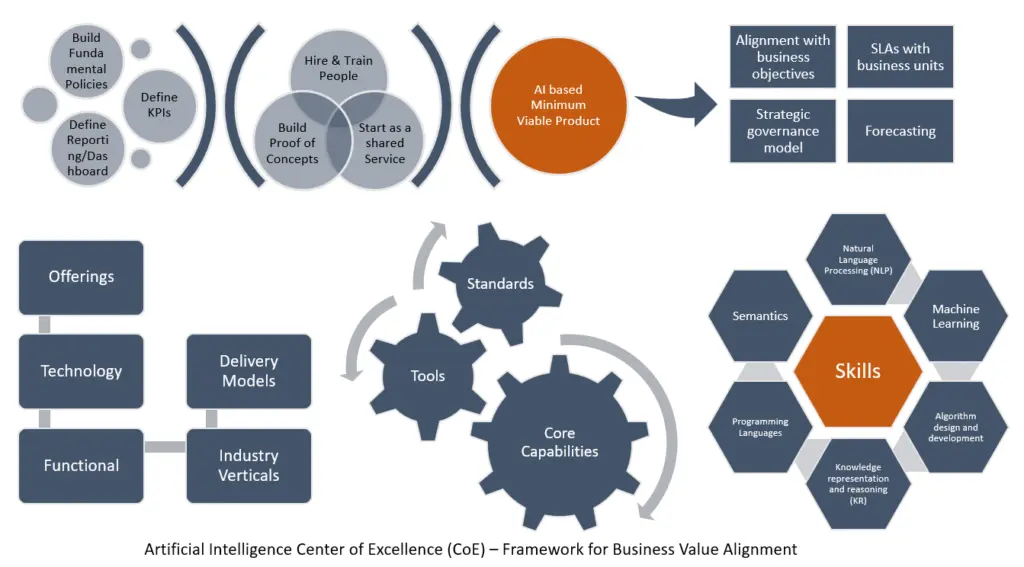
Image source: medium.com
AI-Powered Threat Detection and Response
AI-powered threat detection and response helps you identify and neutralize attacks faster by combining real-time analysis with automated action. Instead of chasing alerts, you gain a system that continuously learns and responds as threats evolve.
Key Capabilities of AI-Powered Detection and Response
- Monitors user and system behavior to detect anomalies that indicate active threats
- Automatically correlates alerts across endpoints, networks, and cloud workloads
- Prioritizes incidents based on risk and potential impact to reduce alert fatigue
- Initiates automated containment actions to limit damage before human intervention
- Continuously improves accuracy by learning from past incidents and outcomes
By integrating AI-powered detection and response, you deliver faster remediation, reduce dwell time, and give your clients a stronger, more resilient security posture.
Automating Security Operations with AI
Automating security operations with AI allows you to manage growing security demands without increasing operational complexity. By removing manual bottlenecks, you can respond to threats faster while maintaining consistency across all client environments.
How AI Automates Security Operations
- Automates routine tasks like log analysis, alert triage, and incident classification
- Orchestrates response workflows to ensure consistent actions across tools and platforms
- Reduces mean time to detect and respond by eliminating manual handoffs
- Frees your security team to focus on high-value investigations and strategy
- Scales security operations efficiently as your client base and threat landscape grow
When you use AI to automate security operations, you transform security from a reactive cost center into a scalable, high-impact AI service your clients can rely on.
Evolving Threat Landscape: AI-Powered Attacks
The threat landscape is rapidly evolving as attackers use AI to automate, adapt, and scale cyberattacks with unprecedented efficiency.
For you as an MSP, this means defending against smarter threats that continuously learn from defenses, making proactive, intelligence-driven security essential for protecting your clients.
Deepfakes and AI-Generated Phishing
Deepfakes and AI-generated phishing are redefining social engineering by making attacks more convincing and harder to detect. These tactics exploit trust, urgency, and familiarity, putting both your clients’ employees and executives at greater risk.
How Deepfakes and AI-Generated Phishing Are Used
- Creates realistic voice and video impersonations to trick staff into authorizing payments or sharing credentials
- Generates highly personalized phishing emails that adapt tone and language to individual targets
- Mimics executive communication styles to bypass traditional approval processes
- Scales social engineering campaigns rapidly with minimal attacker effort
- Reduces obvious red flags, making attacks harder for users to recognize
By addressing these AI-driven tactics, you can strengthen user awareness, implement better verification controls, and protect your clients from some of the most deceptive threats they face today.
Automated Social Engineering Tactics
Automated social engineering tactics powered by AI enable attackers to manipulate users at scale while maintaining a high level of personalization. These attacks exploit human behavior rather than technical vulnerabilities, making them especially dangerous for your clients.
Common AI-Driven Social Engineering Techniques
- Automates reconnaissance to gather personal and organizational details from public data
- Crafts tailored messages that align with user roles, communication styles, and timing
- Adjusts attack strategies in real time based on user responses and engagement
- Launches multi-channel attacks across email, SMS, voice, and collaboration tools
- Continuously refines messaging to improve success rates over time
By understanding automated social engineering tactics, you can implement stronger controls, improve user training, and help your clients reduce the human risk factor in modern cyberattacks.
Image source: markovate.com
Implementing Identity-Centric Security
Implementing identity-centric security shifts your focus from protecting just devices and networks to protecting the users behind them.
For you as an MSP, this approach helps reduce risk by enforcing strong authentication, continuous verification, and least-privilege access across every client environment.
Strengthening Identity and Access Management
Strengthening identity and access management is essential as AI-driven attacks increasingly target user credentials rather than infrastructure. By tightening identity controls, you reduce the likelihood that a single compromised account can lead to a major breach.
Ways to Strengthen Identity and Access Management
- Enforces multi-factor authentication across all users, including privileged accounts
- Applies least-privilege access to limit exposure if credentials are compromised
- Continuously monitors login behavior to detect anomalies and potential misuse
- Centralizes identity management for better visibility across cloud and on-prem systems
- Automates access reviews and deprovisioning to reduce human error
When you strengthen identity and access management, you create a resilient security foundation that protects your clients even as attack methods become more sophisticated.
Integrating AI with Identity Security
Integrating AI with identity security allows you to detect threats that traditional access controls often miss. By analyzing behavior instead of relying solely on credentials, you gain deeper insight into how identities are being used—and abused.
How AI Enhances Identity Security
- Detects abnormal login patterns that indicate credential theft or account takeover
- Continuously assesses user behavior to adjust access levels in real time
- Identifies risky identities based on activity, privilege level, and exposure
- Automates responses such as session termination or step-up authentication
- Learns from historical identity data to improve accuracy over time
By combining AI with identity security, you strengthen protection around the most targeted attack surface while delivering smarter, more adaptive security for your clients.
Turning AI Security Capabilities into MSP Service Offerings
Understanding AI security is only half the equation—you also need a clear way to translate these capabilities into structured, sellable services. As an MSP, your advantage lies in packaging AI-powered security into offerings that are easy for clients to understand, adopt, and justify.
By clearly defining scope, outcomes, and value, you can position AI security as a proactive business enabler rather than just another technical add-on. This approach helps you standardize delivery, scale efficiently, and create predictable recurring revenue.
Packaging AI-Powered Security as Managed Services
Packaging AI-powered security as managed services helps you translate advanced technology into outcomes your clients actually care about.
Key Elements of Service Packaging
- Bundles AI-driven detection, response, and identity protection into tiered offerings
- Defines clear outcomes such as faster response times and reduced breach impact
- Aligns service levels with client risk profiles and regulatory requirements
- Includes reporting that demonstrates measurable security value
This approach simplifies sales conversations while enabling consistent service delivery across all clients.
Operationalizing AI Security Across Client Environments
Operationalizing AI security ensures you can deliver protection at scale without increasing operational complexity.
How to Operationalize AI Security
- Standardizes tools, policies, and workflows across client environments
- Integrates AI-powered detection and response into existing SOC or MDR processes
- Automates onboarding, monitoring, and remediation to reduce manual effort
- Uses AI-driven insights to continuously improve security outcomes
By operationalizing AI security, you build a scalable service model that supports growth while maintaining strong protection and margins.
Service Delivery Models: MDR and AI-First SOC
Choosing the right service delivery model is critical as AI reshapes how security operations are built and scaled for modern MSPs.
| Service Model | Core Focus | Key Capabilities | Ideal Use Case |
| MDR (Managed Detection and Response) | Human-led threat detection and response | 24/7 monitoring, expert-led investigations, guided remediation | MSPs looking to add mature security services without building a full SOC |
| AI-First SOC | Automation-driven security operations | AI-powered detection, automated response, continuous learning | MSPs aiming to scale security services efficiently with minimal manual effort |
By understanding these models, you can align your security services with your operational goals while delivering stronger, more scalable protection to your clients.
Managed Detection and Response (MDR) Strategies
Managed Detection and Response (MDR) helps you deliver advanced security outcomes without the overhead of running a full in-house SOC. By combining technology with expert oversight, MDR strengthens your ability to detect and respond to threats around the clock.
Key MDR Strategies for MSPs
- Leverages 24/7 monitoring to identify threats across endpoints, networks, and cloud environments
- Combines automated detection with human-led investigation and decision-making
- Prioritizes high-risk incidents to reduce noise and accelerate response times
- Provides guided remediation to help you act quickly and confidently
- Enhances visibility and reporting to demonstrate security value to clients
By implementing effective MDR strategies, you can offer enterprise-grade security protection while maintaining operational efficiency and client trust.
Building an AI-First Security Operations Center
Building an AI-first security operations center allows you to handle modern threats at scale while reducing dependence on manual processes. This approach helps you respond faster, operate more efficiently, and deliver consistent security outcomes across all clients.
Image source: rvglobalsolutions.com
Core Elements of an AI-First SOC
- Uses AI-driven analytics to detect threats in real time across diverse environments
- Automates alert triage and response to minimize analyst workload
- Continuously learns from incidents to improve detection accuracy over time
- Integrates data from endpoints, networks, cloud, and identity systems
- Scales security operations without a proportional increase in staffing
By adopting an AI-first SOC model, you position your security services to keep pace with evolving threats while creating a more resilient and future-ready operation.
Future Trends in AI Security for MSPs
Future trends in AI security for MSPs will focus on greater automation, predictive threat prevention, and deeper integration across identity, cloud, and endpoint security.
For you, staying competitive will mean adopting AI systems that not only detect threats faster but also anticipate attacks and orchestrate responses automatically, turning security into a proactive, intelligence-driven service rather than a reactive one.
AI-Augmented SOC Services
AI-augmented SOC services blend human expertise with intelligent automation to deliver faster, more scalable security operations. This model allows you to enhance analyst effectiveness while maintaining high-quality threat detection and response.
Key Capabilities of AI-Augmented SOC Services
- Enhances analyst decision-making with AI-driven context and risk scoring
- Automates alert correlation and prioritization across multiple security tools
- Reduces mean time to detect and respond through intelligent workflow automation
- Provides continuous learning to improve detection accuracy over time
- Scales SOC capabilities without a proportional increase in staffing
By offering AI-augmented SOC services, you deliver stronger security outcomes while positioning your MSP as a modern, forward-thinking security provider.
AI-Driven Compliance and Risk Management
AI-driven compliance and risk management helps you keep pace with evolving regulations while reducing the manual effort traditionally required to stay compliant.
By continuously analyzing systems and data, AI can identify gaps and risks before they turn into audit findings or security incidents. For MSPs, this approach provides greater visibility across multiple client environments without adding operational complexity.
AI tools can monitor controls in real time, flag deviations, and support faster remediation to maintain consistent compliance postures. By leveraging AI for risk management, you move from periodic assessments to continuous oversight.
This allows you to deliver measurable compliance value to clients while strengthening trust and positioning compliance as a proactive, ongoing service.
FAQ
What new security challenges does AI introduce for MSPs?
AI enables faster reconnaissance, adaptive malware, and highly convincing social engineering, forcing you to defend against threats that evolve in real time.
Why are traditional security tools less effective against AI-driven attacks?
Signature-based tools struggle with AI-powered threat because these attacks change behavior frequently and are designed to evade static detection methods.
How can MSPs use AI to improve threat detection and response?
You can deploy AI-powered detection and response systems that analyze behavior, correlate signals across environments, and automate containment actions.
What AI-powered security services can MSPs offer to clients?
MSPs can offer AI-driven MDR, AI-augmented SOC services, identity-centric security, and continuous compliance and risk monitoring.
How does AI help MSPs scale security services profitably?
AI reduces manual effort through automation, allowing you to protect more clients with consistent outcomes while improving margins and service quality.
Conclusion
AI is permanently changing the security landscape, and MSPs that adapt early will be best positioned to protect their clients from emerging threats.
By understanding AI-powered attacks and leveraging AI-driven threat detection, automation, identity security, and SOC models, you can deliver stronger, faster, and more scalable security outcomes while reinforcing your role as a trusted technical advisor.
If you’re ready to turn AI security into a competitive advantage, explore how AI-powered MSP security services can help you operationalize detection, response, and compliance at scale while creating new recurring revenue opportunities for your business.