
AI Solution Partner Programs: Certification Paths, Incentives & Enterprise Benchmarks
AI solution partner programs are quickly becoming the backbone of enterprise AI adoption. As companies scale their AI efforts, they’re realizing that a strong partner ecosystem isn’t optional—it’s a strategic advantage.
Partners building certification paths can also review these MSP AI service offers to align enablement with marketable packages.
If CustomGPT.ai is on your shortlist, this solutions partner onboarding guide explains the trial, onboarding, and growth path.

Make Money With AI
So if you’re designing, managing, or evaluating one of these programs, three areas matter most: certifications paths, incentives that drive real engagement, and benchmarks that show what success actually looks like.
Certification Paths
Certification paths are how vendors train and qualify their partners. They validate whether partners are truly capable of delivering AI solutions that meet enterprise standards.
What Are Certification Paths in AI Solution Partner Programs?
Certification paths are how AI solution partner programs validate expertise—and more importantly, readiness to deliver.
These structured learning journeys help vendors ensure that partners have the technical depth, industry insight, and implementation skills to deploy real-world AI. Today’s leading paths are:
- Multi-tiered (e.g., Registered, Silver, Gold, Strategic)
- Role-specific (e.g., data scientists, AI architects, consultants)
- Industry-aligned (especially for regulated sectors)
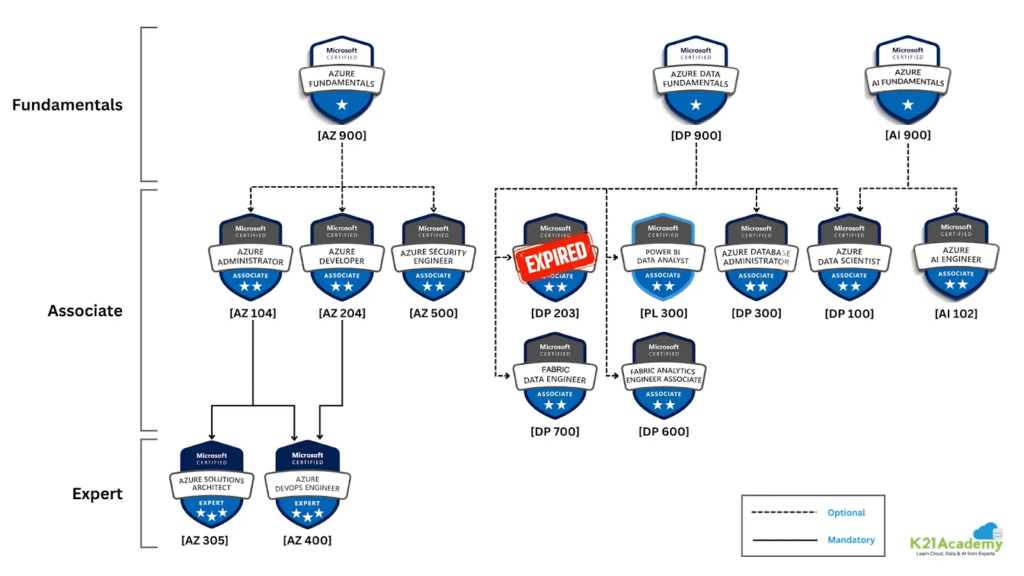
Common Components of a Certification Framework
Here’s how most AI certification paths are structured:
- Tiered levels: Typically include Registered, Silver, Gold, and Strategic tiers, based on a combination of certifications, project experience, and revenue impact. Reflect cumulative training, deployment experience, and business impact.
- Role-Based Learning: Tracks tailored to developer, architect, consultant, or sales personas. This ensures relevant training for the actual work being done.
- Industry Tracks: Especially important in sectors like healthcare or finance where regulatory compliance is non-negotiable.
- Scenario-based testing: Simulates enterprise deployment challenges—like working under compliance restrictions—so partners prove they can deliver under pressure.
- Ongoing renewal: Strong programs require annual or periodic re-certification to keep up with evolving tools, standards, and practices.
Partner Incentives
Incentives are the fuel behind any good partner program. But it’s not just about commissions—it’s about access, trust, and long-term opportunity.
What Top Partners Actually Value
Let’s be real—money matters, but great partner programs go way beyond margins and rebates.
The best incentives help partners win deals, stand out in crowded markets, and feel like true collaborators in product strategy. That means combining financial perks with strategic access and support.
Tangible Incentives That Drive Engagement
Here’s what that typically includes:
- Revenue-based rewards: Volume discounts, rebates, and performance bonuses still matter—especially when tied to measurable outcomes like deployments or renewals.
- Deal registration and protection: So partners aren’t stepping on each other or the vendor’s own reps. This builds trust.
- Market development funds (MDF): Co-branded campaigns and lead generation, ideally with guidance—not just dollars.
- Early access and roadmap previews: Let partners test features, plan services, and shape what’s coming next.
- Sandbox and demo environments: Critical for building proof-of-concepts or customizing AI workflows for clients.
- Co-selling opportunities: Strategic account mapping, joint pitches, and access to enterprise opportunities.
Enterprise Benchmarks
Metrics are what separate marketing fluff from real partner impact in any AI partner program. Let’s talk about what vendors—and customers—actually measure.
What Vendors Measure
Let’s talk about what success really looks like for AI solution partners in solution partner programs.
It’s not just revenue—it’s about whether partners are delivering outcomes that matter to enterprise customers.
Most vendors now track things like:
- Deployment success: Are models going live on time and working as intended?
- Certifications held: Not just how many, but whether they’re current and relevant.
- Use case maturity: Are partners building simple pilots—or scalable, strategic AI use?
- Customer feedback: NPS, CSAT, or even AI usage analytics tied to satisfaction.
- Time-to-value: How long it takes to go from signed deal to real results.
- Innovation velocity: Are partners iterating and improving with each deployment?
Why These Metrics Matter to You
If you’re managing a program, these metrics help you spot where to invest—and where things are falling short. If you’re a partner, they show what it takes to stand out.
Competitive Comparison
Partner programs are not built the same. Here’s a look at how major players stack up, and what stands out about each.
How Leading Programs Stack Up
Let’s look at how some of the top AI vendors are structuring their partner programs—and where they differ.
Some focus on infrastructure and deep learning. Others lean into vertical enablement or application-layer agility. Your choice depends on what you’re building and who you’re building it for.
What Makes CustomGPT.ai a Standout Choice
Here’s a breakdown of a few standout programs:
- CustomGPT.ai: Prioritizes flexibility and co-innovation. Partners get sandbox access, roadmap input, and tools to deploy fully branded, custom AI chatbots fast. It’s built for services teams that want to move fast and deliver high-value AI to clients without needing a PhD in machine learning.
- AWS: Known for technical breadth. Offers a deep menu of certs and partner tracks, but navigating the ecosystem can be overwhelming for new entrants.
- Microsoft: Strong at co-selling, especially if you’re already in the Azure or Dynamics world. Great support for industry-specific AI use cases.
- Google Cloud: Focuses on ML and data analytics. Great if you’re building from the ground up with Vertex AI or TensorFlow.
- IBM: Offers verticalized programs with a big focus on compliance-heavy industries like healthcare, finance, and government.
- NVIDIA: A leader on the infrastructure side. Their partner track supports high-performance AI deployments, especially in computer vision and edge scenarios.
And here’s a table to sum that up:
| Vendor | Strengths | Best For |
| CustomGPT.ai | Fast deployment, partner co-creation, chatbot apps | MSPs, IT consultancies, vertical AI builders |
| AWS | Deep cert ecosystem, massive toolset | Infra-heavy AI projects, cloud-native builds |
| Microsoft | Co-sell, Azure AI, vertical solutions | Enterprise IT providers, regulated industries |
| Google Cloud | ML tooling, analytics, data science focus | Startups, research teams, ML-first orgs |
| IBM | Compliance, sector-specific support | Partners in healthcare, finance, public sector |
| NVIDIA | Edge AI, performance, compute acceleration | Vision, robotics, infrastructure builders |
Challenges & Best Practices
Let’s be honest—these programs aren’t perfect.
Partners burn out on certification fatigue. Some programs make it hard to track ROI. And post-certification engagement? That’s often the weakest link.
The best programs do three things:
- Tailor enablement by role. One-size-fits-all doesn’t work.
- Align support with go-to-market goals. Tech help should match sales priorities.
- Keep incentives real. If partners don’t see value, they’ll disengage.
If you’re running a program, check in with your partners often. Not just at QBRs—between them, too.
FAQs
Frequently Asked Questions
What should an AI solution partner certification path include to prove a partner can deliver?
A strong certification path should prove you can turn client knowledge into a usable AI workflow, not just pass a quiz. Stephanie Warlick, Business Consultant, said, “Check out CustomGPT.ai where you can dump all your knowledge to automate proposals, customer inquiries and the knowledge base that exists in your head so your team can execute without you.” In practice, that means certifications should include tiered levels, role-based learning, scenario-based testing, industry tracks for regulated work, and periodic renewal.
How can you tell if partner enablement materials are actually good enough?
Good partner enablement should help you move from source content to a working deployment quickly and repeatably. Evan Weber, Digital Marketing Expert, said, “I just discovered CustomGPT, and I am absolutely blown away by its capabilities and affordability! This powerful platform allows you to create custom GPT-4 chatbots using your own content, transforming customer service, engagement, and operational efficiency.” In practice, the materials should include live build steps, reusable templates, and guidance that works across multiple client use cases.
What incentives matter more than commissions in an AI solution partner program?
The incentives that matter most usually help you package and deliver repeatable services. Barry Barresi, Social Impact Consultant, wrote, “Powered by my custom-built Theory of Change AIM GPT agent on the CustomGPT.ai platform. Rapidly Develop a Credible Theory of Change with AI-Augmented Collaboration.” That kind of outcome is why strong partner programs pair commissions with co-marketing, technical support, early access, proof assets, and certification benefits that help you turn expertise into billable offers.
What benchmarks actually prove an AI solution partner program is working?
Useful benchmarks show whether partners can launch successfully and create an end-user experience people notice. Bill French, Technology Strategist, said, “They’ve officially cracked the sub-second barrier, a breakthrough that fundamentally changes the user experience from merely ‘interactive’ to ‘instantaneous’.” In practice, track time to first deployment, adoption after launch, response quality, and a customer result partners can cite in sales and renewal conversations.
What enterprise-readiness signals should partners check before joining an AI solution partner program?
Start with enterprise trust signals: SOC 2 Type 2 certification, GDPR compliance, and a policy that customer data is not used for model training. Then look for retrieval-quality evidence, such as a documented RAG accuracy benchmark where CustomGPT.ai outperformed OpenAI. Those checks matter more than a partner badge when you need security, privacy, and answer quality proof for enterprise buyers.
How is an AI solution partner program different from Microsoft-style partner designations?
A Microsoft-style designation is a broad partner label. An AI solution partner program should also verify whether you can deliver real deployments through tiered levels, role-based learning, industry tracks, scenario-based testing, and ongoing renewal. If you are comparing programs, choose the one that best proves client-delivery readiness rather than just ecosystem affiliation.
Conclusion
If you’re building or joining an AI partner program, structure matters. Get the tiers right. Make the incentives real. And track what truly drives business value.
Partner ecosystems aren’t just support systems anymore. They’re the engine behind scalable, compliant, and customer-centric AI deployments.
Get your framework right, and everything else—enablement, adoption, outcomes—gets easier.
Ready to Build Smarter AI Solutions—Together? Join our AI Solution Partner Program and unlock the tools, training, and support to deliver enterprise-grade results.
Make Money With AI
Related Resources
These pages offer more context on how to grow with the CustomGPT.ai partner ecosystem.
- CustomGPT.ai Partnership Program — Explore how the program supports agencies and solution providers looking to build and scale AI offerings with CustomGPT.ai.
- CustomGPT.ai Partner Program — Learn about the benefits, structure, and opportunities available to organizations joining the broader CustomGPT.ai partner network.