How to Build AI Support Agents That Deflect Tickets and Improve CSAT
If your support agents work in Zendesk, this companion guide shows how to build a CustomGPT.ai chatbot for Zendesk from your Help Center and ticket history.
For a side-by-side Zendesk setup comparison, see the CustomGPT.ai Zendesk AI guide.
To compare platform options, review the best customer-service chatbot options for 2026 and map them to your support stack.
This is where AI support agents change the equation. Instead of relying on linear headcount growth or forcing customers through rigid self-service flows, companies can now design AI-driven support systems that reduce ticket volume while improving customer satisfaction. When built correctly, AI support agents don’t replace human teams—they make them dramatically more effective. The result is a support organization that scales with the business instead of holding it back. AI Chatbots Smarter CustomerThe Shift From Ticket Handling to Support Systems
Traditional support models are built around people responding to tickets. That model breaks under rapid growth because tickets are the most expensive output of the system. Modern support works differently. Support is a system designed to help customers succeed. Tickets are a signal that the system failed somewhere upstream. AI makes it possible to redesign that system. Instead of asking, “How do we answer tickets faster?” the better question becomes, “How do we prevent tickets from being created—and resolve the ones that remain with less effort?” This shift is foundational. Without it, AI becomes just another chatbot layered on top of broken workflows.What “Scaling Support” Really Means
If your company is trying to grow 3X, your support volume usually doesn’t grow 3X. It often grows faster. Why?- New customers are unfamiliar customers
- New marketing channels bring lower-intent users
- Increased usage creates more combinations and edge cases
- Revenue growth adds billing complexity
- Frequent product changes create confusion
- Reduce demand by preventing avoidable tickets
- Increase capacity by handling remaining issues faster
The Role of AI in Modern Customer Support
AI support becomes effective when it operates as a system, not a feature. In practice, this means intent detection, knowledge retrieval, and routing must function as one continuous loop. Every customer message updates state, and every response moves the interaction closer to resolution or escalation. What matters most isn’t model size. It’s context. An AI support agent must reason with three types of context at the same time:- Interaction context: conversation history, sentiment, channel
- System context: entitlements, configurations, feature flags
- Knowledge context: documentation, policies, runbooks
What Ticket Deflection Actually Means
Ticket deflection is often misunderstood. It’s not about suppressing tickets or pushing customers away from human help. Real ticket deflection means a customer’s problem is resolved without becoming a case—and stays resolved. That requires proof. Effective deflection systems track:- the customer’s intent
- the content or action served
- whether the customer confirmed resolution
- whether they recontacted later for the same issue
Before adding more channels, map the SaaS support AI integration stack that turns documentation into self-serve answers.
Without this, deflection metrics can look healthy while unresolved demand quietly resurfaces in other channels. High-quality deflection focuses on verified resolution, not raw volume reduction.Designing AI Support Agents as Systems, Not Bots
An AI support agent isn’t a single prompt or chat interface. It’s a purpose-built system with a defined role and clear boundaries. Thinking in terms of AI employees forces clarity. An effective AI support agent has:- a defined job (what it is and isn’t responsible for)
- access to the right data sources
- rules governing when it can resolve and when it must escalate
- measurable success metrics tied to resolution quality
Core Components of an AI Support Agent
Most AI support failures happen due to misalignment between components, not weak models. A reliable architecture separates three layers:- Natural language understanding for intent and entity extraction
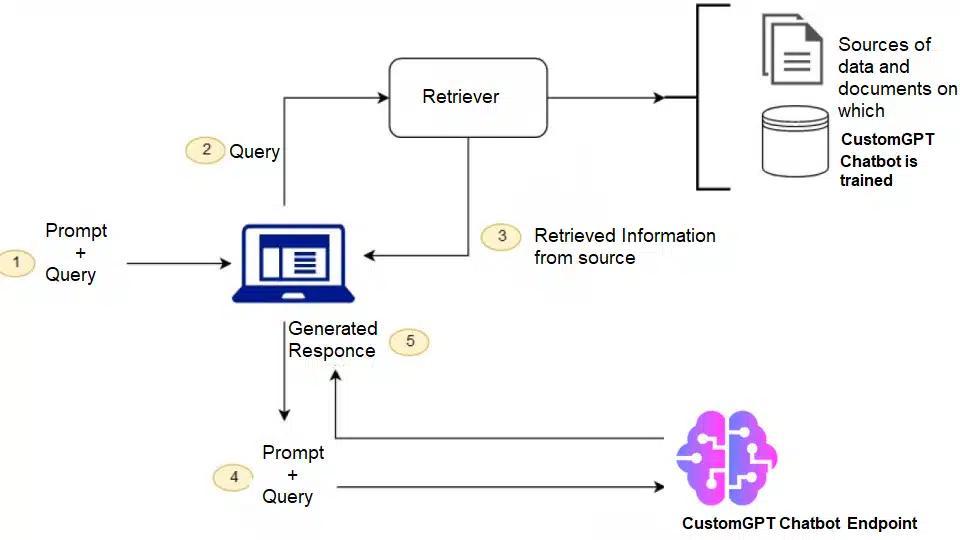
- Retrieval grounded in governed support knowledge
- Policy orchestration that controls routing and escalation
Intent Detection That Actually Works in Production
Intent detection isn’t just classification. It’s reconstructing the customer’s underlying task. Broad labels like “billing” or “technical issue” aren’t enough to drive correct workflows. Operational intent must be specific enough to determine what should happen next. A practical structure includes three passes:- Surface signals: wording, entities, sentiment
- Conversation state: what’s already been attempted
- Operational intent: which workflow should trigger, under which constraints
- clarifying questions
- tighter data requirements
- earlier human handoff
Continuous Learning Through Feedback Loops
The biggest advantage of AI in support isn’t automation—it’s learning at scale. Strong systems capture three feedback channels:- Interaction feedback from customers
- Operator feedback from agent edits and overrides
- Outcome feedback from recontacts, refunds, or churn signals
Implementing AI Across the Support Journey
AI should be wired into the entire support journey, not just live chat. A useful way to structure implementation is across three stages: Pre-contact Reduce demand before a ticket exists.- smarter search
- intent-aware help content
- guided flows that capture required context
- retrieval grounded in live policy
- clarifying questions when context is missing
- controlled escalation when risk is high
- automatic intent and outcome labeling
- structured summaries for agents
- feeding resolved cases into knowledge updates
Knowledge Management as the Real Bottleneck
Most AI support failures aren’t model problems. They’re knowledge problems. If pricing changes, policy updates, or feature launches don’t propagate quickly, trust erodes—regardless of how good the AI sounds. Effective systems separate knowledge into two lanes:- Reference content for audited, slow-changing material
- Delta content for fast updates from releases and incidents
Intelligent Routing and Safe Escalation
Routing isn’t a one-time decision. It’s a live optimization problem. Every turn updates a routing state that blends:- ambiguity
- operational risk
- effort required to resolve
How AI Support Agents Improve CSAT
Customer satisfaction improves when AI behaves like a continuity engine. That means:- remembering prior context
- avoiding repetition
- escalating at the right moment
- helping humans start from understanding
Measuring What Actually Matters
Success isn’t measured inside the chat window alone. Effective teams track:- where the interaction started
- how it ended
- whether the customer came back
- what changed downstream
What AI Support Agent Would You Build First?
As AI support agents become part of everyday operations, they increasingly reflect how teams think about leverage. The question isn’t whether you’ll use AI in support. It’s which AI employee you’ll design first—and how clearly you define its role. Teams that think like builders—designing systems instead of deploying tools—will scale faster, protect CSAT, and create support organizations that grow with the business instead of against it.Frequently Asked Questions
What ticket deflection rate is realistic for an AI support agent?
There is no universal ticket deflection rate because results depend on how repetitive your tickets are, how complete your support content is, and how well escalation rules are designed. A practical way to set expectations is to start with one high-volume issue type, measure AI-contained conversations, escalation rate, and CSAT, then expand once answers stay accurate. Teams usually get the best early results when the agent is grounded in approved help content and deployed where customers get stuck most often.
How do AI support agents improve CSAT without adding headcount?
AI support agents usually improve CSAT by reducing wait time, resolving repetitive questions instantly, and routing harder issues with more context so customers do not have to start over. Evan Weber described the impact this way: “I just discovered CustomGPT, and I am absolutely blown away by its capabilities and affordability! This powerful platform allows you to create custom GPT-4 chatbots using your own content, transforming customer service, engagement, and operational efficiency.” In practice, higher satisfaction comes from faster first responses and fewer dead-end handoffs, not from adding more agents.
How do you stop an AI support agent from giving wrong answers?
Ground the agent in curated support sources, require citation-backed retrieval, and make it ask a clarifying question or escalate when key context is missing. Elizabeth Planet saw that directly: “I added a couple of trusted sources to the chatbot and the answers improved tremendously! You can rely on the responses it gives you because it’s only pulling from curated information.” The RAG accuracy benchmark also shows CustomGPT.ai outperforming OpenAI, which supports using retrieval-first support workflows instead of relying on a generic model to guess.
Which support channel should you automate first for ticket deflection?
Start with the text channel that has the most repetitive questions and the strongest documentation behind it, which is usually website chat or help-center search. Those channels are easier to ground, monitor, and improve before you expand to email, API workflows, or other touchpoints. The goal is not to place AI everywhere at once. It is to deploy it where customers get stuck most often, validate containment and escalation quality, and then extend the same knowledge base to additional channels.
Can AI support agents handle guided troubleshooting and product-choice questions, or only simple FAQs?
Yes. AI support agents can handle guided troubleshooting and product-fit conversations when the content is structured around decision points instead of isolated FAQ entries. Stephanie Warlick explained the broader use case this way: “Check out CustomGPT.ai where you can dump all your knowledge to automate proposals, customer inquiries and the knowledge base that exists in your head so your team can execute without you.” In practice, the agent should narrow options step by step, cite the source behind the recommendation, and escalate if it lacks the account or system context needed to finish the request safely.
How long does it take to launch an AI support agent?
There is no fixed launch timeline because speed depends on how organized your support content is and how much testing you do before rollout. Teams usually move fastest when they start with existing docs, ingest trusted sources, test against real support conversations, set escalation rules, and launch in one channel first. The Kendall Project highlighted the value of iteration: “We love CustomGPT.ai. It’s a fantastic Chat GPT tool kit that has allowed us to create a ‘lab’ for testing AI models. The results? High accuracy and efficiency leave people asking, ‘How did you do it?’ We’ve tested over 30 models with hundreds of iterations using CustomGPT.ai.” The main lesson is that fast launches come from focused testing, not from skipping validation.
Will customer support data be used to train the AI model?
No. Support data is not used for model training, and the service is GDPR compliant. It is also SOC 2 Type 2 certified, which means its security controls have been independently audited. That combination matters when your agent needs access to private support docs, policies, or internal runbooks.
Related Resources
This guide pairs well with a deeper look at how AI support agents use context to improve every interaction.
- Context-Aware Agents — Learn how agents that retain and apply relevant context can deliver more accurate, personalized support experiences with CustomGPT.ai.
For a Zendesk-specific build, see how to create a CustomGPT.ai support agent for Zendesk using ticket history and Help Center articles.