
B2B affiliate programs are emerging as a powerful growth channel in 2025.
Unlike the quick, transaction-driven nature of B2C, B2B affiliates focus on building trust, delivering specialized content, and nurturing decision-makers through longer sales cycles.

Make Money With AI
Join our Partner Programs!
Boost your reputation, drive revenue and grow your business with CustomGPT.ai.
The payoff is significant: research shows that B2B affiliate programs generate higher customer lifetime value (LTV) and foster stronger, recurring revenue streams compared to B2C.
For affiliates seeking long-term, scalable opportunities, B2B programs offer strategic advantages that go far beyond short-term payouts.
What Is Affiliate Marketing? (Core Concepts)
Affiliate marketing is a performance-based model where affiliates earn commissions for driving outcomes such as leads, sign-ups, or sales. While the mechanics are similar in both B2C and B2B, the execution is very different.
- B2C Affiliate Marketing relies on emotional triggers, impulse buying, and broad-reach tactics like product reviews or discount codes.
- B2B Affiliate Marketing requires education, trust, and content tailored to multiple stakeholders—CFOs, IT managers, and executives—each with unique priorities.
The complexity of B2B sales cycles also demands advanced tracking systems. Multi-touch attribution, for example, ensures that affiliates are rewarded not just for the final conversion but for their role in nurturing leads across multiple touchpoints.
As Dr. Sarah Lin, Senior Analyst at Forrester Research, notes:
“The complexity of B2B sales cycles demands a nuanced attribution model that reflects the collaborative nature of decision-making.”
This shift transforms affiliates from middlemen into strategic partners—integral extensions of the sales process rather than one-off promoters.
Key Differences Between B2B and B2C Affiliate Programs
While B2B and B2C affiliate programs share the same foundation—affiliates promoting products in exchange for commissions—their dynamics diverge sharply.
Understanding these differences is essential for affiliates who want to position themselves in the more lucrative and sustainable B2B space.
1. Audience and Decision-Making
- B2C: Targets individuals making quick, emotional purchases (clothing, gadgets, beauty products). Decisions are often impulsive and involve little research.
- B2B: Involves multiple stakeholders, from CFOs to IT managers. Decisions are deliberate, data-driven, and often require approval from several departments.
2. Content Strategy
- B2C affiliates rely on short-form, visually engaging content like Instagram posts, TikTok videos, and product reviews. The goal is rapid persuasion.
- B2B affiliates produce in-depth, educational materials—white papers, ROI calculators, webinars, or industry-specific case studies. These resources demonstrate measurable value and build trust with decision-makers.
This content-driven approach transforms B2B affiliates into educators and advisors rather than product promoters.
3. Sales Cycle
- B2C: Typically short, sometimes only minutes from click to conversion.
- B2B: Can stretch over weeks or months. Affiliates play a role throughout the journey, from initial awareness to final vendor selection.
Because of this length, multi-touch attribution is vital—ensuring affiliates are compensated for influencing decisions at every stage, not just the last click.
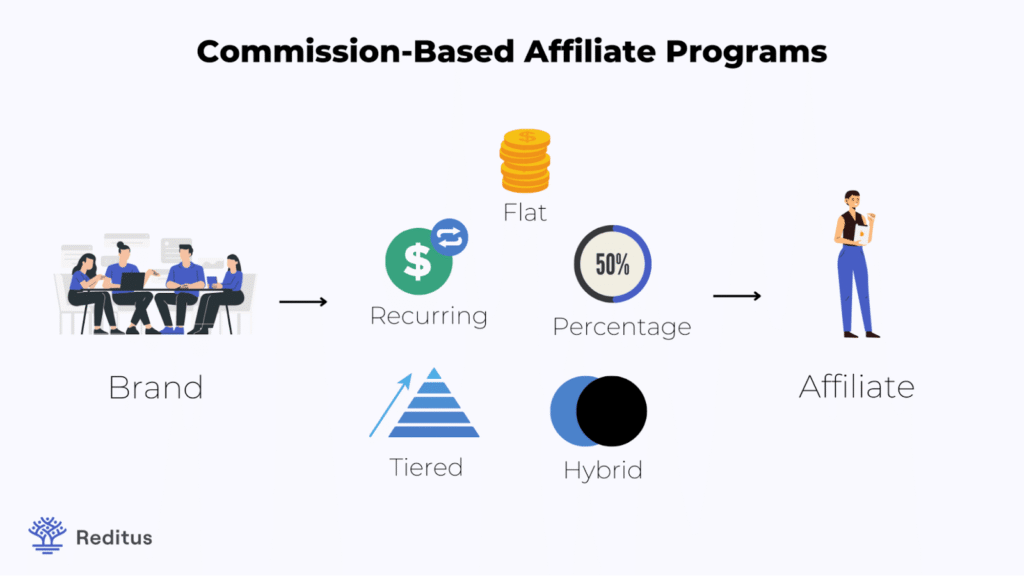
4. Commission Structures
- B2C: Commissions are often small, tied to one-time purchases with low margins.
- B2B: Payouts are higher, often tied to recurring revenue models such as SaaS subscriptions. This creates long-term income streams for affiliates.
Forrester’s 2025 research shows that B2B affiliate programs yield 22% higher customer lifetime value compared to B2C, underscoring the strategic advantage.
This distinction makes B2B affiliate programs not only more profitable but also more resilient—driven by expertise, trust, and long-term relationships rather than short-lived consumer trends.
Advantages of B2B Affiliate Programs
B2B affiliate programs deliver advantages that go far beyond higher commissions. Their strength lies in the combination of long-term value, strategic alignment, and sustained partnerships.
For affiliates looking to build reliable revenue streams, the benefits of B2B stand out clearly when compared to B2C.
Higher Customer Lifetime Value (LTV)
Unlike consumer purchases that often end after a single sale, B2B relationships typically involve recurring revenue—such as software subscriptions or ongoing services—translating into longer-lasting affiliate payouts.
Affiliates benefit from sustained incentives when customers stay engaged.
According to Forrester’s analysis, business buyers increasingly favor partner-driven ecosystems, with 67% anticipating their indirect (partner-influenced) revenue to grow by over 30% year-over-year.
Recurring Revenue and Retention
In many B2B industries, clients commit to annual or multi-year contracts. This creates a predictable revenue stream for affiliates, where one successful referral can pay dividends for years.
By focusing on customer retention rather than volume, affiliates become true growth partners.
Higher Payouts and Deeper Relationships
B2B affiliate programs often offer higher commission payouts tied to recurring revenue and strategic relationships—not just one-time transactions.
Expert insight notes that “B2B models tend to involve higher payouts, less volume and flat fees,” while B2C relies on lower rates at higher volume.
This structure aligns with meaningful, long-term engagement and makes B2B partnerships more resilient and intentional.
Strategic Partnership Over Transaction
B2B affiliates serve as trusted advisors rather than simple promoters. They offer value-driven content—like ROI calculators and case studies—that resonates with decision-makers over time.
CustomGPT.ai, HubSpot and Salesforce lead by example, supporting affiliates with tools and content that emphasize sales enablement and thought leadership.
By contrast, promotions based solely on discounts or product pushes (common in B2C) seldom build lasting authority or foster sustained action.
AI as an Enabler in B2B Affiliate Programs
Complex B2B models can be optimized through AI—especially for personalization and analytics.
Forrester’s 2025 content research shows B2B teams investing in content operational excellence, including generative AI, are reaping sustainable performance gains.
Introducing platforms like CustomGPT.ai, which provide AI-generated personalization and real-time tracking, enhances the effectiveness of affiliate partnerships in nuanced B2B environments.
Why Relationships Drive B2B Affiliate Success
Unlike B2C, where affiliates often prioritize quick wins, B2B affiliate marketing thrives on long-term partnerships.
Affiliates aren’t just middlemen—they become trusted advisors who align with vendors’ goals, deliver specialized content, and nurture decision-makers across extended sales cycles.
Long-Term Contracts Build Trust
B2B affiliate programs often formalize relationships through multi-year agreements. These contracts create stability, allowing affiliates to deeply understand the vendor’s product and audience. Over time, this trust translates into higher conversion rates.
Salesforce exemplifies this with its partner ecosystem, which generated $6.19 billion in revenue in 2024, fueled by affiliates and partners who co-developed tailored solutions for enterprise clients (Salesforce Annual Report, 2024).
Affiliates as Strategic Partners
The role of affiliates in B2B is closer to co-creation than promotion. Instead of pushing discount codes, affiliates co-build campaigns that resonate with multiple stakeholders—CFOs, IT managers, and procurement teams—each with unique priorities.
The Role of Technology in Strengthening Relationships
Sustaining these relationships requires robust tracking and content personalization. Without accurate attribution and relevant content, affiliates risk disengagement.
This is where AI-powered platforms like the CustomGPT.ai play a critical role.
By providing affiliates with real-time analytics, dynamic content tools, and recurring commission structures, CustomGPT.ai transforms relationships into growth engines—helping partners scale while building long-term trust
Challenges in B2B Affiliate Marketing
B2B affiliate programs offer higher rewards, but they also come with unique challenges that require affiliates to take a more strategic approach. Compared to B2C, success in B2B often demands more time, deeper expertise, and the ability to adapt to complex buyer dynamics.
- Longer Sales Cycles: B2B decisions rarely happen overnight. Affiliates must be prepared for longer timelines, where leads may take weeks or months to convert. Patience, consistent engagement, and content that nurtures trust at every stage are essential.
- Multi-Stakeholder Decision-Making: Unlike B2C, where one person often decides, B2B purchases involve several stakeholders with different priorities. A financial leader might care about cost savings, while an IT manager may focus on security or integration. Affiliates need to address each perspective with tailored resources.
- Higher Content Demands: Quick reviews and discount codes are rarely enough in B2B. Affiliates are expected to provide educational, role-specific content—white papers, ROI analyses, or compliance checklists—that demonstrate expertise and directly support the buying process.
- Attribution Complexity: Because multiple interactions shape a B2B sale, traditional last-click attribution fails to capture an affiliate’s full contribution. Affiliates may influence a prospect early in the journey but lose recognition at the final step. Without advanced attribution systems, this creates gaps in how success is measured and rewarded.
B2B affiliate marketing requires affiliates to be patient, data-driven, and capable of creating content that speaks to multiple stakeholders. The rewards are greater, but so are the demands
Launching a Successful B2B Affiliate Program
Launching a B2B affiliate program isn’t about volume—it’s about building the right partnerships, enabling affiliates with resources, and aligning incentives with long-term business goals.
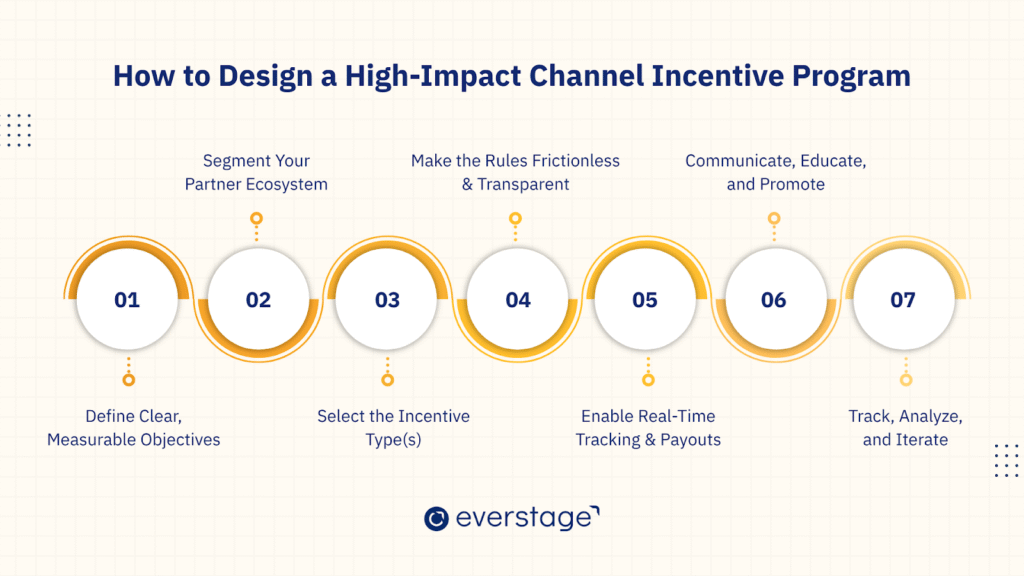
Here’s a step-by-step approach to set up a affiliate program that drives sustainable growth.
Step 1: Define Clear Objectives
Before recruiting affiliates, clarify what success looks like. Is the goal lead generation, new client acquisition, or expanding into a specific industry?
Defining measurable objectives ensures the program stays aligned with business strategy rather than chasing short-term results.
Step 2: Identify the Right Partners
Not all affiliates are equal in B2B. The most effective partners are those with domain expertise, credibility, and networks within your target market.
Instead of prioritizing reach, look for affiliates who already engage with the types of decision-makers you want to influence.
Step 3: Provide Comprehensive Enablement
Affiliates can only succeed if they understand the product and can communicate its value to multiple stakeholders.
Providing role-specific resources—such as ROI calculators for finance teams or integration guides for IT managers—helps affiliates create persuasive, relevant content.
Step 4: Build Flexible Commission Structures
B2B cycles are long, so affiliates need motivation that lasts. Instead of one-time payouts, consider recurring commissions tied to subscription renewals or upsells.
Flexible structures reward affiliates for the long-term impact they create, not just the final conversion.
Step 5: Implement Accurate Tracking
Traditional last-click attribution won’t work in B2B. Invest in tracking systems that recognize contributions across the buyer journey.
This ensures affiliates are fairly compensated and motivated to keep supporting prospects throughout extended decision cycles.
Step 6: Foster Ongoing Communication
Affiliates perform best when treated as strategic partners, not just promoters. Regular check-ins, strategy updates, and feedback loops build trust and help affiliates stay aligned with evolving business goals.
Bottom line: A successful B2B affiliate program is built on precision, partnership, and patience. By recruiting the right partners and equipping them with resources and fair incentives, businesses can create an engine for long-term, high-value growth.
Best Practices for Partner Support and Engagement
Launching a B2B affiliate program is only the first step. To keep affiliates motivated and effective, businesses must invest in ongoing support, training, and communication.
In B2B, where sales cycles are long and complex, strong partner engagement often determines whether a program succeeds or stalls.
Provide Role-Specific Resources
Affiliates need more than generic marketing materials. Equip them with role-specific enablement tools that align with the concerns of different stakeholders:
- ROI calculators or financial models for CFOs.
- Security or compliance guides for IT managers.
- Case studies and customer success stories for executives.
By tailoring resources to each audience, you help affiliates speak directly to the decision-makers who matter most.
Offer Continuous Training
Products evolve, industries shift, and buyer expectations change. Affiliates who receive ongoing training—through webinars, certification programs, or playbooks—are better prepared to adapt.
Training should emphasize not just product knowledge but also how to position solutions within complex buyer journeys.
Maintain Regular Communication
Affiliates thrive when they feel like valued partners. Schedule regular check-ins, share updates on product changes, and invite affiliates into strategic discussions. This fosters alignment and ensures affiliates are always working with the latest insights.
Use Data to Strengthen Engagement
Performance analytics shouldn’t just measure results—they should guide collaboration. Share insights with affiliates about which campaigns perform best, which industries respond most, and where opportunities exist.
This creates a feedback loop that benefits both sides.
Recognize and Reward Contributions
Beyond commissions, acknowledgment matters. Highlight top-performing affiliates, celebrate milestones, and offer exclusive opportunities. Recognition builds loyalty and motivates affiliates to continue investing effort into the partnership.
Supporting affiliates is about more than onboarding—it’s about nurturing a community of trusted advisors who feel equipped, valued, and aligned with your goals. When done well, this transforms affiliates into long-term growth partners.
Case Studies and Real-World Applications
The effectiveness of B2B affiliate programs becomes clear when looking at how leading companies structure their partnerships. These real-world examples highlight the importance of long-term contracts, specialized content, and strong partner support.
CustomGPT.ai: Building Sustainable Affiliate Partnerships
CustomGPT.ai has designed its partner program to reward affiliates for long-term impact rather than short-term promotions.
With a tiered commission structure of up to 20% recurring revenue for two years, the program aligns naturally with the extended sales cycles common in B2B markets.
Affiliates—ranging from agencies and consultants to industry influencers—are supported with marketing assets, performance reporting, and direct access to a partner team.
By combining recurring payouts with structured enablement, CustomGPT.ai positions its affiliates as trusted advisors who can guide businesses through the adoption of AI solutions.
This approach not only strengthens partner relationships but also creates predictable, sustainable revenue streams that extend well beyond the initial referral.
Salesforce: Scaling Through Ecosystem Partnerships
Salesforce has built one of the strongest partner ecosystems in the B2B world. Instead of treating affiliates as one-time promoters, the company empowers them to co-develop tailored solutions for enterprise clients.
This model deepens relationships, enhances customer satisfaction, and generates significant recurring revenue.
By positioning affiliates as strategic extensions of the sales team, Salesforce demonstrates how B2B programs can create value far beyond the initial referral.
HubSpot: Equipping Affiliates With Tools That Educate
HubSpot’s affiliate program emphasizes educational content. Partners are given resources like ROI calculators, case studies, and templates to help them engage decision-makers. Rather than pushing discounts, HubSpot affiliates focus on showing how its tools improve efficiency and drive measurable results.
This strategy reflects a key B2B principle: affiliates succeed when they act as advisors, not advertisers.
SaaS Companies: Leveraging Thought Leadership
Beyond the big names, SaaS providers across industries use affiliates to deliver thought leadership. Webinars, industry-specific guides, and role-based content help affiliates position products as solutions to complex challenges.
This approach builds trust and accelerates decision-making across multi-stakeholder buying groups.
Lessons for Affiliates
These cases illustrate a few common threads:
- Long-term partnerships outperform short-term promotions.
- Affiliates who deliver educational, data-driven content build stronger trust with decision-makers.
- Tools and resources that simplify complex buying decisions make affiliates indispensable.
For affiliates considering where to invest their efforts, these examples show that B2B programs reward those who commit to depth, not just reach.
Emerging Trends in B2B Affiliate Marketing
B2B affiliate marketing is evolving rapidly as businesses adapt to longer sales cycles, complex buyer journeys, and the demand for measurable outcomes. Several trends are reshaping how affiliates create value and how programs structure incentives.
AI-Driven Personalization
Artificial intelligence is transforming affiliate marketing by enabling hyper-personalized content. Instead of relying on static resources, affiliates can use AI tools to generate tailored materials for different stakeholders—ROI projections for finance leaders, integration guides for IT teams, or compliance checklists for legal departments.
This adaptability ensures relevance across the entire decision-making process and strengthens trust.
Performance-Based Influencer Partnerships
Influencers in B2B are less about mass reach and more about domain expertise. Industry consultants, analysts, and thought leaders are increasingly partnering with companies to co-create webinars, case studies, and research-backed content.
Unlike traditional endorsements, these collaborations build credibility and foster deeper engagement with highly targeted audiences.
Advanced Attribution Models
As buying journeys become more complex, companies are investing in multi-touch attribution to fairly compensate affiliates for their influence across different stages of the funnel.
This shift addresses one of the biggest challenges in B2B programs—ensuring that affiliates who nurture leads early are rewarded, not just those who close the final step.
Frequently Asked Questions (FAQs)
What makes B2B affiliate programs different from B2C?
B2B programs focus on longer sales cycles, multiple stakeholders, and higher-value contracts. Affiliates act more like trusted advisors, providing educational content and guidance, while B2C often relies on quick, transactional sales.
Why are recurring commissions important in B2B affiliate marketing?
Recurring commissions align with subscription and long-term service models common in B2B. They reward affiliates not just for one-time sales but for nurturing client relationships that generate revenue over months or even years.
How can affiliates build trust with B2B audiences?
Consistency and transparency are key. Trust comes from creating value-driven, role-specific content—like ROI calculators, compliance guides, or technical deep dives—that addresses real decision-maker concerns.
What tools help affiliates succeed in B2B programs?
Analytics platforms, CRM integrations, and AI-driven content tools help affiliates tailor campaigns, track performance, and demonstrate their impact across the buyer journey. These tools ensure relevance and fair attribution in complex sales cycles.
Conclusion
B2B affiliate programs offer greater rewards than their B2C counterparts, but they demand patience, precision, and partnership.
Affiliates who can deliver tailored content, support complex decision-making, and embrace advanced attribution models will find themselves well-positioned in this evolving landscape.
The future of B2B affiliate marketing lies not in quick wins, but in building sustainable, trust-based relationships that generate long-term value.
Ready to Grow with a Modern B2B Affiliate Program?
If you’re looking for a program designed with these principles in mind, the CustomGPT.ai Partner Program is an excellent place to start.
With tiered recurring commissions, structured support, and resources built for long-term engagement, it equips affiliates to succeed in today’s B2B environment.