
Becoming an AI Partner: Expanding Services & Wallet Share in 2025
Becoming an AI partner unlocks access to cutting-edge tools and expert guidance that can transform your service portfolio. This strategic alliance positions your agency at the forefront of innovation and growth.

Make Money With AI
Aligning with reputable AI vendors allows you to integrate advanced solutions smoothly into existing offerings. Clients gain confidence from proven expertise and seamless implementation.
Expanding services into areas like conversational agents, predictive analytics, and intelligent automation opens new revenue avenues. Your agency captures more wallet share by delivering comprehensive, value-driven solutions.
In a competitive landscape continuous learning and collaboration are key to staying ahead. Embracing AI partnerships empowers your team to lead market trends and exceed client expectations.
Defining AI Partnerships in Professional Services
An effective AI partnership in professional services hinges on aligning AI capabilities with the nuanced demands of client-centric workflows. This isn’t just about deploying algorithms; it’s about embedding AI into the operational fabric to enhance decision-making and service delivery.
One critical technique is co-developing AI models with vendors, ensuring that domain-specific expertise informs every stage of the AI lifecycle. For instance, a financial services firm collaborating with an AI partner might integrate predictive analytics into client portfolio management.
By iteratively refining these models based on real-world performance, the partnership evolves from a transactional relationship to a dynamic, value-driven collaboration.
However, challenges arise when balancing customization with scalability. While bespoke solutions address unique client needs, they can complicate deployment across broader use cases.
This tension underscores the importance of interoperability, ensuring AI systems integrate seamlessly with existing tools and processes.
Ultimately, the key lies in fostering a partnership culture that prioritizes transparency, iterative improvement, and measurable outcomes, transforming AI from a tool into a strategic enabler.
The Strategic Importance of AI in 2025
AI is now a strategic imperative that empowers organizations to optimize operations, enhance customer experiences, and rapidly develop new business models for competitive growth.
- Competitive differentiation through unique, AI-powered offerings
- Operational efficiency via automation of repetitive tasks and process optimization
- Personalized customer experiences enabled by real-time data analysis
- Data-driven decision making with predictive insights for better outcomes
- Creation of new revenue streams through innovative AI services and products
- Enhanced risk management and compliance with continuous monitoring
- Increased organizational agility, allowing rapid adaptation to market changes
Unlocking New Revenue Streams Through AI
AI is transforming revenue generation by enabling businesses to monetize capabilities that were previously untapped or underutilized. Organizations can leverage advanced data analytics to uncover new value streams and drive growth.
One transformative approach is using generative AI to produce scalable, high-quality content and code that can be offered as standalone services. This strategy reduces production costs and opens entirely new revenue channels.
AI-powered managed services introduce recurring income models by using real-time data to anticipate client needs and ensure operational continuity. Clients benefit from proactive solutions while providers secure long-term contracts.
AI goes beyond simple automation to redefine value creation through personalized offerings and dynamic pricing. Businesses must rethink their revenue strategies to fully capitalize on AI’s innovative potential.
AI-Driven Analytics and Automation
AI-driven analytics focuses on building systems that continuously learn and adapt to reveal new revenue opportunities. Integrating predictive analytics with real-time data streams lets businesses anticipate customer needs and marketing AI shifts with precision.
Dynamic feedback loops enable AI models to refine themselves based on actual outcomes. This approach keeps predictions accurate as conditions change and market dynamics evolve.
The success of these systems relies on high-quality data inputs and robust algorithms. Contextual factors like regional market behavior and seasonal trends must be accounted for to maintain performance.
Embedding adaptive analytics into daily operations streamlines decision making and unlocks hidden revenue streams. By evolving alongside the business, these systems redefine how value is created.
Co-Selling with AI Vendors: Practical Insights
Co-selling with AI vendors requires a shared operational framework that leverages each partner’s strengths in AI co-selling partnerships. This approach ensures that sales efforts are coordinated and efficient.
Data interoperability is essential for unlocking the full potential of vendor tools. Seamless integration into existing systems prevents bottlenecks and drives sales productivity.
AI vendors often provide strategic guidance that complements technical solutions. Their market expertise helps refine go-to-market strategies and enhance client engagement.
When co-selling, businesses can identify high-value opportunities more effectively and accelerate deal closures. This collaborative model fosters scalable innovation and a sustainable competitive edge.
Mechanics of Co-Selling Models
Co-selling models thrive on real-time data synchronization to ensure vendor and partner teams operate from a unified information set and maintain strategic alignment. This process begins with CRM interoperability and continuous data validation to prevent discrepancies.
Dynamic feedback loops refine co-selling strategies by incorporating performance metrics into ongoing decision making. Implementing shared dashboards and automated reporting tools fosters transparency and cohesive collaboration between partners and vendors.
Post-Deployment Support and Resources
Post-deployment support is crucial for AI partnerships to ensure systems adapt to evolving client needs and maintain peak performance. Continuous engagement through proactive updates and iterative improvements prevents underperformance and fosters long-term success.
- Establish structured feedback loops to integrate user input and performance metrics into ongoing model refinement
- Provide collaborative tuning and regular maintenance to keep AI solutions aligned with changing requirements
- Offer training resources and co-development opportunities to empower clients in managing their AI systems
- Share expertise and tools to build client capability and reduce dependency
- Schedule periodic health checks and performance audits to anticipate issues and plan upgrades
Resource Sharing and Continuous Optimization
Resource sharing in post-deployment AI support is about creating a collaborative framework where vendors and clients jointly evolve the system. This approach keeps AI solutions adaptable and aligned with changing business needs.
Establishing shared performance dashboards provides real-time visibility into key metrics and highlights trends and anomalies. Both parties can use these insights to make immediate adjustments and drive continuous improvement.
Consistent data formats and protocols are essential to ensure that shared insights remain clear and actionable. Standardized pipelines prevent fragmentation and support efficient implementation of updates.
Regular knowledge-sharing sessions and co-development initiatives foster a culture of shared accountability and innovation. By working together on feature enhancements and optimizations, vendors and clients maintain long-term alignment and trust.
Maintaining Credibility and Trust with Enterprise Buyers
Enterprise buyers demand transparency, reliability, and alignment with their strategic goals when choosing AI partners. Credibility serves as the foundation for strong, long-lasting relationships.
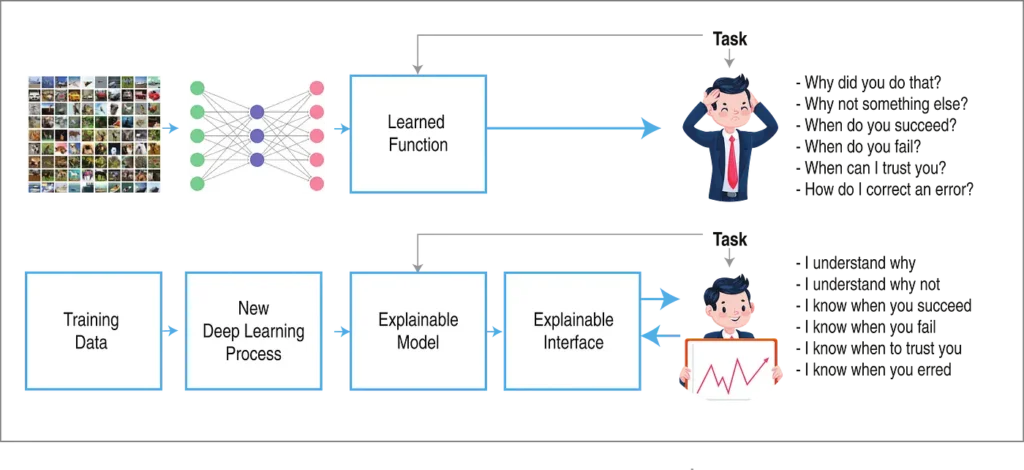
Embedding explainable AI empowers clients to understand how decisions are made and builds confidence in system outputs. This clarity helps reduce disputes and fosters a collaborative atmosphere.
Clear communication about AI limitations and error margins is essential to counteract misconceptions about infallibility. Demonstrating accountability through honesty strengthens trust.
Trust grows when AI amplifies human expertise and supports decision makers. Enterprises feel empowered when technology complements rather than replaces their teams.
Balancing AI with Human Expertise
Position AI as a collaborator that amplifies human expertise rather than replaces it. Customgpt.ai’s assistant integrates seamlessly into workflows, combining AI suggestions with expert review and adaptive oversight to mitigate risks and build trust.
- Position AI as a collaborative partner alongside domain experts to contextualize insights and improve decision making
- Implement dual layer validation so that AI outputs are systematically reviewed by specialists before deployment
- Adopt adaptive oversight frameworks that dynamically adjust the level of human involvement based on task complexity and risk
- Apply minimal oversight for routine tasks like data aggregation and deeper expert engagement for high-stakes strategic decisions
- Foster continuous feedback loops and shared accountability between AI systems and human teams to sustain innovation and trust
Frequently Asked Questions
What does an AI partner program mean for a firm that already sells services?
For a services firm, an AI partner program lets you turn existing work into AI-enabled offers instead of creating a completely new business line. Common examples include conversational agents, predictive analytics, and intelligent automation added to research, support, advisory, or client delivery. Barry Barresi, a Social Impact Consultant, described one practical use case: “Powered by my custom-built Theory of Change AIM GPT agent on the CustomGPT.ai platform. Rapidly Develop a Credible Theory of Change with AI-Augmented Collaboration.” In practice, clients usually buy a better, faster version of a service they already need.
Which recurring revenue streams can an AI partner add?
Recurring revenue usually comes from ongoing AI service delivery rather than a one-time build. Agencies can retain clients to keep knowledge sources current, monitor conversations, refine answers, and expand successful assistants into new workflows. That fits the emphasis on continuous learning, iterative improvement, and measurable outcomes. Stephanie Warlick, a Business Consultant, pointed to the kinds of repeatable use cases that support ongoing work: “Check out CustomGPT.ai where you can dump all your knowledge to automate proposals, customer inquiries and the knowledge base that exists in your head so your team can execute without you.”
Do agencies need an in-house AI team to join an AI partner program?
Not always. A no-code chatbot builder, multi-source knowledge ingestion, and an OpenAI-compatible API mean you can start without building a large in-house machine learning team first. Your main responsibilities are usually choosing the use case, organizing trusted source content, setting guardrails, and reviewing outputs. Evan Weber highlighted the practical appeal of that model: “I just discovered CustomGPT, and I am absolutely blown away by its capabilities and affordability! This powerful platform allows you to create custom GPT-4 chatbots using your own content, transforming customer service, engagement, and operational efficiency.”
How much ongoing work should an agency expect after an AI solution goes live?
After launch, the work usually shifts from building to optimization. Teams typically update source content, review analytics and conversation patterns, improve interoperability with existing tools, and expand strong use cases into more departments or client accounts. Performance tuning also matters because response speed affects adoption. Bill French, a Technology Strategist, said, “They’ve officially cracked the sub-second barrier, a breakthrough that fundamentally changes the user experience from merely ‘interactive’ to ‘instantaneous’.”
Why does hands-on partner experience matter when choosing an AI vendor?
Experience matters because AI partnerships work best when the vendor supports smooth implementation, ongoing collaboration, and real integration into client workflows, not just software access. In professional services, strong partnerships balance customization with scalability and improve solutions iteratively based on real-world use. Dan Mowinski, an AI Consultant, explained why proven experience carries weight: “The tool I recommended was something I learned through 100 school and used at my job about two and a half years ago. It was CustomGPT.ai! That’s experience. It’s not just knowing what’s new. It’s remembering what works.”
What should agencies check before choosing an AI partner for enterprise clients?
For enterprise clients, check answer quality, security controls, compliance, and deployment flexibility first. One benchmark states that CustomGPT.ai outperformed OpenAI in RAG accuracy; the platform is also SOC 2 Type 2 certified, GDPR compliant, and states that customer data is not used for model training. You should also verify citation support, integration options, and deployment methods such as API, embedded widgets, live chat, or search bar so the solution fits the client’s environment.
Conclusion
Becoming an AI partner empowers firms to expand services with cutting-edge capabilities and capture more wallet share. CustomGPT.ai’s Solutions Partner program shows how agencies can leverage vendor expertise and co-development to deliver AI-driven solutions without building in-house teams.
Structured revenue-share models, security and compliance frameworks, and seamless onboarding drive scalable growth and client trust. CustomGPT.ai’s real-time analytics and adaptive oversight enable continuous resource sharing and transparent co-selling.
Ultimately, strategic AI alliances transform agencies into innovators who not only meet but anticipate enterprise needs. Embracing these partnerships today positions your firm to lead the market and unlock new avenues of value, discover how to join CustomGPT.ai’s Solutions Partner program.




Related Resources
This guide expands on the service models and opportunities surrounding AI partnerships.
- AI Solution Agencies — Explore how AI-focused agencies deliver implementation, strategy, and support services that complement a CustomGPT.ai partner offering.