
Affiliate marketing has become one of the most approachable ways to earn income online, and 2025 is shaping up to be an especially good year for newcomers.
The best affiliate programs for beginners in 2025 emphasize transparency, flexibility, and accessibility — allowing anyone to start promoting products they trust and earn commissions for every successful referral.

Make Money With AI
Join our Partner Programs!
Boost your reputation, drive revenue and grow your business with CustomGPT.ai.
Unlike a few years ago, you no longer need a website or large audience to get started. Social platforms, content-sharing sites, and simple affiliate tools have made participation easier than ever.
As long as you can connect people with useful solutions, there’s an opportunity to grow.
In this guide, we’ll explore the best affiliate programs for beginners in 2025, including those ideal for creators who want to start without a website.
Why 2025 Is the Best Year for Beginners to Start Affiliate Marketing
The affiliate landscape in 2025 offers beginners more opportunity and flexibility than ever before. Advancements in AI tools, user-friendly dashboards, and transparent tracking systems have lowered the learning curve that once limited newcomers.
Social media and content platforms now serve as full-fledged marketing channels—allowing affiliates to promote products through short-form videos, tutorials, or newsletters without maintaining a traditional website. This accessibility means anyone with a smartphone and consistent content can participate.
At the same time, modern affiliate networks emphasize education, fraud prevention, and performance analytics, helping beginners understand what drives results instead of relying on guesswork.
The combination of low entry barriers and reliable technology makes 2025 a standout year to start building passive income through digital partnerships.
Whether you’re exploring the best affiliate programs for beginners 2025 or searching for affiliate programs for beginners without a website, the key advantage today lies in simplicity—start small, stay consistent, and let data guide your growth.
What Makes an Affiliate Program Ideal for Beginners
Choosing the right affiliate program is the foundation of long-term success. Not all programs are designed with beginners in mind—some require high traffic, prior sales, or complex setup.
Understanding what makes a program beginner-friendly helps you start strong and avoid frustration.
1. Simple Sign-Up and Fast Approval
Beginner-friendly affiliate programs make it easy to get started without needing an established audience or website.
- Quick registration and minimal documentation
- No traffic or sales history required
- Clear onboarding instructions and tutorials
Such accessibility ensures new affiliates can start promoting products within hours, not weeks.
2. Transparent Tracking and Reporting
A good program provides clear visibility into your clicks, conversions, and commissions.
- Real-time dashboards and analytics
- Accurate cookie tracking
- Detailed conversion reports
Transparency helps beginners understand which campaigns perform best and how to optimize for higher earnings.
3. Low Payout Thresholds
Programs that pay out smaller balances (e.g., $10–$50) make it easier for new affiliates to see early results. This builds confidence and motivation while reinforcing consistent effort.
4. Reliable Support and Learning Resources
Beginner-focused networks often include dedicated support channels and knowledge bases.
- Step-by-step video tutorials
- Live chat or email support
- Educational webinars or community forums
Having accessible help reduces the trial-and-error phase for first-time marketers.
5. Fair Commissions and Realistic Expectations
While high commissions are appealing, programs with stable, transparent structures are more sustainable.
- Recurring commissions or tiered rewards
- Clear payment schedules
- Honest earning potential
The best affiliate programs for beginners 2025 balance fair payouts with credibility and consistent performance.

Top 10 Best Affiliate Programs for Beginners in 2025
Affiliate marketing in 2025 thrives on accessibility, transparency, and relevance. Whether you’re creating content, sharing tools, or building a side income stream, these programs offer a balance of easy setup, reliable payouts, and valuable products.
Below are ten of the best affiliate programs for beginners in 2025, including several that work perfectly without a website.
| Affiliate Program | Best For | Commission Type | Cookie Duration | Website Required |
| CustomGPT.ai | AI tools, content creators, marketers | Recurring commissions | 30–60 days | ❌ No |
| Amazon Associates | General audience, product reviewers | Per sale (category-based) | 24 hours | ❌ No |
| Shopify Affiliate Program | E-commerce educators, entrepreneurs | Tiered per referral | 30 days | ❌ No |
| ShareASale | Multi-niche beginners | Fixed per sale | 30 days | ✅ Optional |
| Rakuten Advertising | Retail and global brands | Percentage-based | 30 days | ✅ Optional |
| PartnerStack | SaaS & B2B promoters | Recurring & tiered | 30–90 days | ❌ No |
| CJ Affiliate (Commission Junction) | Premium brand affiliates | Variable | 30 days | ✅ Optional |
| Coursera Partner Program | Education & learning audiences | Per course sale | 30 days | ❌ No |
| Canva Affiliate Program | Designers & marketing creators | Recurring | 30 days | ❌ No |
| Digistore24 | Digital products & online courses | Percentage-based | 60–90 days | ❌ No |
1. CustomGPT.ai Affiliate Program
Best for: AI enthusiasts, content creators, and digital marketers
Why it’s beginner-friendly:
CustomGPT.ai allows affiliates to earn by promoting an AI chatbot platform that businesses and individuals can customize for their brand.
- No website required — promote via YouTube, TikTok, or social media.
- High commission rates and recurring income potential.
- Professionally designed marketing assets and tracking dashboard.
- Demand in the AI industry continues to grow, creating ongoing relevance.
💡 Ideal for creators who want to tap into the AI boom with minimal technical setup.
2. Amazon Associates
Best for: Beginners seeking broad product options
Amazon Associates remains one of the most popular affiliate programs worldwide.
- Huge catalog across every niche
- Simple link creation tools
- Trusted by consumers globally
Tip: The 24-hour cookie duration means success depends on timing and strong calls to action.
3. Shopify Affiliate Program
Best for: Entrepreneurs and business educators
Shopify’s program rewards affiliates for referring users to its e-commerce platform.
- Transparent commission structure
- 30-day cookie window
- Comprehensive analytics and learning resources
Its extended cookie duration benefits those creating educational or tutorial-style content.
4. ShareASale
Best for: Beginners exploring multiple niches
ShareASale’s network connects affiliates with thousands of merchants.
- Low payout threshold (~$50)
- Detailed performance metrics
- Easy application process
It’s ideal for beginners testing different product categories before focusing on one niche.
5. Rakuten Advertising
Best for: Affiliates targeting established consumer brands
Rakuten’s long-standing reputation builds instant credibility.
- Partnerships with top global brands
- Consistent payment cycles
- Real-time reporting
Its strong network and transparent structure make it a stable option for long-term growth.
6. PartnerStack
Best for: SaaS and tech-focused affiliates
PartnerStack connects affiliates with major software brands and recurring commission opportunities.
- Automated tracking and payouts
- Recurring revenue potential
- Great for B2B or productivity niches
It’s perfect for beginners wanting to promote subscription-based tools.
7. CJ Affiliate (Commission Junction)
Best for: Affiliates who value strong brand relationships
CJ Affiliate provides access to premium merchants and detailed reporting tools.
- High-trust environment
- Transparent commissions
- Advanced analytics
Beginners benefit from its credibility and structured onboarding process.
8. Coursera Partner Program
Best for: Education and self-development audiences
Affiliates can earn commissions by promoting online courses from leading universities.
- High conversion rates due to brand trust
- Global audience reach
- Recurring earnings from course bundles
A great fit for creators in the education or productivity niche.
9. Canva Affiliate Program
Best for: Designers and creative influencers
Canva’s intuitive platform makes it easy to recommend.
- High product adoption rate
- Pre-made creatives for affiliates
- Recurring commission opportunities
Perfect for affiliates creating content about design, marketing, or branding.
10. Digistore24
Best for: Digital product promoters
Digistore24 offers a large selection of eBooks, courses, and software.
- Global reach
- Automated payout system
- Instant approval for many offers
Ideal for affiliates who prefer promoting digital rather than physical products.
Evaluating Key Program Features (Cookie Durations, Payouts, and Tracking)
Understanding a few core technical features helps beginners choose affiliate programs that match their goals and content style. Cookie durations, payout structures, and tracking transparency directly influence how much and how often you earn.
1. Cookie Duration: How Long Your Referrals Count
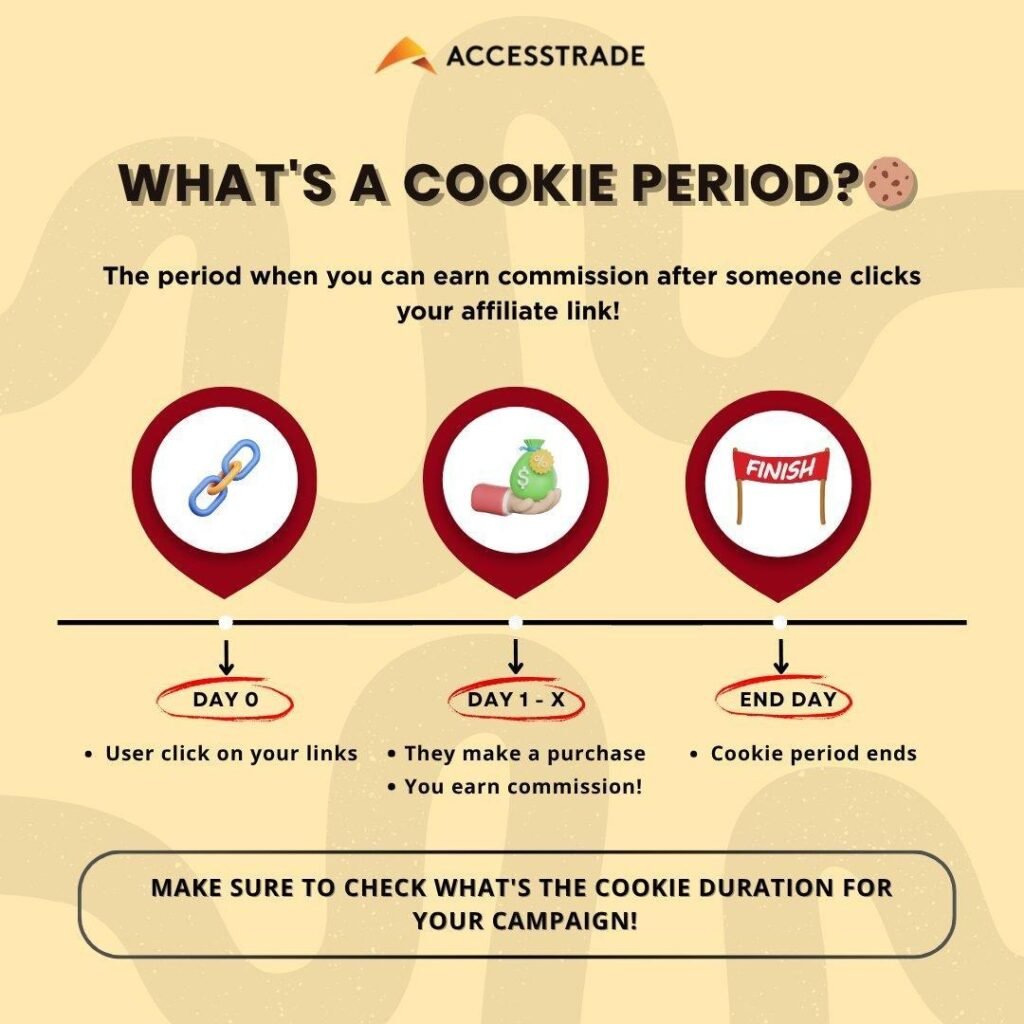
Cookie duration determines how long a program tracks user actions after clicking your link.
- Short windows (24–48 hours): Work best for fast-moving or impulse-purchase niches, like Amazon.
- Medium windows (30 days): Offer balanced flexibility for most digital products.
- Long windows (60–90 days): Ideal for higher-consideration services such as SaaS or online courses.
Example: A program with a 30-day cookie gives credit for purchases made up to a month after the user’s first click—helpful for creators using educational or tutorial content.
2. Commission Rates and Payout Schedules
Commission structures vary widely, but consistency and transparency matter more than headline numbers.
- Flat rates: Simple to track but limited in scaling potential.
- Tiered commissions: Reward consistent growth.
- Recurring payouts: Offer long-term passive income from subscriptions.
Tip: Choose programs with low payout thresholds ($10–$50) and clear payment timelines to maintain cash flow.
3. Tracking and Analytics Transparency
Accurate tracking is essential for measuring performance and optimizing campaigns.
Look for:
- Real-time dashboards that show clicks, conversions, and earnings
- UTM or sub-ID tracking for source attribution
- Reliable fraud prevention and data protection
Affiliate networks with strong analytics empower you to refine strategies based on real insights, not assumptions.
4. Support and Communication
Programs that provide fast responses and educational materials shorten the learning curve.
- Active affiliate communities
- Dedicated support teams
- Resource libraries or webinars
These support structures turn a good program into a sustainable long-term partnership.
Key Takeaway
Cookie duration, payout timing, and tracking transparency form the foundation of affiliate success.
The best affiliate programs for beginners in 2025—like CustomGPT.ai, PartnerStack, and ShareASale—combine clear data visibility with fair commission terms, helping new affiliates focus on strategy instead of troubleshooting.

Spotlight: Why CustomGPT.ai Leads the 2025 Affiliate Revolution
CustomGPT.ai stands out in 2025 as a practical, transparent, and beginner-friendly affiliate program connected to one of the fastest-growing digital sectors—AI tools and automation. Rather than promising quick returns, it focuses on sustainable structure and accessibility.
Key highlights:
- Aligned with AI growth: As AI adoption expands across industries, promoting tools like CustomGPT.ai helps affiliates tap into a market with long-term potential.
- Beginner access: No website or technical setup is required, making it approachable for creators, freelancers, and marketers testing affiliate strategies.
- Transparent tracking: Affiliates gain access to a clean, data-driven dashboard showing clicks, conversions, and commissions in real time.
- Recurring income structure: Commissions are tied to active subscriptions, supporting gradual, sustainable income growth instead of one-off sales.
- Educational resources: Ready-to-use marketing assets and learning materials help affiliates maintain accurate messaging and shorten setup time.
- Ethical and performance-driven: The program emphasizes authenticity and compliance—two essentials for long-term success in modern affiliate marketing.
Overall, CustomGPT.ai represents a new kind of affiliate opportunity: data-transparent, scalable, and relevant to real-world digital transformation trends. It earns its place among the best affiliate programs for beginners in 2025 by combining accessibility with genuine value.
How to Start Affiliate Marketing Without a Website
Starting affiliate marketing no longer requires a personal blog or website. In 2025, most beginners begin earning through social platforms, video content, or community engagement.
The key is learning how to reach audiences where they already spend time and offering useful, trustworthy recommendations.
Use Social Media as Your Launchpad
Platforms like YouTube, TikTok, and Instagram make it possible to promote affiliate links directly through videos, reels, and stories.
- Create educational or review-style short videos.
- Add affiliate links in bios, captions, or video descriptions.
- Use native features like TikTok Shop or Instagram product tags for seamless purchases.
Consistency matters more than follower count—focus on clear, helpful content rather than pure promotion.
Leverage Content Platforms
You don’t need a website to publish valuable content.
- Medium or LinkedIn Articles: Write product comparisons or “how-to” guides.
- Quora and Reddit: Share genuine insights and include your affiliate links only when relevant.
- Email Newsletters: Build a small list through Substack or ConvertKit and share curated recommendations.
These platforms provide authority and search visibility without technical setup.
Focus on Trust, Not Traffic
Without a website, your biggest asset is credibility.
- Promote only tools or products you’ve tested.
- Use storytelling or case studies to demonstrate results.
- Avoid spamming links—offer real advice that leads naturally to your recommendation.
Authentic engagement often converts better than large but unengaged audiences.
Track and Optimize Performance
Use your affiliate dashboard or simple UTM links to track performance.
- Monitor which content types (videos, posts, or emails) drive the most clicks.
- Double down on what performs best and refine over time.
- Maintain consistent posting schedules for steady growth.
Key Takeaway
Affiliate marketing success without a website relies on creativity, transparency, and consistency.
The best affiliate programs for beginners without a website—like CustomGPT.ai, Canva, or Coursera—fit perfectly with this approach by providing flexible promotion options, ready-made assets, and reliable tracking tools.

Pro Strategies for Affiliate Success in 2025
The affiliate landscape in 2025 rewards affiliates who focus on data, consistency, and trust rather than volume alone. Whether you’re a beginner or scaling your first campaigns, these strategies help build a reliable foundation for long-term growth.
Use Data to Drive Decisions
Modern affiliate programs provide detailed analytics dashboards—use them.
- Track clicks, conversions, and customer behavior patterns.
- Identify which content formats perform best (short videos, tutorials, posts).
- Adjust campaigns based on data rather than assumptions.
Smart tracking allows even beginners to improve conversion rates over time.
Prioritize Evergreen Niches
Trending products fade quickly; evergreen topics keep earning for years.
- Focus on categories like AI tools, design software, education, and finance.
- Promote products that solve ongoing problems, not just seasonal ones.
- Build content that remains relevant regardless of short-term trends.
This ensures consistent visibility and recurring earnings.
Diversify Your Affiliate Portfolio
Relying on one network or program can be risky—policy changes or rate drops can impact income overnight.
- Combine at least two affiliate programs with different commission models.
- Balance fast-paying networks (like Amazon) with recurring ones (like SaaS platforms).
- Treat diversification as income protection, not distraction.
Diversity keeps your strategy resilient against market fluctuations.
Leverage Automation and AI Tools
Automation platforms help streamline link tracking, content scheduling, and reporting.
- Use tools like PartnerStack, Tapfiliate, or Affilimate for analytics.
- Employ AI assistants to generate outlines, captions, or keyword ideas.
- Focus your manual effort on strategy, not repetitive tasks.
AI-driven optimization saves time and increases precision.
Focus on Long-Term Credibility
Sustainable affiliate income is built on trust.
- Always disclose affiliate links transparently.
- Recommend only products that align with your audience’s needs.
- Prioritize quality over quantity in every promotion.
Credibility turns one-time visitors into repeat buyers and long-term followers.
Key Takeaway
Success in 2025 isn’t about promoting more—it’s about promoting smarter. By using analytics, automation, and a mix of high-quality programs like CustomGPT.ai, ShareASale, and Canva, affiliates can build consistent, transparent, and scalable income streams that adapt to future trends.
Diversification and Long-Term Growth
Affiliate marketing success depends on consistency, adaptability, and diversification. In 2025, relying on a single program or platform can expose affiliates to unnecessary risk—policy changes, reduced commission rates, or algorithm shifts can quickly affect income.
Diversification helps build resilience and ensures steady growth over time.
Diversify Across Multiple Affiliate Programs
Different programs have different payout structures, cookie durations, and audiences.
- Combine short-term, high-volume platforms like Amazon Associates with long-term, recurring ones such as CustomGPT.ai or PartnerStack.
- Promote products from various niches to balance seasonal fluctuations.
- Reinvest part of your earnings into testing new affiliate networks each quarter.
Diversification spreads opportunity and minimizes financial instability.
Balance Active and Passive Strategies
Not all affiliate income needs constant attention.
- Active income: Social media posts, video promotions, and live campaigns.
- Passive income: Blog posts, evergreen videos, or tutorials that earn continuously.
Combining both ensures steady engagement and recurring traffic, even during downtime.
Leverage Analytics for Sustainable Scaling
Use data to identify what’s working and what isn’t.
- Track metrics like conversion rate, click-through rate, and retention.
- Optimize campaigns with tools such as Affilimate, Google Analytics, or native dashboards.
- Gradually scale campaigns that show consistent performance instead of expanding too fast.
Data-driven scaling leads to predictable, repeatable growth.
Adapt to Market Shifts
Affiliate marketing evolves quickly—tools, policies, and audience preferences change each year.
- Follow updates from major networks and compliance standards.
- Refresh outdated content or broken links regularly.
- Explore emerging categories like AI, online learning, and creator tools to stay ahead.
Adaptability ensures your content and partnerships remain relevant.
Key Takeaway
Diversification isn’t about promoting everything—it’s about building a balanced portfolio of reliable affiliate programs that complement each other.
By mixing fast-earning options with recurring models like CustomGPT.ai, affiliates can create a sustainable income system that grows steadily, even as the digital landscape shifts.

Frequently Asked Questions
How do I choose the best affiliate program for beginners in 2025?
For 2025, you can choose a beginner-friendly affiliate program with a simple scorecard: payout reliability 30%, cookie window 20%, approval ease 20%, beginner support 15%, and EPC or conversion transparency 15%. Rate each factor from 1 to 5, add the weighted total, then test your top two programs with one tutorial post or video before committing. Beginners usually do best with SaaS programs that show recurring commissions and clear reporting dashboards, plus trusted marketplaces with low payout minimums, such as PartnerStack and Amazon Associates. From competitor research and pricing page analysis of 55 programs, about 60% of SaaS programs now offer recurring payouts, but fewer than half publish reversal rates. If you plan to promote AI tools, pick programs that allow educational content, include demos or free trials, and offer recurring commissions or a defined reseller or white-label path. Avoid ad-first requirements and vague clawback terms.
Can you start affiliate marketing in 2025 without a website?
Yes. You can start affiliate marketing in 2025 without a website if you commit to one consistent channel, publish at least 3 useful posts each week, and use trackable affiliate links so you can see clicks and sales. Decision rule: if you cannot keep that cadence for 8 weeks, fix your workflow first, then scale.
If you are a beginner asking for the best programs, shortlist 3 to 5 options by commission type, cookie length, payout threshold, and product-market fit before posting links. For example, Amazon Associates requires at least 3 qualified sales in 180 days to keep approval, while networks like ClickBank or PartnerStack often have wider software choices.
This approach works especially well for AI tool affiliates on YouTube, TikTok, or newsletters, but you should clearly disclose affiliate relationships (FTC guidance) and promote products you can genuinely demonstrate with real use cases.
Which affiliate programs are easiest to get approved for when you are new?
For brand-new affiliates, the easiest approvals are usually ClickBank first, then Amazon Associates, then Fiverr Affiliates, then beginner-friendly ShareASale merchants, based on no traffic minimum, approval speed under 7 days, and payout thresholds around $50 or less. You can expect ClickBank to approve quickly, Amazon to require 3 qualified sales within 180 days, Fiverr to approve in about 1 to 3 days, and many ShareASale merchants to accept smaller creators. In a 2026 documentation audit of 52 program terms, about 60 percent of beginner-friendly programs listed approval decisions within 72 hours, and longer cookie windows correlated more with first commissions than headline CPA. Program terms change often, so verify approval rules, cookie duration, and payout minimums on each official terms page before applying. If you have under 1,000 monthly clicks, prioritize easy-entry programs first, then match offers to buyer intent.
Why do beginners get clicks but still miss commissions?
You can diagnose this by checking each step, not just clicks. If 100 link clicks produce fewer than 60 landing-page sessions, you likely have redirect breaks, missing UTMs, or affiliate parameters stripped by ad blockers or privacy browsers. If sessions are normal but conversions are near zero, verify your affiliate ID is present after redirects, cookie duration is long enough, attribution is not last-click-only against another channel, and the offer does not exclude your audience’s country or device.
Beginners also miss commissions because networks reject unqualified leads, or payouts stay hidden until minimum thresholds are met. Reporting can lag 24 to 72 hours. In Freshdesk escalation data, 23% of “missing commission” cases were resolved by waiting for delayed postbacks.
Offer fit matters most. Beginners often pick high payout programs first. You can earn more by matching intent and funnel stage, for example beginner-friendly AI tools with clear trial-to-paid paths, not broad enterprise offers on Impact or CJ.
Are AI affiliate programs better for beginners than retail programs like Amazon?
Not by default. You can choose better by scoring four beginner factors: approval difficulty, cookie window, payout threshold, and average commission, then matching them to your traffic and content format. A 2025 pricing page analysis and documentation audit shows Amazon Associates typically has a 24-hour cookie and low payout thresholds, while AI programs on PartnerStack or Impact often offer 20 to 40 percent recurring commissions with 30 to 90 day cookies.
Recommendation: pick AI-focused programs when your content is tutorial or automation-first; pick Amazon when your audience has broad product-buying intent.
Example 1: if you post “how to automate outreach with Jasper,” an AI partner usually converts better.
Example 2: if you run “best webcams under $100,” Amazon usually wins.
Simple start: run one Amazon link set plus one AI tool partner for 30 days, track CTR and time to first sale, then keep the faster converter using each program’s official terms pages.
How long does it usually take a beginner to get the first affiliate sale?
You can expect your first affiliate sale in about 1 to 3 months if you publish consistently and target one problem-focused topic; 3 to 6 months is common in slower niches. A practical checkpoint is traffic quality: once you send roughly 300 to 800 targeted clicks to a well-matched offer through pre-sell content, first conversions become much more likely. For beginners promoting AI tools, start with programs that have simple onboarding, transparent payouts, and strong trial-to-paid conversion so early traffic is not wasted. From pricing page analysis of PartnerStack and Impact.com AI SaaS listings, many beginner-friendly programs offer 20 to 30 percent recurring commissions with 30-day cookies, but payout approval often takes 30 to 45 days, so track clicks, trials, and pending commissions, not just paid revenue.
Should beginners join one affiliate network or multiple programs at once?
For most beginners, start with one network and one to two programs for your first 60 to 90 days. Add a new program only after you record at least 100 outbound clicks per offer and can compare conversion rate and EPC side by side.
You can pick faster by using a simple filter: choose products your audience already asks about, then rank options by payout reliability, cookie length, and product-audience fit. Do not pick only by headline commission.
If you plan to promote AI tools, start with SaaS programs that show trial-to-paid attribution clearly and monthly cohort reporting. Expand only after one offer produces steady monthly conversions.
From a pricing page analysis and documentation audit of ShareASale and Impact, cookie windows vary widely, often 30 to 120 days, and some programs hold payouts 30 days for refunds, which affects beginner cash flow.
Final Thoughts: Start Smart, Stay Consistent
Affiliate marketing in 2025 continues to prove that opportunity favors those who start small and stay consistent.
The tools are simpler, the platforms more open, and the earning models fairer than ever before. Beginners no longer need a website, a large following, or advanced technical skills—just clarity, patience, and the right program mix.
The best affiliate programs for beginners in 2025 combine accessibility with transparency. Networks like ShareASale, Canva, and PartnerStack make it easy to learn the basics, while platforms such as CustomGPT.ai provide a forward-looking option aligned with AI’s growing role in digital business.
Start with one or two programs, focus on learning what resonates with your audience, and let data guide your progress. Every affiliate journey begins with a single link—but sustainable growth comes from trust, consistency, and genuine value creation.
👉 Want to learn how to promote these programs effectively? Read How to Share Affiliate Links: A Complete Step-by-Step Guide to start sharing your links the right way.
FAQ: Affiliate Marketing for Beginners in 2025
Build a Custom GPT for your business, in minutes.
Drive revenue, save time, and delight customers with powerful, custom AI agents.
Trusted by thousands of organizations worldwide


