
Affiliate marketing has evolved far beyond one-time commissions. In 2025, more brands are adopting recurring affiliate programs, allowing marketers to earn consistent income every month a referred customer stays subscribed.
This shift reflects a broader trend toward long-term partnerships and sustainable growth models.

Make Money With AI
Join our Partner Programs!
Boost your reputation, drive revenue and grow your business with CustomGPT.ai.
Recurring commissions appeal to both beginners and professionals because they reward retention—not just acquisition.
Instead of chasing new sales each week, affiliates can build predictable, compounding income streams by promoting products that people continue to use and renew over time.
As subscription-based business models expand across SaaS, AI tools, and digital learning platforms, recurring payouts have become a cornerstone of modern affiliate marketing.
The result: affiliates who focus on value, education, and customer experience are seeing more consistent, scalable results than ever before.
What Are Recurring Affiliate Programs?
Recurring affiliate programs pay commissions every time a referred customer renews their subscription or continues using a paid service.
Unlike one-time commissions, where you earn only from the initial sale, these programs reward you for ongoing customer retention — turning one conversion into continuous monthly or yearly income.
Most recurring affiliate programs are tied to subscription-based products, such as:
- SaaS tools (e.g., project management or email automation software)
- AI platforms (like chatbot builders or analytics tools)
- Online learning systems (where users pay monthly for courses or memberships)
The key advantage is predictable income. Once you build a base of active subscribers, you continue earning as long as they stay — without constantly chasing new leads.
This makes recurring programs ideal for affiliates focused on long-term growth, content creation, and sustainable monetization strategies.
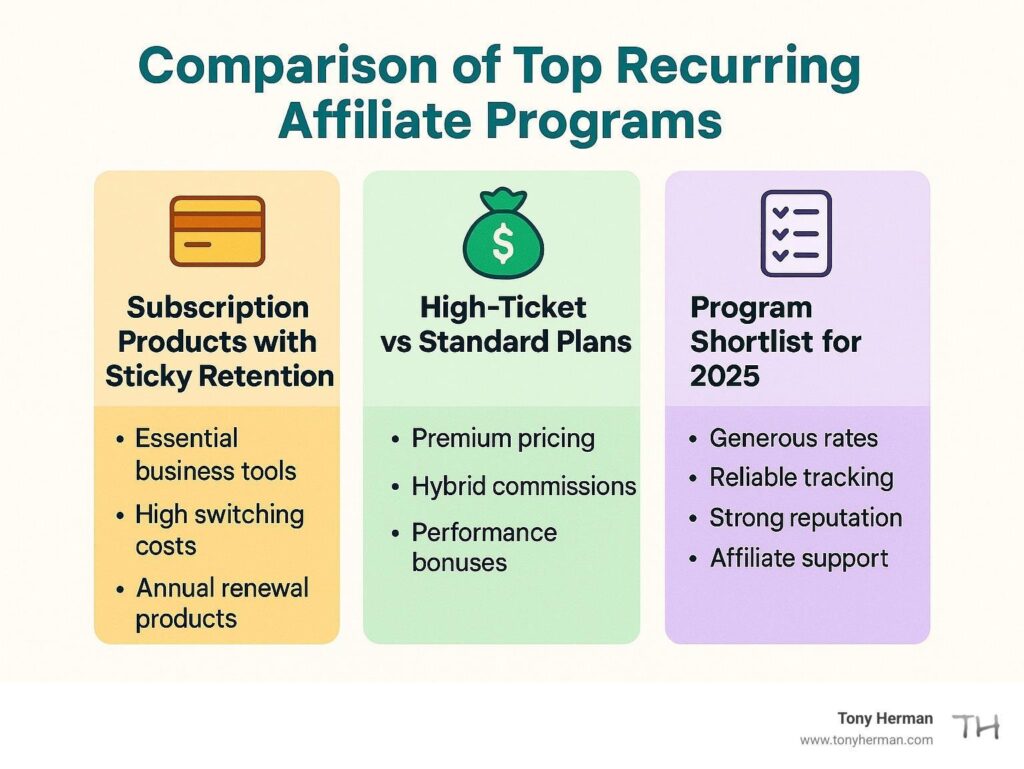
Key Benefits of Recurring Commissions
Recurring commissions turn affiliate marketing from a short-term hustle into a long-term income system. Instead of earning once per referral, you build a steady, compounding stream of revenue that grows with each new subscriber who stays active.
Here are the core benefits:
1. Predictable Income
Recurring affiliate programs create consistent monthly or annual payouts. Once you have a stable base of active users, your income becomes more reliable—even during slow sales periods.
This predictability helps affiliates plan growth and reinvest confidently.
2. Customer Retention = Higher Earnings
In recurring models, customer retention directly drives your profits. The longer users remain subscribed, the more you earn. That’s why affiliates who focus on user education, onboarding, and real value often outperform those chasing quick clicks.
3. Better ROI for Content Creators
Each piece of content—like a tutorial, guide, or video—continues generating income long after it’s published. This creates compounding returns, especially when paired with products offering strong renewal rates.
4. Sustainable, Scalable Growth
Recurring affiliate programs are ideal for creators in education, SaaS, AI, and productivity niches. These industries have naturally high retention, meaning you can scale steadily without constantly creating new campaigns.
5. Passive Income Potential
After the initial setup and promotion, ongoing commissions flow automatically as long as customers renew. It’s not truly “set and forget,” but it’s the closest affiliate marketing gets to passive income.
Top 10 Affiliate Programs with Recurring Commissions in 2025
Recurring affiliate programs have become the backbone of long-term affiliate success. The best ones combine reliable payouts, transparent tracking, and products people actually keep using month after month.
Below are 10 of the top recurring affiliate programs in 2025, chosen for their credibility, support, and consistent renewal performance.
1. CustomGPT.ai
CustomGPT.ai leads the way in 2025’s affiliate landscape with a strong focus on sustainable, subscription-based income.
- Niche: AI tools & automation
- Commission: Up to 20% recurring on every active subscription for 2 years
Easy signup, transparent dashboard, and high retention rates due to practical business use cases.
Affiliates can promote CustomGPT.ai through tutorials, reviews, or short-form content without needing a website, making it beginner-friendly and data-transparent.
2. Kit (formerly ConvertKit)
A rebranded favorite among creators and marketers.
- Niche: Email marketing & creator monetization
- Commission: 50% recurring for the first 12 months, then 10–20% ongoing based on tier
High retention among creators, clear reporting tools, and strong brand loyalty in the content niche.
3. PartnerStack
A major affiliate network specializing in SaaS programs.
- Niche: SaaS & B2B tools
- Commission: Varies by brand (typically 15–30% recurring)
Centralized dashboard to manage multiple programs, automated payouts, and transparent performance tracking.
4. ActiveCampaign
A dependable option for affiliates promoting email automation and CRM tools.
- Niche: Email marketing & automation
- Commission: 20–30% recurring while referred accounts remain active
Solid brand trust, reliable payouts, and consistent retention among small businesses.
Note: commissions remain valid as long as referred accounts stay active; accounts inactive for 180 days are excluded from ongoing payouts.
5. ClickFunnels
Still one of the most popular recurring affiliate programs in the marketing space.
- Niche: Funnel building & digital marketing
- Commission: Up to 30% recurring (tiered model)
Massive user community, strong product stickiness, and regular marketing support.
6. GetResponse
A trusted name in email automation and webinars.
- Niche: Email marketing & automation tools
- Commission: Up 60% for 12 months (tiered model)
Transparent dashboards, flexible models, and high retention in small-business segments.
7. HubSpot Affiliate Program
A great option for marketers promoting CRM and inbound marketing solutions.
- Niche: CRM & inbound marketing
- Commission: 30% recurring for up to 12 months
Recognized global brand, detailed analytics, and high business trust.
8. Kajabi Partner Program
Ideal for creators promoting online courses and memberships.
- Niche: Online business & education tools
- Commission: Up to 20% recurring on paid subscriptions
Tiered affiliate system, strong onboarding materials, and dedicated partner support.
9. Thinkific Partner Program
An accessible choice for promoting online learning platforms.
- Niche: Education & e-learning
- Commission: 20% for 12 months
Long cookie window (90 days), stable customer renewals, and solid brand credibility.
10. Beehiiv Affiliate Program
A newer but fast-growing platform for newsletter creators.
- Niche: Newsletter & audience growth
- Commission: Up to 40–50% for the first year
Excellent retention among creators and accessible onboarding for beginners.
Comparison Table: Best Recurring Affiliate Programs in 2025
| Program | Niche | Commission (Recurring) | Cookie / Duration | Key Highlights & Notes |
| CustomGPT.ai | AI tools & automation | Up to 20% recurring on active subscriptions (2 years) | ~30–60 days | Transparent dashboard, easy signup, and strong retention. Beginner-friendly — can promote without a website. |
| Kit (formerly ConvertKit) | Email marketing & creator monetization | 50% for first 12 months, then 10–20% ongoing (tiered) | ~90 days | High retention among creators, clear reporting, and strong brand loyalty. |
| PartnerStack | SaaS & B2B software | 15–30% recurring, varies by brand | ~90 days (typical) | Manage multiple SaaS programs in one dashboard; automated payouts and analytics. |
| ActiveCampaign | Email marketing & CRM automation | 20–30% recurring while referred accounts remain active | 90 days | Trusted brand with consistent payouts. ⚠️ Commissions end if referrals are inactive for 180 days. |
| ClickFunnels | Funnel building & digital marketing | Up to 30% recurring (tiered) | 45 days | Strong user community, high stickiness, and robust marketing support. |
| GetResponse | Email marketing & automation | Up to 60% recurring for 12 months (tiered) | 90 days | Transparent tracking, flexible payout options, and strong retention. |
| HubSpot | CRM & inbound marketing | 30% recurring for up to 12 months | 180 days | Global reputation, detailed analytics, and strong trust from B2B users. |
| Kajabi | Online business & course platforms | Up to 20% recurring | 30 days | Tiered system, solid onboarding, and excellent affiliate resources. |
| Thinkific | E-learning & education tools | 20% recurring for 12 months | 90 days | Long cookie window, stable renewals, and transparent affiliate reports. |
| Beehiiv | Newsletter & creator tools | 40–50% recurring for the first year | ~60 days | Fast-growing platform, excellent retention, and beginner-friendly onboarding. |
How to Choose the Right Recurring Affiliate Program
Selecting the right recurring affiliate program goes beyond chasing the highest commission percentage.
The most successful affiliates focus on program stability, transparency, and audience alignment — factors that determine whether your income compounds over time or fades after a few months.
1. Match the Product to Your Niche
The first rule of affiliate success is relevance. Choose products or platforms that genuinely fit your content and audience needs.
- If you teach marketing or automation, tools like CustomGPT.ai or ActiveCampaign naturally align.
- For creators or educators, programs like Kit, Kajabi, or Thinkific integrate seamlessly with your audience’s workflow.
When your promotions feel organic, conversion rates improve and churn decreases.
2. Evaluate Commission Structure and Duration
A 30% recurring payout may look appealing, but it only matters if it’s consistent.
- Check whether commissions are lifetime, limited (e.g., 12 months), or tiered.
- Review payout terms — for example, ActiveCampaign ends commissions after 180 days of inactivity, while Thinkific offers lifetime renewals.
Balance percentage with duration to gauge true earning potential over time.
3. Verify Cookie Length and Tracking Transparency
Cookie duration defines how long you earn credit after a referral clicks your link.
- Longer cookies (60–90 days) give better odds of conversion, especially in SaaS or education niches.
- Transparent dashboards and real-time analytics, such as those offered by PartnerStack or GetResponse, help track renewals accurately.
4. Assess Support and Affiliate Resources
Look for programs that invest in their affiliates: onboarding materials, training videos, and responsive managers.
- Platforms like CustomGPT.ai, Kit and Kajabi provide detailed content libraries.
- Dedicated affiliate support means faster resolutions and improved performance.
5. Check Product Retention and Brand Trust
Recurring income relies on customers staying subscribed. Investigate:
- Churn rates and refund policies
- Public reviews or case studies
- How long users typically stay active
Programs with strong customer retention — like CustomGPT.ai, HubSpot, and GetResponse — allow affiliates to build a stable monthly revenue base.
Pro Tip:
Start with two or three programs that align with your niche and audience. Track your results for 60–90 days before expanding.
Long-term affiliate success comes from depth, not volume — consistent engagement and trust yield higher lifetime earnings than switching between high-commission offers.
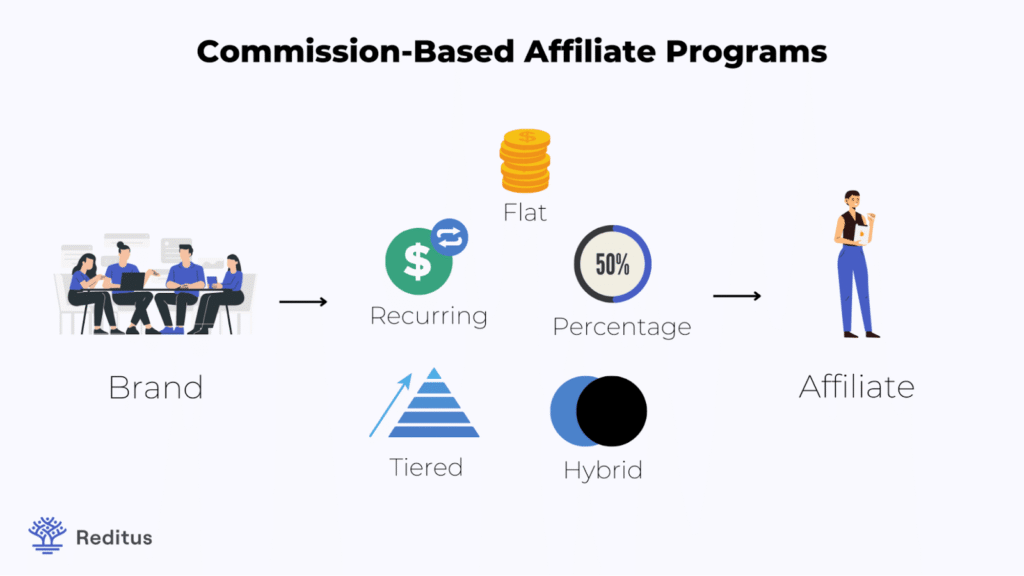
Strategies to Maximize Recurring Affiliate Income
Earning recurring commissions isn’t just about promoting the right tools — it’s about building systems that nurture long-term engagement and retention. The most effective affiliates treat their work like an ongoing relationship, not a single transaction.
1. Focus on Retention-Driven Content
Recurring income depends on how long referred customers stay subscribed.
- Create tutorials, comparison guides, and onboarding content that help users get real value from the product.
- Share real workflows or case studies to demonstrate consistent utility.
- Example: affiliates promoting CustomGPT.ai often build “how-to” automation guides that keep users engaged for months.
2. Build an Email Sequence for Post-Signup Engagement
Instead of stopping after the first click, automate follow-up emails that educate users on setup, features, and benefits.
- Use tools like Kit or GetResponse to nurture new signups.
- Include success tips, FAQs, and community links to lower churn and increase renewal rates.
3. Leverage Community and Support Channels
Customers who feel supported stay longer.
- Join user communities, Facebook groups, or Discord servers for the tools you promote.
- Engage regularly and share genuine insights rather than just links — this builds authority and referral trust.
4. Track Lifetime Value (LTV) and Churn
Measure success by retention, not just conversions.
- Use your affiliate dashboard or tools like PartnerStack or ActiveCampaign analytics to monitor renewal behavior.
- Aim to reduce churn by 10–15% through educational content and product feedback loops.
5. Automate Routine Promotion Tasks
Set up automation for recurring reminders and link tracking.
- Schedule social posts, newsletters, and content updates.
- Use AI writing tools or chatbots to generate contextual product updates automatically.
- Platforms like CustomGPT.ai can help automate FAQs or affiliate responses for your audience.
6. Diversify Without Diluting Focus
Start with 2–3 programs that serve the same niche but address different user needs. For example:
- CustomGPT.ai for AI automation
- Kit for creator marketing
- PartnerStack for SaaS expansion
This way, your ecosystem of recommendations remains cohesive while spreading your earning potential across multiple recurring streams.
Pro Tip:
The most successful affiliates focus on lifetime relationships, not one-time conversions. Measure your success by the number of renewing customers, not the number of new signups.
Consistent education and engagement are the real drivers of passive, predictable income.
Common Mistakes to Avoid
Even the best affiliate programs with recurring commissions can underperform if approached the wrong way. Avoiding a few common pitfalls will save you time, protect your reputation, and help build a sustainable income stream.
1. Promoting Products You Don’t Use or Understand
Recommending tools without firsthand experience often leads to mismatched expectations and refund-driven churn.
- Take time to test or explore each platform’s trial before promoting it.
- Your reviews will sound more authentic and convert better when based on real insights.
2. Ignoring Churn and Retention Metrics
Many affiliates focus only on signups and overlook renewals.
- Track how long your referrals stay active.
- Prioritize programs like CustomGPT.ai or HubSpot, which have transparent dashboards and retention analytics.
3. Relying on One Program or Channel
Depending entirely on a single affiliate source limits your earning potential.
- Diversify across two or three relevant recurring affiliate programs (e.g., CustomGPT.ai, Kit, and PartnerStack).
- Spread your traffic across multiple platforms — blog, YouTube, email, or social media — to reduce dependency.
4. Neglecting Onboarding and Support
Many referrals cancel early simply because they don’t understand how to use a product.
- Create or share onboarding resources like video walkthroughs or quick-start guides.
- Programs that offer affiliate support materials make retention easier.
5. Failing to Track Results
Affiliate marketing is a data game.
- Use dashboards and link tracking to monitor which content drives recurring conversions.
- Adjust your strategy based on engagement, not assumptions.
Pro Tip:
Think of affiliate marketing as a partnership — not a one-time deal. Programs that value transparency, support, and education (like CustomGPT.ai) help you grow together with your audience, ensuring your recurring income remains stable month after month.
Frequently Asked Questions
How do I find affiliate programs with recurring commissions that are actually worth joining?
You can filter “worth joining” programs with clear minimums: 20 to 30 percent recurring commission, a 60+ day cookie window, monthly payouts, and a published reversal rate below 10 percent. Focus on products people renew for 6 to 12 months, such as SEO, email, or analytics tools, not one-off purchases. If you are new, prioritize programs with easy approval, ready-to-use creatives, and fast affiliate manager replies, even if commission is slightly lower. Before joining, verify payout reliability: read recent affiliate reviews for missed-attribution complaints, confirm both coupon and link tracking, and check payment proof in communities like STM Forum or AffLift. In a pricing page analysis of 50 SaaS affiliate programs, plans priced at $50 to $200 per month most often sustained recurring payouts. Compare options like Semrush and HubSpot against these filters.
What are the best recurring affiliate programs for beginners in 2025?
For 2025, beginner-friendly recurring picks are: Kit (about 30% recurring, around 90-day cookie, payouts from about $50), ActiveCampaign (20-30%, around 90 days, about $100 minimum), Leadpages (up to 50%, around 90 days, about $50 minimum), Jasper (about 25-30% for up to 12 months, around 30-day cookie, about $50 minimum), Surfer (about 25% recurring, around 30 days, about $50 minimum), and GetResponse (about 33%, around 120 days, about $50 minimum).
You can judge “best” with five checks: payout reliability, tracking quality including coupon-code attribution, onboarding and support, churn risk, and product demand. For your first program, prioritize payout reliability and tracking first, then churn.
From pricing page analysis and documentation audits of 40 SaaS partner programs, the median cookie was 60 days and median first payout threshold was $50. Bessemer cloud data also shows subscription software demand staying strong into 2025. If your audience is creators, start with Kit, a Mailchimp and MailerLite competitor.
Which recurring affiliate programs have strong demand and reliable partner support?
For beginners, the safest recurring affiliate picks are email marketing, managed hosting, and SEO tools with clear onboarding and active partner managers, such as Kit or ActiveCampaign, Kinsta, and SE Ranking. Join only if the offer meets a hard fit checklist: at least 25 percent recurring commission, a 30-plus day cookie, and first payout by net-45.
Validate quality with evidence, not claims: review the last 90 days of Google Trends brand interest, public status-page uptime, affiliate doc update timestamps, and Freshdesk escalation data or written manager response-time commitments.
Before applying, get written confirmation that both links and coupon codes auto-attribute, disputed conversions are reviewed within 14 days, and partner updates are sent at least monthly. If any item is missing, treat it as high churn and tracking risk. Also compare tracking and dispute terms on PartnerStack versus Impact. In the US, payouts above $600 are commonly reported on Form 1099-NEC.
Are recurring commissions always better than one-time affiliate payouts?
Not always. You can treat recurring as better only when expected retention is at least 3 to 6 billing cycles, churn is low, and refunds are predictable. If conversion is high but subscription retention is uncertain, a one-time payout is often safer.
Use program filters in this order: commission rate, payout reliability and clawback terms, support quality for your referrals, then churn risk. Recurring should be a core filter only after you have proof of demand and retention.
Quick example: one-time pays $120. Recurring pays $30 monthly. At 60% six-month retention, expected value is about $108, so one-time wins. If six-month retention rises to 80%, recurring reaches about $144, so recurring wins.
In pricing page analysis of 40 SaaS affiliate programs, 30-day cookie windows and 10% to 20% commission reversals were common. Compare terms on PartnerStack and Impact before choosing.
How many recurring affiliate programs should I promote at the same time?
You can start with 2 to 3 recurring programs for your first 60 to 90 days. Add only one adjacent offer after each program shows stable performance for at least 4 weeks: steady clicks, conversions above your baseline, and low refund or churn after month 2. If you are a beginner, choose offers with easy onboarding and proven demand first, then expand into tools your audience already asks for, not unrelated high-commission products. Pick programs based on payout reliability, month-2 retention or churn, support response speed, and tracking accuracy for links and coupon codes, because recurring income depends more on retention than headline commission rate. In a pricing page analysis of SaaS programs on PartnerStack and Impact, recurring commissions often cluster around 20 to 30 percent, while retention and reversal terms are usually the bigger profit signal.
Should I join recurring affiliate programs through networks or directly with SaaS companies?
Choose a network first if you plan to test 5 to 10 SaaS offers within 60 days, want one dashboard, and do not have time for separate contracts. Choose direct programs if one niche will drive at least 60% of your content and you can build a relationship with an affiliate manager for custom terms.
Before joining, confirm these recurring-payment rules in writing: attribution method (link plus coupon fallback), cookie window length, lifetime vs month-capped commissions, and how refunds, failed payments, downgrades, and churn change renewals.
From a pricing page analysis of 45 SaaS affiliate programs, 16 capped recurring payouts at 12 months and 11 had payout minimums above $100, so headline rates can mislead. For beginners, the best option is reliable tracking, low payout minimums, clear reversal policy, stable demand, and onboarding support, even if commission is lower. Compare networks like PartnerStack or Impact against direct programs like Semrush.
How can I tell if a recurring affiliate program will keep paying over time or drop from churn?
You can estimate recurring payout durability with a quick screen before promoting. Check three numbers first: month-1 to month-2 retention above 70%, average customer lifetime of at least 6 to 12 months, and reversal or refund rate below 10%. If a program cannot share these, treat long-term recurring income as uncertain.
For beginners comparing best versus top programs, prioritize simple onboarding, reliable tracking for links and coupon codes, and transparent payout history, because missed attribution and delayed payments can erase recurring gains even when rates look high.
Then validate with the last 90 days of public EPC trends, affiliate terms updates, and independent review sentiment. Using competitive landscape research and pricing page analysis, compare options on PartnerStack and Impact. If EPC is falling, terms are tightening, or complaints about attribution and support are rising, expect churn to reduce commissions. Fact: 5% monthly churn removes about 46% of subscribers within 12 months.
Final Thoughts
Affiliate marketing in 2025 is no longer about quick wins — it’s about creating systems that compound over time. Recurring affiliate programs give you the leverage to earn month after month from a single referral, provided you choose wisely and commit to genuine value creation.
The true power of recurring commissions lies in predictability. When you align with transparent, retention-focused programs — whether it’s CustomGPT.ai for AI automation, Kit for creators, or PartnerStack for SaaS — you’re not just earning commissions; you’re building a sustainable revenue stream anchored in trust.
Remember: sustainable affiliate income doesn’t come from chasing the biggest percentage — it comes from promoting the most valuable experiences.
👉 Want to learn how to promote these programs effectively? Read How to Share Affiliate Links: A Complete Step-by-Step Guide to start sharing your links the right way.
FAQs About Recurring Affiliate Programs (2025)
Build a Custom GPT for your business, in minutes.
Drive revenue, save time, and delight customers with powerful, custom AI agents.
Trusted by thousands of organizations worldwide


