
Artificial intelligence has become one of the fastest-growing service categories for agencies and consultants.
Clients across industries — from retail to financial services to manufacturing — want AI-powered automation, assistants, analytics, and workflow improvements.

Make Money With AI
Join our Partner Programs!
Boost your reputation, drive revenue and grow your business with CustomGPT.ai.
Yet many agencies struggle with how to sell AI services effectively. Not because they lack skill, but because AI introduces unfamiliar concepts, new value propositions, and deeper operational questions from clients.
Selling AI is different from selling websites, ads, or software licenses. Clients expect clarity, measurable outcomes, and reassurance that AI will improve — not disrupt — their workflows.
Agencies that succeed in AI sales use a structured process: understanding client needs, scoping clearly, building a secure and compelling business case, communicating benefits simply, and guiding the client from pilot to full deployment.
This guide outlines the practical steps for identifying opportunities, framing AI value, pricing services, overcoming common objections, and closing deals with confidence.
Understanding the AI Buyer Landscape
Selling AI starts before the pitch. Agencies need to understand who buys AI, why they buy it, and what problems they expect AI to solve. AI buyers are not all the same — and your sales approach should adjust depending on their motivations.
According to McKinsey’s 2024 State of AI Report, 88% of companies now use AI in at least one business function, but only about one-third have managed to scale those initiatives across the business (McKinsey, 2024).
Who Your AI Buyers Are (Decision-Maker Profiles)
In most organizations, AI decisions involve several roles. Agencies must understand how each role thinks about AI.
- Executives care about ROI, growth, and competitive advantage.
- Operations teams care about efficiency and workflow improvements.
- Marketing teams care about personalization, content automation, and customer experiences.
- IT departments care about integrations, data security, and compliance.
When selling AI services, you are rarely selling to one person. You are selling to a collective need, and your pitch should address the priorities of each stakeholder group.
Understanding Client Maturity (Where the Buyer Is in Their AI Journey)
Not all clients are ready for large-scale AI transformation. Some are exploring; others are ready to deploy immediately.
You will encounter three maturity levels:
- Explorers — curious but unclear about use cases
- Evaluators — know what they want but unsure how to implement
- Implementers — ready for pilots, budgets, and clear timelines
Your messaging, proposals, and pricing should align with maturity. Explorers need education; implementers need clarity and structure. Agencies that misjudge maturity risk overselling or underscoping the engagement.
Identifying High-Value AI Opportunities
AI is most valuable in processes that are repetitive, manual, slow, or error-prone — or those requiring personalized interactions at scale.
Common high-impact areas for clients include:
- customer service automation
- intelligent search and knowledge assistants
- sales enablement and lead qualification
- inventory or demand prediction
- compliance monitoring and documentation
- automated marketing workflows
- internal operations automation
These areas create measurable ROI, making it easier to build a strong business case.
Once you know who you’re selling to and what motivates them, the next step is identifying where AI genuinely helps and shaping the conversation around client outcomes — not technology.
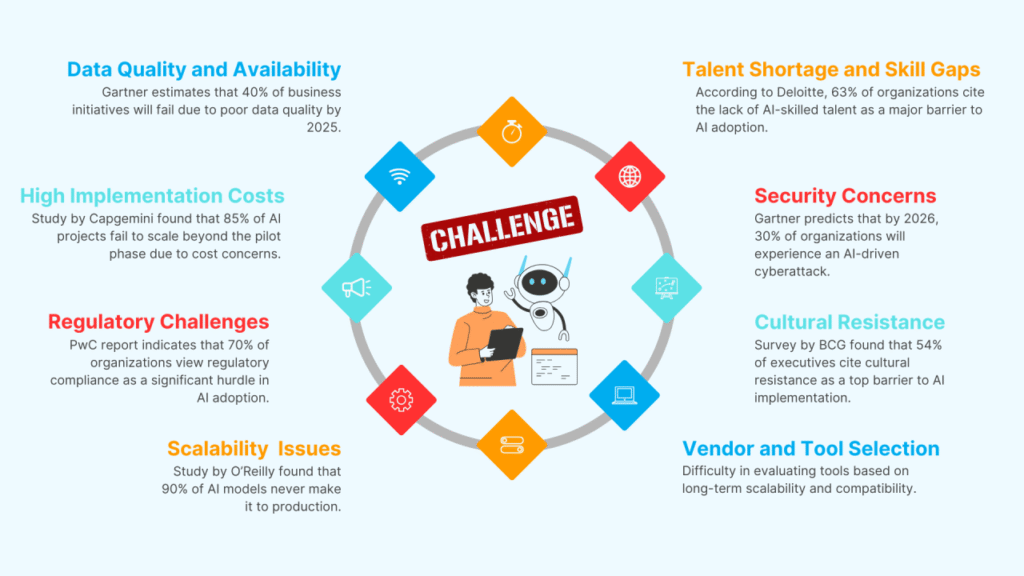
Many clients aren’t struggling with interest in AI — they’re struggling with readiness.
Research from Boston Consulting Group found that only 26% of companies have the capabilities needed to generate meaningful value from AI, meaning more than three-quarters are still stuck in pilot mode or proof-of-concept cycles (BCG, 2024).
Mapping AI Solutions to Real Client Needs
Clients rarely want “AI.” They want better outcomes. Agencies must frame AI solutions as a practical answer to real business pain points. This requires structured discovery and a clear framework for diagnosing opportunities.
The Discovery Conversation (Where Good AI Sales Begin)
Strong AI engagements start with a discovery call focused on problems, not features. Your goal is to uncover inefficiencies, bottlenecks, and opportunities for automation.
Key areas to explore:
- What tasks consume the most time?
- Where do errors occur frequently?
- Which customer interactions could be improved?
- What data sources does the client already have?
- Where is the team overwhelmed or understaffed?
When you ask problem-centered questions, clients naturally begin to connect AI to value.
Translating Pain Points Into AI Use Cases
Once you understand the client’s challenges, you can map them to AI-powered solutions. This step requires explaining outcomes simply — without deep technical detail.
For example:
- “Your team spends 20 hours a week answering repeat questions. A custom AI agent could reduce that workload by 70%.”
- “Your customers struggle to find information on your website. An AI assistant can improve search accuracy dramatically.”
- “Your sales reps lose time documenting calls. AI can handle transcription and summarization automatically.”
Clients respond to AI when it’s positioned as a practical fix, not a futuristic concept.
Prioritizing Use Cases (Choosing What to Implement First)
Most clients can benefit from multiple AI use cases, but agencies must help them prioritize. Choosing the right starting point helps control scope and ensures early wins.
A simple prioritization framework:
- Impact — revenue, time savings, customer experience
- Ease of implementation — data readiness, integrations, workflow complexity
- Risk — compliance, user adoption, operational dependencies
High-impact, low-complexity use cases are the ideal starting point. They create momentum and make larger projects easier to sell.
Crafting a Compelling AI Value Proposition
Once the right opportunity is identified, the next challenge is communicating value. Clients want reassurance, clarity, and evidence — not technical jargon or overpromises.
Selling AI effectively means reframing AI not as a tool, but as a strategic asset. Agencies must articulate value in a way that feels tangible, measurable, and low-risk for clients.
Explaining AI in Simple, Business-Friendly Language
Clients don’t need to understand LLMs or vector embeddings — they need to understand outcomes. A strong AI pitch avoids technical explanations and focuses on:
- efficiency
- accuracy
- faster workflows
- better customer experiences
- reduced operational costs
Simple, relatable messaging builds trust more effectively than technical depth.
Quantifying Value (Turning AI Into a Business Case)
Clients buy AI when they clearly understand the financial or operational gains. After identifying a use case, estimate the impact using real numbers when possible.
Examples:
- cost savings from reduced manual work
- increased conversion rates
- fewer customer support tickets
- faster service resolution
- improved employee productivity
Even rough calculations help clients visualize outcomes. Use conservative estimates — clients appreciate honesty more than exaggeration.
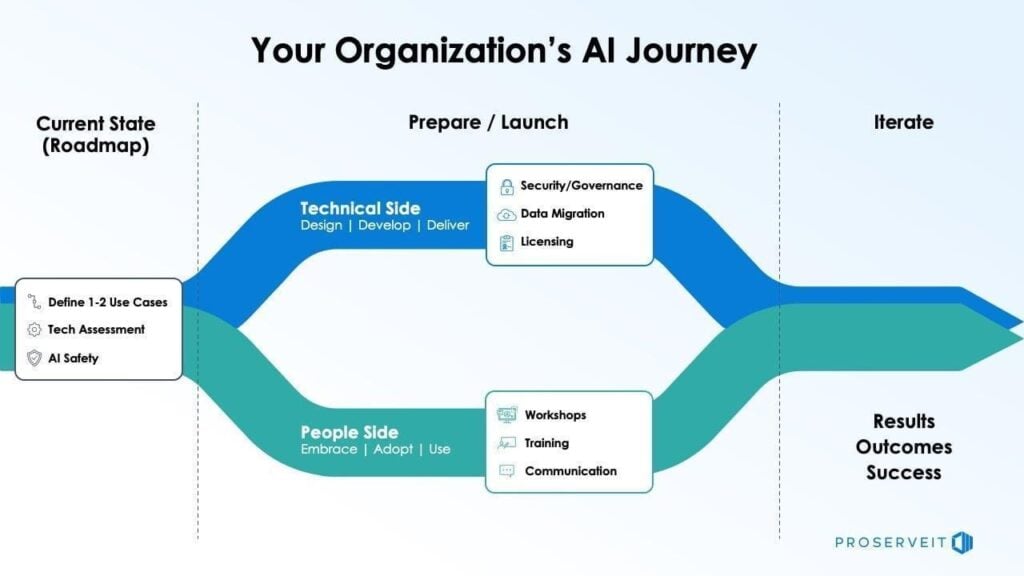
Designing a Low-Risk Pilot (Your Entry Point Into Larger Deals)
Instead of pitching a multi-month, multi-use-case AI transformation, start with a pilot. Pilots reduce client anxiety, create immediate wins, and serve as proof of value.
A strong pilot has:
- clear scope
- 1–2 focused outcomes
- controlled timeline
- defined KPIs
- clear success criteria
Once a pilot proves value, expanding into new use cases becomes easier — and often client-driven.
Pricing AI Services Effectively
Pricing is one of the biggest challenges agencies face when selling AI. Underpricing eliminates margins; overpricing creates resistance. The right pricing model depends on your service level, client type, and AI maturity.
The Three Pricing Models That Work Best
Agencies commonly use three proven pricing structures:
- Fixed-scope projects — clear deliverables for one-time fees
- Recurring service retainers — ongoing optimization, monitoring, and improvements
- Hybrid models — upfront build + monthly maintenance
AI requires ongoing monitoring, so hybrid and retainer models often produce better long-term outcomes for both the agency and the client.
Avoiding Scope Creep (The Silent Profit Killer)
AI projects can easily expand as clients discover new capabilities. Set expectations early:
- What’s included
- What’s excluded
- Required client inputs
- Responsibilities during implementation
- Timeline boundaries
Clear scoping protects your margins and creates a smoother delivery experience.
Value-Based Pricing (Moving Beyond Hours and Tasks)
AI delivers efficiency and measurable financial value. Agencies should align pricing to value rather than hours worked.
Examples:
- “This reduces manual processing by 60 hours a month.”
- “This improves customer search accuracy, increasing conversions.”
- “This reduces ticket resolution costs by X%.”
The more clearly you tie pricing to outcomes, the easier the sales process becomes.
Overcoming Common Client Objections
Even with strong value framing, clients will have questions and objections. Overcoming them is a core skill in AI sales.
Clients don’t reject AI because the technology is unclear — they hesitate because the path feels unclear. Objections are often expressions of uncertainty, not resistance. Effective agencies treat objections as guidance on what the client needs to feel comfortable moving forward.
Here are the most common categories of concerns — each framed with a stronger, more unique heading.
The “Data Readiness” Objection — When Clients Believe They Need More Than They Actually Do
Many organizations assume AI requires large, perfectly structured datasets. This creates hesitation early in the process.
Your role is to show that AI pilots typically start with existing documents, FAQs, policies, CRM exports, or website content. Once the pilot proves value, data quality can improve over time.
This reframes the project from a “data overhaul” to a practical starting point.
The “Job Security” Concern — Helping Teams Understand AI as Support, Not Replacement
This objection comes from fear, not technical misunderstanding. Teams worry AI may threaten roles or disrupt routines.
Agencies counter this by reframing AI as a tool that reduces repetitive work and supports teams rather than replaces them. Once employees feel safe, resistance fades.
The “Security & Compliance” Question — Clearing Up How AI Handles Sensitive Information
Clients in regulated or data-sensitive industries naturally focus on data protection. The key is addressing these concerns proactively: walk through encryption, access controls, data retention, audit logs, and compliance documentation.
Transparency shifts the conversation from risk to confidence.
The “Is the ROI Real?” Doubt — Translating AI Into Tangible Business Value
Clients don’t just want AI — they want outcomes. If ROI isn’t clear, momentum stalls. The solution is quantification: show the financial value through time savings, operational efficiency, reduced workload, or improved customer experience.
Clear numbers make the decision feel justified and safe.
The “This Feels Too Big” Hesitation — Making AI Adoption Feel Manageable
AI can feel intimidating if presented as a major transformation. Clients often imagine a multi-year project requiring heavy change management. You remove this fear by proposing a focused, low-risk pilot with defined success criteria.
Once clients see results, larger phases become easier to approve.
Closing the Deal Confidently
Closing an AI services deal isn’t about pressure — it’s about clarity. Clients move forward when the path feels structured, predictable, and low-risk.
A strong close is really the outcome of a well-managed discovery, clear value framing, and thoughtful scoping.
The more grounded and specific your proposal is, the easier it becomes for clients to say yes.
Great closers don’t rely on flashy presentations. They rely on removing friction, giving the client confidence, and making the next step feel obvious.
Turning the Proposal Into a Decision-Making Tool
A proposal should do more than summarize what was discussed — it should help the client make a confident, informed decision internally. Many agencies make proposals overly technical or vague. The most effective proposals focus on three things:
- What problem is being solved
- How AI solves it
- What results the client can expect
A proposal built around outcomes instead of tasks makes the investment feel grounded and justified. Clients should be able to share your proposal with internal stakeholders without needing to interpret or defend it.
Making the Pilot the Easiest Yes on the Table
When selling AI, the pilot is your most persuasive closing mechanism. A well-structured pilot feels manageable, affordable, and low-risk — while still demonstrating meaningful value.
A good closing strategy frames the pilot like this: “You don’t need to commit to a full AI rollout today. Let’s validate the value with a focused pilot that solves one problem clearly.”
Pilots eliminate fear and give clients the confidence to move forward in phases. Once the pilot succeeds, expansion naturally follows.
Removing Final Barriers (Stakeholders, Approvals, and Timing)
Even when clients are excited, deals stall for predictable reasons: multiple stakeholders, competing priorities, or internal approval processes. Agencies that help clients navigate these internal steps close deals faster.
This means providing:
- a 1-page summary for executives
- a simple ROI justification
- a clear breakdown of timeline and responsibilities
- answers to IT or security questions prepared in advance
Clients move forward when they can easily advocate for the project internally. Closing becomes less about persuasion and more about empowerment.
Preparing for Implementation & Expansion
A signed contract is not the end of the sales process — it’s the beginning of the partnership. The first 30–60 days determine how the client feels about both the agency and the AI solution.
Implementation is where trust is either reinforced or lost. The smoother this phase is, the easier future expansions and renewals become.
Agencies that prepare properly experience higher client satisfaction, fewer delays, and stronger momentum for additional AI projects.
Creating a Seamless Handoff Between Sales and Delivery
Handoffs are where many AI projects break down. Sales understands the client deeply, but the delivery team is often starting fresh. The transition must be smooth, documented, and thorough.
A good handoff includes:
- the original pain points
- defined success metrics
- data sources identified
- technical constraints noted
- pilot scope and boundaries
- any concerns raised during the sales cycle
When delivery teams have full context, they can execute confidently and avoid revisiting already-set expectations.
Setting Expectations Early to Prevent Misalignment
Clients may be new to AI, so clear communication is essential. The very first implementation meeting should reinforce the plan:
- what success looks like
- what the client must provide
- where AI will and won’t help
- project timeline and milestones
- communication cadence
Expectations set at the beginning eliminate confusion later and keep the project moving smoothly. Consistent, proactive updates build trust and strengthen the relationship.
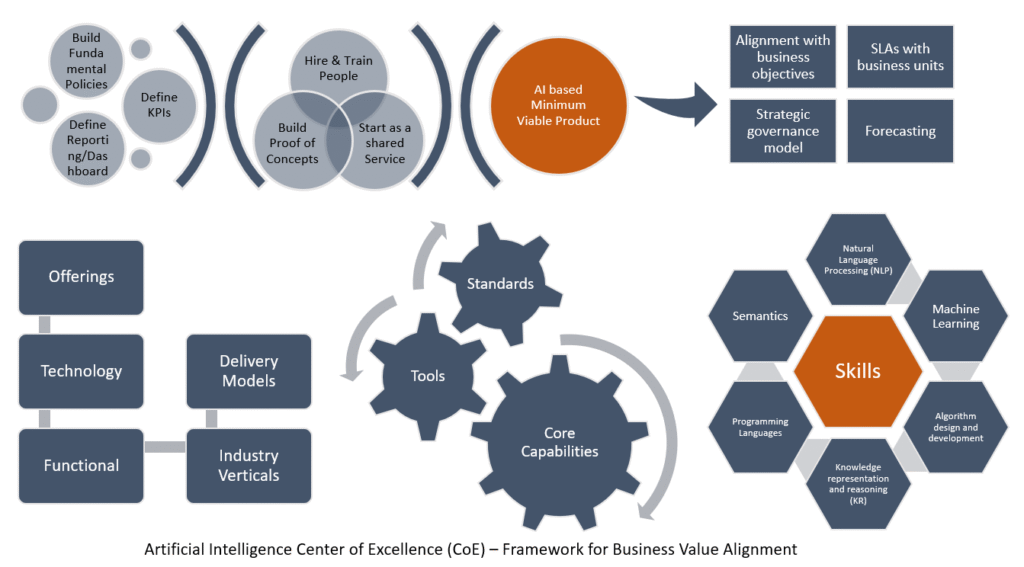
Establishing a Roadmap for Post-Pilot Growth
A successful pilot naturally opens the door to expansion — but agencies should not leave this to chance. As soon as early results appear, introduce a roadmap outlining:
- secondary use cases
- additional workflows
- new departments that could benefit
- deeper integrations (CRM, ERP, website, internal tools)
- opportunities for automation beyond the pilot
This roadmap positions you as a long-term strategic partner, not just a vendor delivering a one-off AI project.
Clients respond well when they can visualize how AI scales inside their organization. Expansion becomes a logical next step rather than a new sales pitch.
FAQ
What are the key steps to identifying client AI needs and linking them to real business outcomes?
Start with short stakeholder interviews to uncover bottlenecks (e.g., support volume, slow workflows, manual reporting). Map these pain points to specific AI capabilities and confirm what success would look like. Review available data early to ensure feasibility. Finally, define KPIs tied to business goals—such as reduced response time, lowered costs, or improved conversions—so the project delivers measurable impact.
How can agencies clearly demonstrate the ROI of AI solutions?
Use before-and-after comparisons, projected time savings, and cost-reduction scenarios to show financial value. Share case studies, pilot results, or simple ROI models to help clients visualize the improvement. Tie every benefit—efficiency, accuracy, speed, or customer experience—back to a business metric the client cares about.
What’s the best way to handle common objections around AI adoption?
Reframe AI as an assistant, not a replacement; show how it reduces repetitive work. Address security concerns with clear explanations of data handling and compliance. Use small pilots to remove risk and build trust. Provide basic training so teams feel comfortable using the new tools.
How do data readiness and governance affect AI success?
Good AI depends on good data. Clean, accessible, well-structured information improves accuracy and reduces errors. Governance adds transparency and keeps the client compliant by defining who owns the data, who can access it, and how it’s monitored. Together, they ensure the AI system delivers reliable, scalable results.
Which pricing models work best for selling AI services?
Flexible models work best: subscriptions for predictable costs, usage-based pricing for variable workloads, and value-based pricing for results-driven clients. Tiered packages help agencies serve both SMBs and enterprises. Some agencies also use hybrid models—flat fee + usage or performance incentives—to align pricing with outcomes.
Conclusion
Selling AI services isn’t about pitching technology — it’s about guiding clients through a clear, low-risk path to improvement.
When agencies focus on understanding real problems, showing practical value, and starting with a manageable pilot, clients feel confident taking the first step. That confidence is what turns a single project into an ongoing partnership.
To explore how agencies can expand their offerings even further, learn more about top AI reseller programs in this guide: What to Look for in an AI Reseller Program: A Partner’s Checklist.