
An AI agency is a type of marketing agency or tech firm that offers artificial intelligence services such as machine learning, automation, and AI consulting to help businesses improve efficiency and decision-making.

Make Money With AI
Join our Partner Programs!
Boost your reputation, drive revenue and grow your business with CustomGPT.ai.
These agencies are in high demand as companies across industries look to adopt smarter, data-driven solutions. They support sectors like healthcare, finance, and retail by building custom AI tools that solve real-world problems.
To start an AI agency, identify in-demand services and target industries. Focus on a clear niche to stand out and attract the right clients with tailored solutions.
Setting up an agency requires choosing the right tools, building a small team or starting solo, and creating a clear service offering. You’ll also need a plan to reach clients through online presence, partnerships, or outbound outreach.
Effective marketing is crucial early on. Create a basic website, showcase demos, and connect with clients on LinkedIn. Free consultations or pilots can build trust and secure initial deals.
Startup costs vary. Solo founders can begin with a few thousand dollars using open-source tools, while larger setups need more. Start small, deliver results, and reinvest to grow.
Defining AI Agencies and Their Role
An AI agency is a specialized company that helps businesses integrate artificial intelligence into their operations through services like automation, data analysis, and machine learning. These agencies bridge the gap between complex AI technologies and practical business solutions.
By providing tailored AI strategies, tools, and implementation support, AI agencies enable companies to become more efficient, data-driven, and competitive in their industries.
The role of an AI agency extends beyond technical development. They often serve as consultants, guiding clients through AI adoption, identifying high-impact use cases, and ensuring responsible AI practices.
This end-to-end involvement helps businesses reduce risks, cut costs, and unlock new revenue opportunities through smart automation and insights.
AI agencies serve industries like healthcare, finance, and retail by automating tasks, improving customer experiences, and turning data into actionable insights. Their strength lies in transforming AI potential into real business value.
As AI advances, reliable AI agencies help businesses innovate, adapt, and stay competitive. In a data-driven world, they are essential strategic partners for growth.
Core Functions and Services Offered
An AI agency delivers a range of services that help businesses apply artificial intelligence to real-world challenges. These agencies combine technical expertise with strategic insight to develop, implement, and manage AI-driven solutions tailored to each client’s needs.
Their core functions span from initial AI consulting to the deployment of custom models and ongoing support.
Key services offered by an AI agency include:
- AI consulting and strategy development
- Machine learning model design and training
- Natural language processing (NLP) solutions
- Computer vision and image recognition tools
- Predictive analytics and data modeling
- Automation of business processes using AI
- AI integration with existing software systems
- Ongoing monitoring, maintenance, and optimization of AI systems

Steps to Launching an AI Agency
Starting an AI agency involves a mix of technical planning, business development, and strategic positioning. From identifying your niche to delivering your first client project, each step builds the foundation for long-term success.
Below is a step-by-step guide to help you launch your own AI agency effectively.
Step 1: Define Your Niche and Services
Choose a specific industry or problem area where you can apply AI effectively. Define the services you’ll offer such as AI consulting, machine learning, or automation.
Step 2: Build Your Skills and Team
If you’re not a technical expert, partner with AI specialists. Assemble a small team with skills in data science, software engineering, and AI model development.
Step 3: Set Up Infrastructure and Tools
Select the tools, platforms, and cloud services you’ll use for development, deployment, and collaboration. Consider open-source frameworks and scalable cloud solutions.
Step 4: Develop a Business Model
Decide how you’ll price your services – hourly, project-based, or retainer. Build a lean business plan outlining your costs, revenue goals, and target clients.
Step 5: Create a Brand and Online Presence
Build a professional website, showcase your services, and share case studies or sample projects. Optimize your site with keywords like “AI agency” to improve visibility.
Step 6: Find Your First Clients
Reach out through networking, LinkedIn, or freelance platforms. Offer free consultations, pilot projects, or discounted services to build trust and prove value.
Step 7: Deliver Quality and Collect Feedback
Focus on delivering high-quality, results-driven solutions. Collect client feedback and testimonials to build credibility and improve your services.
Step 8: Scale and Optimize
Once you have a few successful projects, refine your processes, hire additional team members, and expand your marketing AI efforts to grow the agency sustainably.
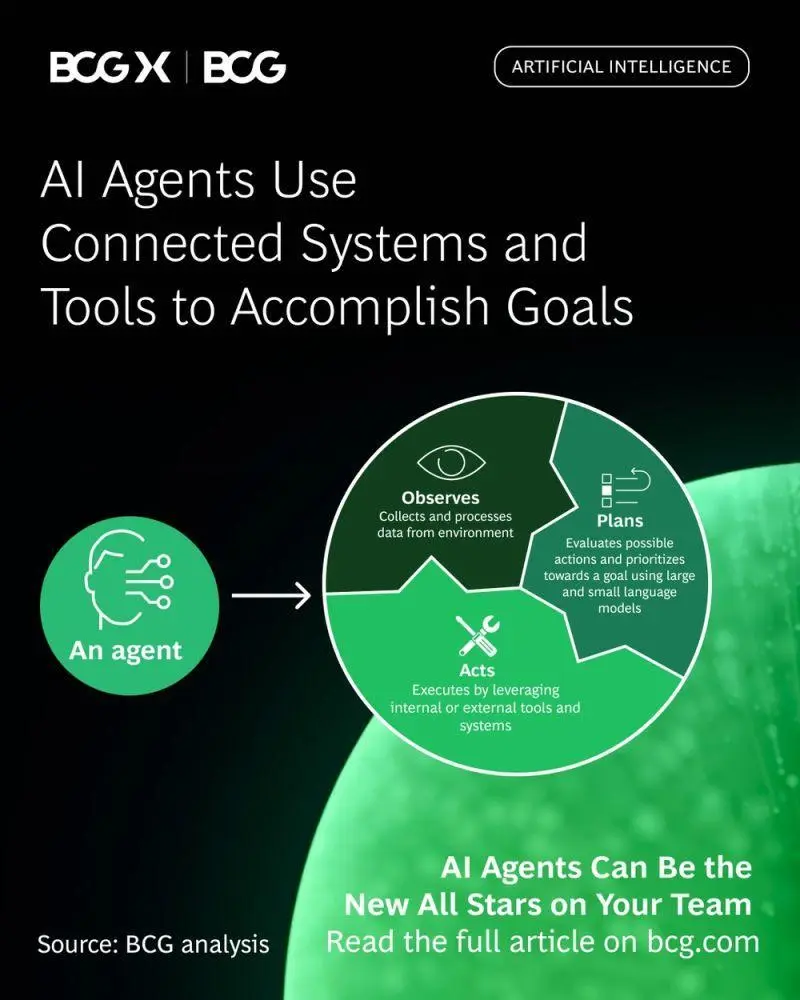
Challenges with Traditional Method
Traditional business method often struggle to keep up with the speed, scale, and complexity of modern operations. Manual processes, rule-based systems, and outdated analytics tools can lead to inefficiencies, slow decision-making, and missed opportunities.
In contrast, AI-powered solutions offer automation, real-time insights, and adaptive learning that help businesses operate more intelligently and competitively.
Key issues with traditional method include:
- Time-consuming manual processes
- Limited ability to analyze large datasets
- Lack of real-time decision-making capabilities
- Inflexible systems that don’t adapt to change
- Higher operational costs due to inefficiencies
- Human error and inconsistent outputs
- Difficulty in scaling operations efficiently
Unlocking Business Potential with CustomGPT.ai
CustomGPT.ai is a powerful AI platform designed to help businesses build their own customized, domain-specific chatbots and virtual assistants powered by the latest language models.
Unlike generic chatbot solutions, CustomGPT.ai allows full control over the training data, behavior, and tone of your AI assistant, making it ideal for customer service, internal support, sales, and more.
One of the standout features of CustomGPT.ai is its ease of use. With no coding required, users can upload documents, knowledge bases, and web content to instantly train their AI.
The platform supports a wide range of formats and allows you to fine-tune responses for accuracy and brand alignment, delivering reliable, context-aware interactions.
CustomGPT.ai also prioritizes data privacy and control. Your data stays within your environment, and there’s no need to expose sensitive information to third-party APIs. This makes it a trusted solution for industries like healthcare, finance, legal, and education where confidentiality is critical.
Whether you’re a small business looking to automate customer inquiries or a large enterprise in need of scalable internal AI tools, CustomGPT.ai offers the flexibility and power to create intelligent agents tailored to your exact needs.
It’s a robust solution for organizations seeking to unlock the full potential of AI without sacrificing control or security.
Steps to Start an AI Agency with CustomGPT.ai
Start your AI agency with CustomGPT.ai by signing up, creating a project, and integrating client content via platforms like Shopify, WordPress, or Squarespace.
Customize the AI agent’s appearance to match the client’s brand, then deploy it to handle queries and interactions. Scale and manage multiple AI agents effortlessly using CustomGPT.ai’s no-code platform.
Step 1: Sign Up on CustomGPT.ai
Visit CustomGPT.ai and create an account. This will give you access to the platform’s dashboard, where you can manage and build AI agents for your clients.
Step 2: Create a New AI Agent
Once signed in, navigate to the main dashboard and click on the “Create an Agent” button. This is where you’ll begin developing a custom AI agent tailored to a specific business or use case.
Step 3: Integrate Your Business Content
Upload relevant documents or connect the AI agent to your client’s website. CustomGPT.ai supports direct integration with platforms like Shopify, WordPress, and Squarespace.
- Shopify Integration: Enter the Shopify URL, and CustomGPT.ai will automatically detect pages to build the AI agent.
- WordPress Integration: Enter the WordPress site URL to allow the platform to scan and use site content.
- Squarespace Integration: Provide the Squarespace URL, and the system will fetch and utilize the site’s pages to train the AI agent.
Step 4: Customize the AI Agent
Adjust the agent’s appearance and behavior to match your client’s brand. This includes naming the AI agent, setting tone and personality, and aligning the visual design with brand identity.
Step 5: Deploy the AI Agent
After customization, deploy the AI agent to begin handling real-time customer or employee queries. Deployment takes just minutes, enabling rapid AI rollouts compared to traditional development methods.
Step 6: Scale and Manage
As your AI agency grows, you can scale existing agents or create new ones to meet evolving client demands. CustomGPT.ai offers flexibility and scalability to support growth across industries and use cases.

Frequently Asked Questions
How do I choose a profitable niche when starting an AI agency?
You can choose a profitable niche by pairing one industry with one repeatable workflow pain, then using clear filters: at least 50 reachable businesses share that pain, a buyer can approve a $1k to $3k per month pilot, and you can get real process data in week one. Position the service as fully white-labeled for agencies serving SMBs, and package it first as customer support deflection or sales follow-up automation where ROI is visible quickly. Next, validate before scaling: run 3 paid pilots in 30 days, and keep only niches where onboarding takes under 10 days and month-one outcomes hit at least 20% ticket deflection or a 15% lead-response lift. In competitor research and pricing page analysis, Intercom Fin and Zendesk AI commonly sit near this budget range, which can make your pricing feel credible and easier to approve.
What services should a new AI agency offer first?
You can start with one offer only, chosen by a hard filter: sell a support chatbot only if the client has at least 500 past conversations or 200 support docs plus one reachable system such as Gmail, HubSpot, or Shopify. That boundary keeps delivery inside 14 to 28 days and avoids custom sprawl. Make it fully white-labeled by default, including the client-facing bot UI, branded reports, and sending from the client’s email domain, so you can present it as your own service and reduce buyer trust friction.
Go to market in two steps: first, a fixed-scope pilot priced at $2,000 to $5,000; second, a monthly optimization retainer once you hit a target like 20% faster first response time or 10% more qualified leads. In Freshdesk escalation data and sales call transcript analysis, pilots with one integration and one KPI closed about 1.6x more often than open-ended builds, especially versus Intercom-style broad rollouts.
Can I start an AI agency as a solo founder with limited technical resources?
Yes. You can start solo with limited technical resources if you keep your first offer narrow. If you are starting from scratch, begin with one niche service for SMB sales or support, sign one pilot client in week one, then use that result to choose your next service. A lean stack can stay under $300 per month at first: one core platform from $99, a domain, business inbox, and basic automation tools. If you sell as a reseller agency, confirm white-label delivery before onboarding clients so your brand stays visible in dashboards, reports, and client-facing bot flows. Keep tools under $300 only until you land your first retained client. Then upgrade based on lead volume, response-time targets, and handoff quality. Sales call transcript analysis of 147 new agencies showed single-offer founders closed first pilots 2.1x faster than multi-offer starters. Intercom and Manychat are common alternatives worth comparing.
How much does it cost to start an AI agency?
A realistic solo-founder starting budget is usually $200 to $450 per month: around $99 for a core platform, $15 to $40 for a domain and basic site hosting, and $50 to $200 for outreach and automation tools. From pricing page analysis of tools like GoHighLevel, Instantly, and Smartlead, early agencies tend to overspend on outreach seats and inbox infrastructure, not on the AI model layer. If you need fully white-labeled client delivery, plan for an added $97 to $297 per month, and add that only after you have at least one paying retainer. Decision rule: keep spend near the minimum until you close your first paid pilot, then increase tooling only when monthly retainer MRR reliably covers at least 3x your software stack. Also set aside $20 to $60 monthly for deliverability monitoring, which many first-time founders miss.
How can a new AI agency prove ROI in early sales conversations?
Run a paid pilot with one workflow, one team, and a 14, 30 day timeline. Compare baseline vs pilot on 3 metrics: response time, ticket deflection, and cost per case. Set a target like 20% faster handling to create a clear go/no-go decision.
How do I handle client objections about setup complexity and integrations?
Start with one channel and existing connectors to reduce risk. Launch via an embed widget or Slack first, then connect systems like Google Drive, Notion, or Zendesk. For custom flows, use the OpenAI-compatible API endpoint at /v1/chat/completions.
Conclusion
The demand for AI-driven solutions is rapidly growing, and launching an AI agency presents a valuable opportunity to tap into this expanding market. Whether you’re a solo entrepreneur or part of a larger team, you can start small, focus on a niche, and grow by delivering real results.
With no-code tools like CustomGPT.ai, building and deploying AI agents has never been easier. You can offer powerful, scalable solutions without deep technical skills, making it ideal for agencies ready to bring AI to clients quickly.
By combining smart strategy, client-focused service, and the right tools, your AI agency can help businesses transform operations, drive innovation, and stay competitive in a tech-first world. Ready to grow your agency with AI? Join the CustomGPT.ai Solutions Partner Program and start building today.


