

AI chatbot analytics are redefining how agencies measure success, moving the focus beyond surface-level conversations to real, actionable intelligence.

Make Money With AI
Join our Partner Programs!
Boost your reputation, drive revenue and grow your business with CustomGPT.ai.
Instead of guessing what works, agencies can now see exactly how users interact, where they drop off, and what drives meaningful engagement.
For agencies managing multiple clients, analytics turn chatbots from simple automation tools into strategic growth assets.
By understanding patterns, intent, and performance trends, teams can optimize experiences, prove ROI, and position themselves as data-driven partners rather than just service providers.
Why AI Chatbot Analytics Matter for Agencies
AI chatbot analytics give agencies the clarity they need to move from deploying chatbots to actively improving them.
Instead of relying on anecdotal feedback, agencies can use conversational analytics to understand real user behavior and align chatbot performance with client business goals.
For client-facing teams, this data becomes essential for reporting value, justifying optimizations, and scaling chatbot strategies across industries. Strong analytics also help agencies position themselves as strategic advisors, not just chatbot implementers.
Understanding Client Expectations and Goals
Before tracking metrics, agencies need clarity on what success actually means for each client. Different goals—lead generation, support deflection, or user engagement—require different chatbot performance metrics.
Align analytics with client objectives
- Identify the primary business outcome the chatbot supports
- Map chatbot interactions to measurable KPIs
- Set realistic benchmarks based on industry and traffic levels
When expectations are defined upfront, analytics become a tool for alignment rather than confusion.
Identifying the Right AI Chatbot Analytics Metrics
Not all data points are equally valuable, and tracking everything often leads to noisy reports. Agencies should prioritize metrics that clearly reflect performance, efficiency, and user satisfaction.
Focus on high-impact chatbot performance metrics
- Conversation completion rate to measure task success
- Fallback or error rate to identify knowledge gaps
- Engagement depth to understand user intent quality
Choosing the right metrics ensures analytics support optimization instead of overwhelming stakeholders.
Turning Conversational Analytics Into Insights
Raw data alone doesn’t create value unless it’s interpreted correctly. Agencies must translate conversational analytics into insights that clients can easily understand and act on.
Key questions analytics should answer
- Where do users drop off in conversations?
- Which intents perform best or worst?
- How does chatbot behavior impact conversions or support volume?
Insight-driven analysis transforms analytics from reports into decision-making tools.

Image source: 5ly.co
Reporting AI Chatbot Performance to Clients
Clear reporting is critical for building trust and demonstrating ROI. Agencies should present AI chatbot analytics in a way that highlights progress, challenges, and next steps without overwhelming clients.
| Reporting Element | What It Shows | Why It Matters |
| Trend summaries | Performance over time | Demonstrates improvement or decline |
| Top metrics | Core chatbot KPIs | Keeps focus on business value |
| Optimization notes | What was changed and why | Connects actions to results |
Well-structured reports help clients see chatbots as evolving assets, not static tools.
Tracking and Analyzing AI Chatbot Performance Effectively
Tracking AI chatbot analytics consistently allows agencies to spot performance gaps early and validate optimization decisions with data.
Instead of reactive fixes, agencies can adopt a structured analysis approach that improves chatbot efficiency and user satisfaction over time.
A repeatable tracking framework also simplifies client reporting and ensures insights are comparable across campaigns, industries, and chatbot use cases.
Setting Up a Consistent Analytics Framework
A strong analytics framework ensures data is reliable, comparable, and actionable across all client chatbots. Agencies should standardize how data is collected and reviewed before diving into optimization.
Core elements of a reliable tracking setup
- Define a fixed reporting cadence (weekly or monthly)
- Use consistent metric definitions across clients
- Segment data by intent, channel, or user type A structured framework makes AI chatbot analytics easier to scale and explain.
Monitoring User Behavior Across Conversations
Understanding how users move through conversations reveals friction points that metrics alone may miss. Behavioral analysis helps agencies improve flow, clarity, and intent recognition.
Behavior signals worth monitoring
- Repeated user inputs indicating confusion
- Early exits within key conversation paths
- Intent switching during a single session Tracking behavior patterns supports smarter chatbot optimization decisions.
Comparing Performance Across Time Periods
Point-in-time data lacks context without historical comparison. Agencies should analyze trends to understand whether changes are improving or harming performance.
Time-based comparisons to focus on
- Month-over-month completion rates
- Pre- and post-optimization engagement changes
- Seasonal traffic impact on chatbot usage Trend analysis turns conversational analytics into long-term strategy insights.
Identifying Optimization Opportunities From Data
The real value of analytics lies in uncovering what to improve next. Agencies should regularly review data with an optimization mindset rather than treating reports as final outputs.
Common optimization signals
- High fallback rates tied to specific intents
- Low conversion paths within goal-driven flows
- Overused escalation to human agents Using AI chatbot analytics this way keeps chatbots evolving alongside client goals.
Optimizing AI Chatbots Using Analytics-Driven Insights
AI chatbot analytics enable agencies to move beyond surface-level fixes and implement improvements backed by real user data. When optimization is guided by analytics, chatbots become more accurate, efficient, and aligned with client objectives.
For agencies, this approach creates a clear feedback loop where performance data directly informs updates, testing, and long-term AI chatbot strategy.

Image source: prakashinfotech.com
Improving Intent Recognition and Accuracy
Analytics often reveal which intents fail, overlap, or trigger fallbacks, making them a priority for optimization. Refining intent structure improves both user satisfaction and task completion rates.
Optimization actions based on intent data
- Merge or split overlapping intents
- Add training phrases from real conversations
- Remove rarely triggered or low-value intents Improved intent accuracy reduces friction across the entire chatbot experience.
Enhancing Conversation Flow and User Experience
Poor conversation flow is a common reason for user drop-off, and analytics help pinpoint where that happens. Agencies can use conversational analytics to simplify paths and clarify bot responses.
Conversation flow improvements to consider
- Shorten multi-step interactions
- Rephrase unclear prompts or questions
- Add quick replies to guide user actions Smoother flows lead to higher engagement and better overall chatbot performance.
Reducing Fallbacks and Escalations
High fallback or human handoff rates signal gaps in chatbot understanding or coverage. Analytics make it easier to identify exactly where these issues occur.
Ways to reduce fallback rates
- Expand intent coverage for common queries
- Improve entity recognition
- Update responses tied to outdated content Lower fallback rates indicate a more capable and trusted chatbot.
Testing and Iterating With Performance Data
Optimization is an ongoing process, not a one-time task. Agencies should continuously test changes and measure their impact using AI chatbot analytics.
Best practices for iterative optimization
- Test one change at a time
- Monitor metrics before and after updates
- Document results for client reporting A test-and-learn approach ensures chatbot improvements are measurable and repeatable.
Reporting AI Chatbot Analytics and Proving Client ROI
AI chatbot analytics are most valuable when agencies can clearly communicate results and business impact to clients.
Strong reporting turns performance data into narratives that highlight progress, justify decisions, and reinforce the agency’s strategic role.
Effective reports focus on outcomes, not just activity, helping clients understand how chatbot performance ties directly to conversions, cost savings, or customer experience improvements.
Selecting the Most Meaningful Metrics for Reports
Clients don’t need every data point—they need the right ones. Agencies should curate metrics that align directly with agreed-upon goals and KPIs.
Metrics that resonate with clients
- Goal completion or conversion rate
- Reduction in support tickets or agent workload
- Engagement rate across key flows Focusing on meaningful metrics keeps reports clear and results-oriented.
Structuring Clear and Client-Friendly Dashboards
Dashboards should simplify insights, not overwhelm stakeholders with raw data. A well-structured dashboard helps clients quickly grasp chatbot performance at a glance.
Elements of an effective analytics dashboard
- High-level summary metrics at the top
- Visual trends instead of dense tables
- Clear labels tied to business outcomes Clean dashboards improve transparency and client confidence.
Demonstrating ROI Through Performance Trends
ROI becomes clearer when performance is tracked over time rather than reported in isolation. Trend-based reporting shows how optimization efforts drive measurable improvements.
| Metric Trend | Business Impact | Client Value |
| Rising completion rate | Better task success | Higher user satisfaction |
| Lower fallback rate | Improved accuracy | Reduced support costs |
| Increased engagement | Stronger intent match | Higher conversions |
| Trend analysis helps clients see chatbot analytics as a growth investment. |
Turning Reports Into Strategic Conversations
Reports should spark discussions, not just be delivered and forgotten. Marketing agencies can use analytics reviews to recommend next steps and future optimizations.
Ways to elevate reporting conversations
- Highlight one key win and one key opportunity
- Tie insights to upcoming business goals
- Propose data-backed optimization actions This approach positions AI chatbot analytics as an ongoing strategic advantage rather than a static report.

Image source: codiste.com
Scaling AI Chatbot Analytics Across Multiple Clients
As agencies grow their chatbot offerings, managing AI chatbot analytics across multiple clients becomes increasingly complex. A scalable approach ensures insights remain consistent, comparable, and easy to act on without increasing operational overhead.
Standardizing analytics processes also helps agencies maintain quality while delivering faster optimization and clearer reporting at scale.
Standardizing Metrics Across Client Accounts
When each client tracks different metrics, analytics lose their strategic value. Agencies should define a core set of standardized chatbot performance metrics while allowing room for client-specific goals.
Why standardized metrics matter
- Simplify cross-client performance comparisons
- Reduce reporting and analysis time
- Improve internal decision-making consistency
Standardization keeps AI chatbot analytics manageable as client volume grows.
Managing Analytics for Different Industries
Different industries require different success benchmarks, even when using the same chatbot technology. Agencies must interpret analytics through an industry-specific lens.
Industry-specific considerations
- E-commerce chatbots prioritize conversion and cart recovery
- SaaS chatbots focus on onboarding and feature education
- Support chatbots emphasize resolution speed and deflection
Contextual analysis ensures chatbot optimization remains relevant for every client.
Automating Data Collection and Reporting
Manual analytics processes don’t scale well across multiple chatbot deployments. Automation helps agencies collect, analyze, and report data efficiently.
Areas where automation adds value
- Scheduled performance reports
- Automated alerts for performance drops
- Consistent dashboard updates
Automation allows teams to focus more on strategy and less on data handling.
Maintaining Quality While Scaling Optimization
Scaling should not come at the cost of chatbot performance. Agencies need systems in place to ensure optimization remains data-driven and intentional.
Best practices for scalable optimization
- Use repeatable optimization checklists
- Review analytics at fixed intervals
- Document changes and performance impact
A disciplined approach keeps AI chatbot analytics effective even at scale.
Using AI Chatbot Analytics to Drive Long-Term Client Strategy
AI chatbot analytics shouldn’t be limited to short-term fixes or monthly reports. When analyzed over time, they help agencies guide clients toward smarter digital strategies and more sustainable performance improvements.
By connecting chatbot insights with broader business goals, agencies can elevate conversations from optimization tasks to long-term growth planning.
Aligning Chatbot Insights With Business Objectives
Chatbot data becomes more powerful when it’s tied directly to what the business is trying to achieve. Agencies should consistently map analytics back to revenue, efficiency, or customer experience goals.
How to align analytics with strategy
- Connect chatbot goals to marketing or support KPIs
- Track how conversations influence conversions or retention
- Revisit objectives as business priorities change
Strategic alignment ensures chatbot analytics support meaningful outcomes.
Identifying Trends That Inform Future Improvements
Short-term metrics show performance, but long-term trends reveal direction. Agencies should look beyond individual reports to identify patterns that guide future chatbot enhancements.
Trends worth monitoring over time
- Shifts in user intent or question types
- Gradual improvements or declines in completion rates
- Changes in engagement as traffic scales
Trend analysis helps agencies anticipate needs rather than react to issues.
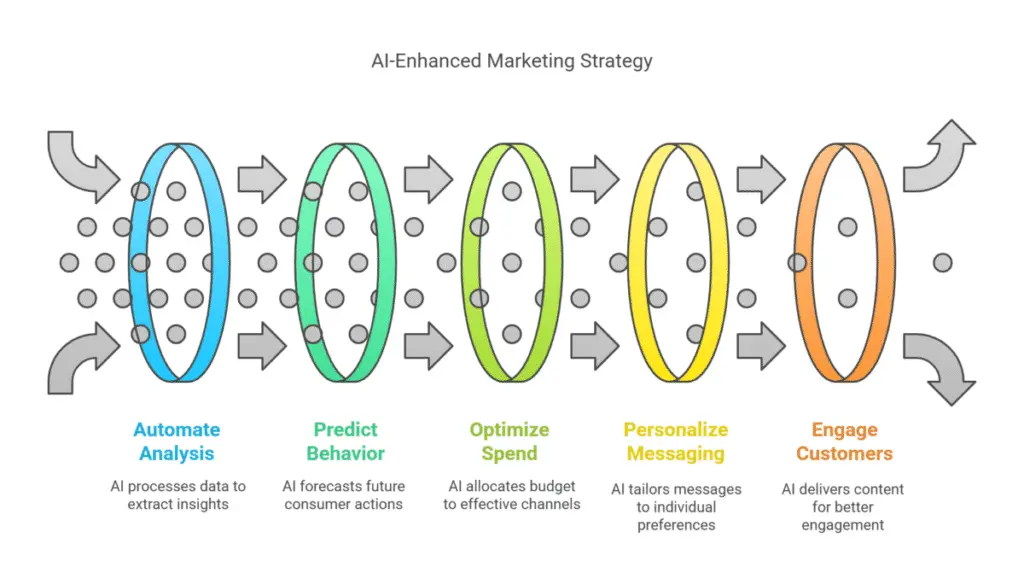
Image source: scalepv.com
Supporting Data-Backed Recommendations to Clients
Clients are more likely to trust and act on recommendations when they’re grounded in clear analytics. Agencies can use historical data to justify roadmap decisions.
Analytics-driven recommendations include
- Expanding chatbot use cases based on demand
- Integrating chatbots with CRM or support tools
- Adjusting conversation tone or structure
Data-backed guidance strengthens the agency’s advisory role.
Positioning Analytics as a Competitive Advantage
When used effectively, AI chatbot analytics become a differentiator for agencies. They demonstrate maturity, accountability, and a commitment to continuous improvement.
Ways analytics enhance agency value
- Stronger client retention through transparency
- Clear proof of ROI and optimization impact
- More strategic, consultative client relationships
Long-term use of AI chatbot analytics turns chatbots into lasting business assets rather than short-term experiments.
Common Challenges Agencies Face With AI Chatbot Analytics
Even with the right tools in place, agencies often encounter challenges when working with AI chatbot analytics at scale. Understanding these obstacles early makes it easier to address them before they impact performance or client trust.
By proactively managing analytics challenges, agencies can maintain accuracy, clarity, and momentum in their chatbot optimization efforts.
Dealing With Incomplete or Noisy Data
Chatbot data isn’t always clean or perfectly structured, especially in early deployments. Incomplete conversations and irrelevant inputs can skew insights if not handled carefully.
Ways to improve data quality
- Filter out test and internal conversations
- Segment incomplete or abandoned sessions
- Focus analysis on high-intent interactions
Cleaner data leads to more reliable analytics and better decisions.
Avoiding Metric Overload
Tracking too many metrics can dilute focus and confuse both agency teams and clients. Not every data point contributes to meaningful insights.
How to keep analytics focused
- Limit reports to goal-aligned KPIs
- Separate operational metrics from strategic ones
- Review metric relevance regularly
A streamlined metric set keeps analytics actionable and easy to interpret.
Translating Technical Data for Non-Technical Clients
Clients may struggle to understand analytics without proper context. Agencies must bridge the gap between technical performance data and business impact.
Techniques for clearer communication
- Use plain language instead of platform-specific terms
- Pair metrics with real-world examples
- Focus on outcomes rather than system behavior
Clear translation builds confidence and strengthens client relationships.
Keeping Analytics Action-Oriented
Analytics lose value when they stop driving action. Agencies must ensure insights consistently lead to optimization or strategic recommendations.
Signs analytics are actionable
- Each report includes clear next steps
- Insights tie directly to optimization plans
- Performance reviews lead to decisions
Action-oriented AI chatbot analytics ensure data continuously fuels improvement rather than sitting idle.
FAQ
Q: How do agencies know if a chatbot is performing well?
A: Agencies assess chatbot performance by comparing outcomes like task completion and fallback rates against defined goals. Performance is relative to intent design, traffic quality, and use case. Analytics show trends rather than absolute success. Benchmarks vary by industry.
Q: Can chatbot analytics show return on investment?
A: Chatbot analytics can support ROI analysis by linking performance trends to cost savings or conversions. They do not directly calculate revenue. ROI estimates depend on assumptions and external business data. Results should be framed as directional.
Q: How often should agencies review chatbot analytics?
A: Most agencies review analytics weekly or monthly depending on traffic volume. High-traffic chatbots benefit from more frequent monitoring. Low usage can make short-term analysis unreliable. Review cadence should remain consistent.
Q: Can chatbot analytics track user satisfaction?
A: Analytics can infer satisfaction through completion rates and drop-offs but cannot directly measure sentiment. Explicit feedback tools are required for accuracy. Behavioral signals are proxies, not guarantees. Interpretation should be cautious.
Q: How do agencies compare chatbot performance over time?
A: Performance is compared using trend analysis across consistent metrics. Agencies look at changes before and after updates. Seasonal traffic can affect results. Context is required to avoid false conclusions.
Q: What limitations do chatbot analytics have?
A: Analytics show patterns, not user intent certainty. They depend on accurate tagging and setup. Low usage limits insight quality. Human review remains necessary.
Conclusion
AI chatbot analytics help agencies move beyond surface-level performance checks and into informed, data-driven decision-making.
When tracked and interpreted correctly, analytics provide the clarity needed to optimize conversations, demonstrate measurable value, and guide long-term client strategy with confidence.
As agencies scale their chatbot offerings, responsible data handling and governance become just as important as performance insights.
To ensure analytics practices align with evolving regulations and client expectations, explore how agencies can approach AI compliance thoughtfully and sustainably.
Turn Chatbot Data Into Agency Value.
Use AI chatbot analytics to measure outcomes, optimize performance, and prove client ROI.
Trusted by thousands of organizations worldwide


