
AI for Financial Services Marketing: A Guide for Agencies
AI is rapidly reshaping how financial brands connect with customers, and AI for financial services marketing is becoming a must-have capability for modern agencies embracing white-label AI.

Make Money With AI
From predictive targeting to real-time personalization, AI enables smarter campaigns that resonate with highly regulated, trust-driven audiences.
For marketing agencies, this shift represents both an opportunity and a challenge as clients demand measurable growth without compromising compliance.
Understanding how to apply AI strategically allows agencies to deliver more relevant messaging, optimize spend, and stand out in an increasingly competitive financial services landscape.
Understanding AI’s Role in Financial Services Marketing
AI is transforming financial services marketing by helping agencies balance performance with strict regulatory expectations.
For marketing agencies, using AI effectively means not only driving engagement but also ensuring every campaign aligns with compliance, data privacy, and transparency standards.
As financial services AI marketing continues to mature, agencies that understand AI’s core capabilities can design smarter strategies that scale without increasing risk. This foundation is essential before applying AI to targeting, personalization, or campaign optimization.
How AI Supports Data-Driven Decision Making
AI enables agencies to analyze vast volumes of financial consumer data and uncover insights that would be impossible to identify manually. These insights help marketers predict behaviors, refine messaging, and improve campaign outcomes while maintaining control over sensitive data.
Key ways AI improves decision-making include:
- Identifying high-intent audience segments based on behavioral patterns
- Forecasting campaign performance using predictive analytics
- Optimizing budget allocation across channels in real time
When applied correctly, AI turns raw financial data into actionable marketing intelligence.
Balancing Personalization With Compliance
Personalization is critical in financial marketing, but it must be executed within strict regulatory boundaries. AI allows agencies to tailor messaging dynamically while adhering to approved language, disclosures, and risk guidelines.
AI helps agencies stay compliant by:
- Enforcing pre-approved content frameworks automatically
- Monitoring personalization rules to avoid misleading claims
- Adjusting messaging based on jurisdiction-specific regulations
This balance ensures campaigns feel relevant without exposing clients to compliance risks.
Automating Campaign Optimization Safely
AI-driven optimization helps agencies refine campaigns continuously without constant manual intervention. In regulated industries, automation must be carefully controlled to prevent unauthorized changes or non-compliant variations.
Safe optimization strategies using AI include:
- Automated A/B testing within approved content parameters
- Performance-based adjustments that exclude sensitive variables
- Real-time alerts when campaigns approach compliance thresholds
With the right safeguards, AI automation enhances efficiency while protecting brand integrity.
Building Trust Through Transparent AI Usage
Trust is central to financial services marketing, and agencies must be transparent about how AI influences customer experiences. Clear AI governance reassures both clients and regulators that technology is being used responsibly.
Best practices for transparent AI usage include:
- Documenting how AI models make targeting and content decisions
- Maintaining audit trails for AI-driven campaign changes
- Regularly reviewing AI outputs for bias or risk exposure
By prioritizing transparency, agencies strengthen long-term client relationships and campaign credibility. This foundational understanding sets the stage for applying AI more strategically across targeting, content, and compliance workflows in financial services marketing.
Using AI to Enhance Audience Targeting and Segmentation
Effective audience targeting is especially critical in financial services, where relevance, trust, and timing directly impact conversions. AI allows agencies to move beyond basic demographics and build smarter segmentation models that respect privacy while improving performance.
By applying AI-driven marketing for finance, agencies can uncover nuanced audience insights and activate them across compliant campaigns. This approach helps financial brands reach the right users with the right message—without overstepping regulatory boundaries.
Leveraging Predictive Analytics for Smarter Targeting
Predictive analytics uses AI to anticipate customer behavior based on historical and real-time data. This enables AI agencies to identify prospects who are most likely to convert or engage with specific financial products.
How predictive analytics improves targeting:
- Scores leads based on likelihood to take action
- Anticipates customer needs before intent is explicit
- Reduces wasted spend on low-propensity audiences
When used responsibly, predictive targeting increases efficiency while maintaining ethical data use. Targeting becomes more proactive and data-informed rather than reactive.
Creating Privacy-Safe Customer Segments
Financial data is highly sensitive, making privacy-safe segmentation essential. AI helps marketing agencies build meaningful segments without relying on personally identifiable information.
AI supports compliant segmentation by:
- Using anonymized and aggregated data models
- Identifying behavioral patterns instead of individual identities
- Adapting segments as regulations or consent rules change
This ensures segmentation remains both effective and regulation-ready. Privacy-first targeting strengthens consumer trust and long-term brand value.
Improving Lookalike and Prospecting Audiences
AI-powered lookalike modeling allows agencies to expand reach while maintaining relevance. By analyzing existing high-value customers, AI identifies similar profiles without copying sensitive attributes.
Benefits of AI-driven prospecting include:
- Higher-quality acquisition audiences
- Reduced risk of biased or non-compliant targeting
- Faster scaling of successful campaigns
This approach supports growth while aligning with financial marketing standards. Smarter prospecting helps agencies scale confidently in regulated markets, including healthcare marketing.
Adapting Targeting in Real Time
AI enables real-time adjustments to targeting strategies based on performance signals and market conditions. This flexibility is especially valuable in finance, where consumer sentiment can change quickly.
Real-time AI targeting capabilities include:
- Adjusting audience criteria based on engagement trends
- Pausing underperforming segments automatically
- Responding to economic or seasonal shifts
Dynamic targeting keeps campaigns efficient and relevant without manual intervention. This agility gives agencies a competitive edge in fast-moving financial markets.
This targeting foundation enables agencies to apply AI more effectively to content creation and messaging, which is the next critical layer of financial services marketing success.
Creating Compliant and High-Performing AI-Driven Content
Content in financial services must educate, persuade, and comply—all at the same time. AI helps agencies scale content production while maintaining consistency, accuracy, and regulatory alignment across channels.
With AI for financial services marketing, agencies can produce personalized yet compliant messaging faster, ensuring every asset meets brand, legal, and performance standards. This makes AI a powerful ally for content teams working under tight constraints.
Using AI to Generate Regulation-Ready Content
AI content tools can assist agencies by drafting copy that follows predefined compliance rules and tone guidelines. This reduces revision cycles and minimizes the risk of non-compliant language reaching production.
Ways AI supports compliant content creation:
- Generates copy using pre-approved claims and disclosures
- Maintains consistent tone across ads, emails, and landing pages
- Flags restricted phrases or promises automatically
- Speeds up content ideation without bypassing legal review
This allows agencies to scale content output while staying within guardrails. Reliable AI-assisted drafting frees teams to focus on strategy rather than rewrites.
Personalizing Messaging Without Increasing Risk
Personalization improves engagement, but in finance it must be tightly controlled. AI enables personalization based on behavior and context rather than sensitive personal attributes.
Safe personalization techniques powered by AI include:
- Dynamic messaging based on funnel stage
- Content variations tied to intent signals, not identity
- Rule-based personalization approved by compliance teams
This ensures relevance without exposing brands to regulatory scrutiny. Controlled personalization builds trust while still improving performance.
Maintaining Brand and Legal Consistency at Scale
As campaigns expand across platforms, consistency becomes harder to manage manually. AI helps enforce brand and legal standards across every asset.
AI-driven consistency benefits include:
- Automated brand voice alignment across formats
- Centralized content rules applied at scale
- Reduced human error in repetitive content tasks
Consistency strengthens credibility, especially in high-trust industries like finance. This approach helps agencies deliver polished, compliant campaigns across channels.
Reviewing and Optimizing Content Performance
AI doesn’t stop at creation—it also evaluates how content performs in real-world conditions. Agencies can use AI insights to refine messaging without introducing compliance risk.
Content optimization with AI often includes:
- Identifying high-performing compliant language patterns
- Testing approved variations safely
- Measuring engagement without tracking sensitive data
These insights guide smarter iterations over time. Continuous improvement ensures financial content remains both effective and responsible.
Optimizing Campaign Performance While Meeting Regulatory Standards
Performance optimization in financial services requires a careful balance between agility and control. AI helps agencies improve results continuously while respecting approval workflows, disclosure requirements, and regulatory limitations.
By applying compliant AI marketing strategies, agencies can enhance efficiency without introducing unnecessary risk. This allows teams to focus on growth while maintaining confidence in every optimization decision.
Automating A/B Testing Within Compliance Guardrails
AI-powered testing enables agencies to improve performance without manually managing every variation. In financial marketing, testing must stay within approved content and structural boundaries.
How AI enables safe A/B testing:
- Tests only pre-approved copy and design elements
- Automatically pauses non-compliant or underperforming variants
- Tracks performance without altering required disclosures
This approach accelerates learning while preserving regulatory integrity. Smarter testing leads to faster insights without compliance setbacks.
Using AI to Optimize Media Spend Responsibly
AI can dynamically adjust bids and budgets based on performance signals, helping agencies maximize ROI. In regulated industries, these optimizations must avoid targeting restricted audiences or placements.
Responsible media optimization includes:
- Budget reallocation based on compliant performance metrics
- Channel optimization that excludes high-risk environments
- Continuous monitoring of spend against policy constraints
These controls ensure efficiency without sacrificing oversight. Responsible automation protects both performance and reputation.
Monitoring Campaign Risk in Real Time
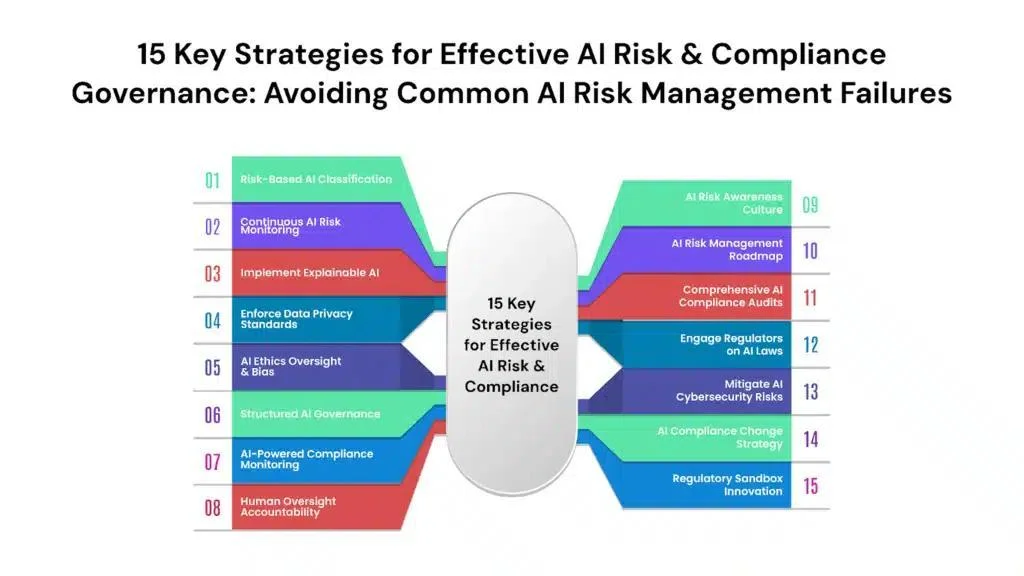
AI can detect potential compliance issues before they escalate into serious problems. Real-time monitoring allows agencies to respond quickly to anomalies or policy violations.
AI-powered risk monitoring capabilities include:
- Alerts for unusual performance spikes or drops
- Detection of messaging deviations across platforms
- Identification of placement or targeting conflicts
Proactive risk management reduces exposure and builds client trust. Early detection keeps campaigns running smoothly.
Balancing Speed and Governance in Optimization
AI increases speed, but governance ensures accountability. Agencies must define clear rules around what AI can and cannot adjust.
Effective governance frameworks often include:
- Approval hierarchies for AI-driven changes
- Audit logs for optimization decisions
- Regular reviews of automated rulesets
This balance ensures innovation doesn’t outpace compliance. Strong governance enables sustainable AI-driven growth. Together, these optimization practices help agencies deliver high-performing financial campaigns that meet regulatory standards and client expectations.
Conclusion
AI is no longer a future consideration for financial services marketing—it’s a practical advantage for agencies that know how to apply it responsibly.
By combining intelligent automation with strong governance, agencies can deliver more relevant, compliant, and high-performing campaigns that meet both client expectations and regulatory demands.
As competition increases and compliance pressures grow, agencies that master AI-driven strategies will be better positioned to scale results without increasing risk.
The key lies in using AI as a controlled enabler—enhancing targeting, content, and optimization while preserving trust and transparency.
Ready to take the next step? Explore how AI-powered co-selling strategies can help your agency unlock new revenue opportunities, strengthen client relationships, and deliver measurable value across regulated industries.
Start building smarter, more scalable financial marketing solutions today.
Frequently Asked Questions
What is the best AI approach for financial services marketing agencies?
For most agencies, the safest approach is a retrieval-grounded AI system that answers from approved disclosures, product documents, and compliance FAQs instead of a general chatbot relying on memory. That setup helps you personalize messaging while keeping claims tied to source material. In the provided sources, CustomGPT.ai is RAG-powered, supports citation-based answers, and outperformed OpenAI in a RAG accuracy benchmark, which is the kind of architecture agencies typically prefer for regulated marketing work.
How can agencies personalize financial marketing without creating compliance risk?
A practical way to personalize without increasing compliance risk is to load only approved messaging, disclosure text, and jurisdiction rules into the system, generate variations inside those boundaries, and require human signoff for any change that affects claims, rates, or suitability. Sara Canaday described the value of a grounded assistant this way: “For the past year, I’ve been using CustomGPT.ai as a specialized AI-powered leadership resource for my VIP clients. One that draws directly from my years of experience, research, and proven leadership strategies. What drew me in? Its simplicity, reasonable cost, and constant feature updates.”
Can AI-generated marketing content be accurate enough for regulated financial campaigns?
Yes, if the content is grounded in current, approved source material and high-risk copy still gets human review. Brendan McSheffrey of The Kendall Project said, “We love CustomGPT.ai. It’s a fantastic Chat GPT tool kit that has allowed us to create a ‘lab’ for testing AI models. The results? High accuracy and efficiency leave people asking, ‘How did you do it?’ We’ve tested over 30 models with hundreds of iterations using CustomGPT.ai.” For regulated campaigns, use AI for first drafts, segmentation ideas, and FAQ responses sourced from approved documents rather than unsupervised final claims.
Do agencies need a full AI tech stack to offer AI marketing services to financial clients?
No. Many agencies start with one bounded workflow, such as approved FAQs, disclosure-backed messaging, or first-draft campaign copy, and expand only after the process is working. The provided sources support that approach with a no-code chatbot builder, multi-source knowledge ingestion, embed options, and an OpenAI-compatible API for deeper integration later. Dr. Michael Levin described how accessible that can be: “Omg finally, I can retire! A high-school student made this chat-bot trained on our papers and presentations”
How do agencies measure ROI from AI in financial services marketing?
Measure ROI in two layers: operational efficiency and campaign performance. Start with time to produce compliant copy, approval-cycle length, volume of personalized outreach, cost per qualified lead, and conversion rate from campaign to booked meeting or application. Stephanie Warlick highlighted the efficiency side of AI adoption this way: “Check out CustomGPT.ai where you can dump all your knowledge to automate proposals, customer inquiries and the knowledge base that exists in your head so your team can execute without you.” In financial services marketing, time saved on research and compliance-safe drafting often shows up before full revenue attribution does.
What should agencies check for in AI data privacy and security before using it in financial marketing?
Before using AI with financial marketing data, check for independently audited security controls, a clear policy that customer data is not used for model training, and regional privacy compliance. The provided sources state SOC 2 Type 2 certification, GDPR compliance, and that customer data is not used for training. Those checks matter when campaign briefs, audience data, and approval notes include sensitive financial information.
Can AI safely automate campaign optimization for financial services clients?
Yes, if you constrain what the system is allowed to change. Safe automation in financial services usually means letting AI optimize within pre-approved bids, audience rules, routing rules, and copy variants while sending any new claim, disclosure change, or exception to a human reviewer. That approach supports continuous optimization without creating unauthorized or non-compliant variations.
Related Resources
These guides expand on how AI can sharpen marketing strategy across adjacent service models.
- AI for B2B Agencies — Explore how agencies can use AI to improve campaign execution, client reporting, and scalable service delivery.
- AI for Partner Marketing — Learn how partner marketing agencies can apply AI and CustomGPT.ai to streamline collaboration, messaging, and partner-focused growth programs.