
An AI Legal Assistant That Produces Citation-Backed & Defensible Answers
Pick an AI legal assistant that (1) cites primary sources with pinpoint references, (2) lets you verify every claim against the source text, and (3) logs an audit trail of the question, sources, model/version, and reviewer decision. If it can’t prove provenance, it isn’t defensible.
Legal teams don’t lose sleep over “bad writing.” They lose sleep over answers you can’t reproduce, verify, or defend.
If you’re evaluating legal AI, treat it like a risk system: you’re buying provenance, verification speed, and an evidence trail, not vibes.
TL;DR
1- Demand claim-level, pinpoint citations you can open and validate fast.
2- Make verification a first-class workflow with reviewer sign-off, not “chat-only” outputs.
3- Require an exportable audit trail (question → sources → answer → model/version → reviewer decision) before scaling.
Explore an Expert AI Assistant to build a defensible, citation-backed legal workflow.
What a “Defensible” AI Legal Answer Looks Like
Defensible means you can recreate the answer and defend how it was made.
You should be able to show what the assistant saw, why it concluded what it did, and where each material statement came from.
Think of it as “show your work,” but for legal risk and audit readiness. This aligns with industry standards for defensible AI, which prioritize transparency and explainability over raw speed to ensure every conclusion remains auditable.
In practice, defensibility usually means:
- Traceability: Every material claim maps to a source (ideally primary) and a specific location (pinpoint cite/section).
- Verifiability: A reviewer can open the cited source and confirm the claim without guesswork.
- Auditability: You can produce an evidence trail (prompt/question, retrieved sources, output, timestamps, reviewer notes).
- Security + oversight: Confidential data is handled securely and humans remain accountable for legal judgment.
Why this matters: if you can’t recreate and defend the evidence trail, the answer isn’t defensible.
Must-Have Legal AI Decision Rules
Use these as pass/fail gates before you evaluate “bells and whistles.”
The goal isn’t to find the smartest-sounding tool, it’s to find the tool you can prove.
These rules align with the NIST AI Risk Management Framework, which provides authoritative guidance for managing AI risks and supporting trustworthy AI across the lifecycle.
1) Citations are mandatory and precise
Pinpoint citations are the minimum viable requirement for defensibility.
Pass if the assistant can cite primary sources (cases/statutes/regulations/policies) with pinpoint references or section-level anchors.
Fail if it gives generic “sources” that are unopenable or don’t support the claim.
2) Verification is a first-class workflow
You’re buying speed-to-verify, not just speed-to-answer.
Pass if reviewers can open cited text quickly, compare it to the claim, and approve/flag it.
Fail if verification requires manual detective work or copying/pasting into separate tools.
3) Audit trail exists by default
If it can’t be exported, it can’t be governed.
Pass if you can export/share what question was asked, what sources were used, and what final answer was approved.
Fail if outputs are “chat-only” with no durable evidence trail.
4) Clear boundaries for scope + jurisdiction
Scope controls prevent confident answers where the tool has no authority.
Pass if you can scope jurisdictions, practice areas, and internal policies, and define what it must refuse.
Fail if it answers outside scope confidently.
5) Data handling and access control fit legal risk
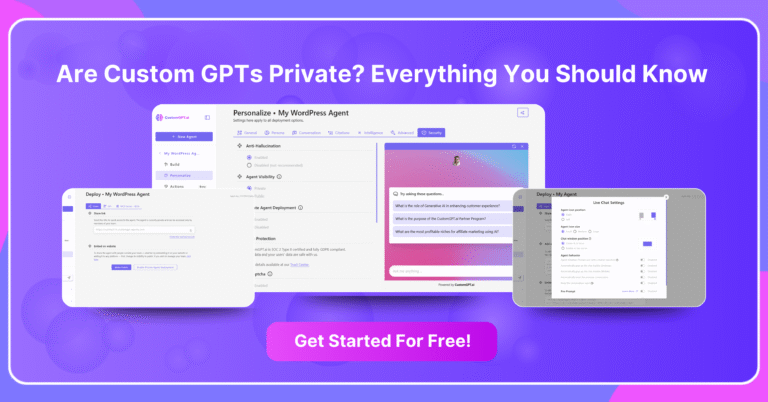
Legal AI must match your confidentiality and compliance constraints. For confidential legal workflows, review custom GPT privacy controls before uploading client files, enabling shared access, or relying on chat logs.
Pass if permissions, retention, and access controls match confidentiality and compliance requirements.
Fail if data residency, retention, or sharing controls are unclear.
Why this matters: if any one of these fails, you don’t have a legal assistant, you have an un-auditable liability.
Red Flags That Make Answers Non-Defensible
These patterns break defensibility immediately.
Treat them as procurement stop-signs, not “things to fix later.”
- Citations that don’t open, don’t match the claim, or look “made up.”
- No way to see what the system retrieved (black-box retrieval).
- No reviewer workflow (encourages “one-click” acceptance of legal conclusions).
- No logging/export of sources used and versions involved.
- Vendor marketing claims about “accuracy” without a reproducible verification method.
Why this matters: these failures don’t just create wrong answers, they create answers you can’t defend under audit.
How to Evaluate an AI Legal Assistant in a Pilot
A good pilot tests governance, not eloquence.
Your goal is to prove the workflow is repeatable, reviewable, and exportable.
Keep the pilot small and representative so reviewers actually do the verification work.
Run a small set of representative tasks (10–30) and score each output on:
- Citation validity: Do cited sources exist, open, and support each key claim?
- Pinpointing: Are citations specific enough to verify quickly?
- Reproducibility: Can two reviewers reproduce the same conclusion from the same sources?
- Refusal quality: Does it refuse or ask clarifying questions when out of scope?
- Audit completeness: Can you export question → sources → answer → review decision?
Decision rule: If citation validity and audit completeness aren’t consistently strong in the pilot, don’t scale, fix the workflow first.
Why this matters: scaling a weak verification loop multiplies support load, rework, and legal exposure.
If you want to operationalize these pass/fail checks inside a real workflow, CustomGPT.ai is built around citation-first answers, verification, and controlled actions, so your pilot measures defensibility, not just writing quality.
How CustomGPT Enables Defensible Legal Answers
The defensibility pattern is simplest when the product supports it end-to-end.
CustomGPT can be configured to prioritize defensibility over fluency by centering two capabilities:
- Citations + Verify Response: Design the assistant so every material claim is grounded in citations and reviewers can verify outputs before relying on them.
- Custom Actions / MCP actions: Pull current policies, playbooks, or approved precedents from systems of record so the assistant answers from controlled sources instead of memory or guesswork.
Why this matters: defensibility is a system property, if the workflow doesn’t force evidence and review, people will skip it.
What to Validate in Your Deployment
Governance details decide whether your assistant is safe in production. Legal teams should first understand how to create a private CustomGPT workflow and where ChatGPT’s privacy limits apply.
Validate these explicitly rather than assuming they “come with AI.”
- Which sources are treated as authoritative (internal policy vs external law).
- Who can trigger actions, and what they can access.
- What gets logged and how reviewers sign off.
- How policy/precedent updates are reflected, and how you prevent outdated answers.
- private personal AI assistant — Apply the same privacy-first source controls to personal workflows.
Why this matters: unclear scope, logging, or access controls becomes a compliance problem, not a feature gap.
Example: Answering a Policy Question With Citations and Verification
Here’s what defensibility looks like in a real internal-policy scenario.
The goal is a usable answer plus an evidence trail you can defend.
For a closely related pattern, see CustomGPT.ai’s Internal Search Tool use case (with examples from Martin Trust Center for MIT Entrepreneurship, BernCo, and Dlubal Software) and additional customer stories at Customer Intelligence.
Scenario: An in-house legal team asks, “What is our current travel & expense exception policy for international client meetings?”
- The user asks the question in an assistant configured to require citations.
- A Custom Action pulls the latest policy text from the system of record.
- The assistant drafts an answer and attaches citations to exact policy sections.
- The reviewer opens the cited sections, confirms the wording, and approves or flags mismatches.
- The final approved output is saved with an audit trail (question, sources, timestamps, reviewer outcome).
Conclusion
Fastest way to de-risk this: Since you are struggling with choosing tools that sound confident but can’t be proven, you can solve it by Registering here.
Now that you understand the mechanics of choosing an AI legal assistant that gives citation-backed, defensible answers, the next step is to operationalize verification and audit export as non-negotiables. That reduces wrong-intent adoption, cuts rework from “detective work” reviews, and lowers the chance that a single untraceable answer becomes a compliance or client-trust incident.
Keep the bar simple: if you can’t open and validate citations quickly, and you can’t produce an evidence packet on demand, don’t scale the assistant.
Frequently Asked Questions
How do you reduce hallucinated citations in an AI legal assistant?
Start by limiting the assistant to approved primary and internal sources, then require pinpoint citations for every material claim so a reviewer can open the cited passage and verify it quickly. Elizabeth Planet said, “I added a couple of trusted sources to the chatbot and the answers improved tremendously! You can rely on the responses it gives you because it’s only pulling from curated information.” For legal work, curated retrieval plus claim-by-claim verification is far safer than a chat-only answer.
What should be in an audit trail for AI-generated legal answers?
Bill French said, “They’ve officially cracked the sub-second barrier, a breakthrough that fundamentally changes the user experience from merely ‘interactive’ to ‘instantaneous’.” In legal workflows, speed only matters if the answer is reproducible. A strong audit trail should capture the question or prompt, retrieved sources, answer or output, model or version, timestamps, and reviewer notes or decision. Those records let counsel recreate how the answer was produced and defend it later.
Which legal tasks are safest to pilot first with an AI legal assistant?
Start with structured work such as intake questions, document checklists, policy lookup, and other answers that can be grounded in approved sources. Stephanie Warlick said, “Check out CustomGPT.ai where you can dump all your knowledge to automate proposals, customer inquiries and the knowledge base that exists in your head so your team can execute without you.” In a legal setting, that means loading approved policies, forms, and authorities first, while keeping legal judgment, factual verification, and final sign-off with a lawyer or trained reviewer.
What is the safest way to pilot an AI legal assistant?
Biamp deployed internal and external assistants in under 30 days, supports 90+ languages, and operates them 24/7. Toyon Nurul Huda said, “CustomGPT has opened new doors for how Biamp interacts with customers and internal audiences. With its advanced GPT-4 capabilities, CustomGPT allows Biamp to quickly address the most common questions and requests for information, making it far faster and more efficient to deliver answers.” For a legal pilot, start just as narrowly: use one practice area or one policy corpus, require openable pinpoint citations, and measure verification time, citation pass rate, and reviewer sign-off before expanding scope.
Can ChatGPT do Bluebook citations well enough for legal work?
Bluebook-looking citations are not enough for defensible legal work. The better test is whether the tool can point you to the exact authority and passage you can open and verify. A RAG accuracy benchmark found CustomGPT.ai outperformed OpenAI, so compare tools on grounded accuracy and source provenance, not just citation formatting. If you cannot trace a citation back to the underlying text, treat it as unverified.
Are AI legal assistants compliant enough for confidential legal work?
For confidential legal work, treat security controls as a gate, not a guarantee. CustomGPT.ai is SOC 2 Type 2 certified, GDPR compliant, and states that customer data is not used for model training. Those are useful baseline checks, but you should still verify document access controls, audit logging, source review, and human accountability for legal judgment before using any assistant with sensitive legal material.