
Welcome to our comprehensive guide on generating a sitemap for a YouTube channel using our free and user-friendly sitemap tool. In this guide, we will walk you through the simple process of creating a sitemap based on the content of uploaded videos on a channel. By utilizing this tool, you can extract valuable information from a YouTube channel which you can use in your CustomGPT Chatbot.
Step 1: Accessing the Free Sitemap Tool
To begin, access our free sitemap tool. This tool enables you to effortlessly generate a sitemap for your YouTube channel, leveraging the information conveyed within videos.
Step 2: Inputting the YouTube Channel
Once you have reached the tool’s interface, the process is straightforward. Simply copy and paste the link to your desired YouTube channel into the designated URL box.
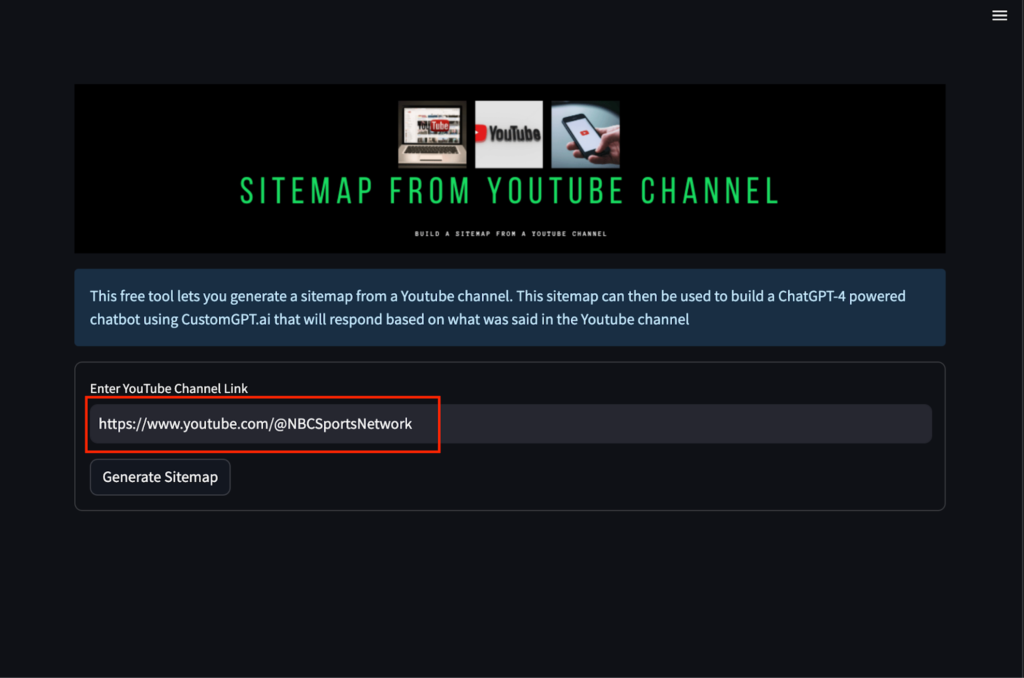
This action ensures that the sitemap generated will accurately represent the videos uploaded to the channel.
Step 3: Initiating the Sitemap Generation
After pasting the YouTube channel link, proceed by clicking the “Generate Sitemap” button.
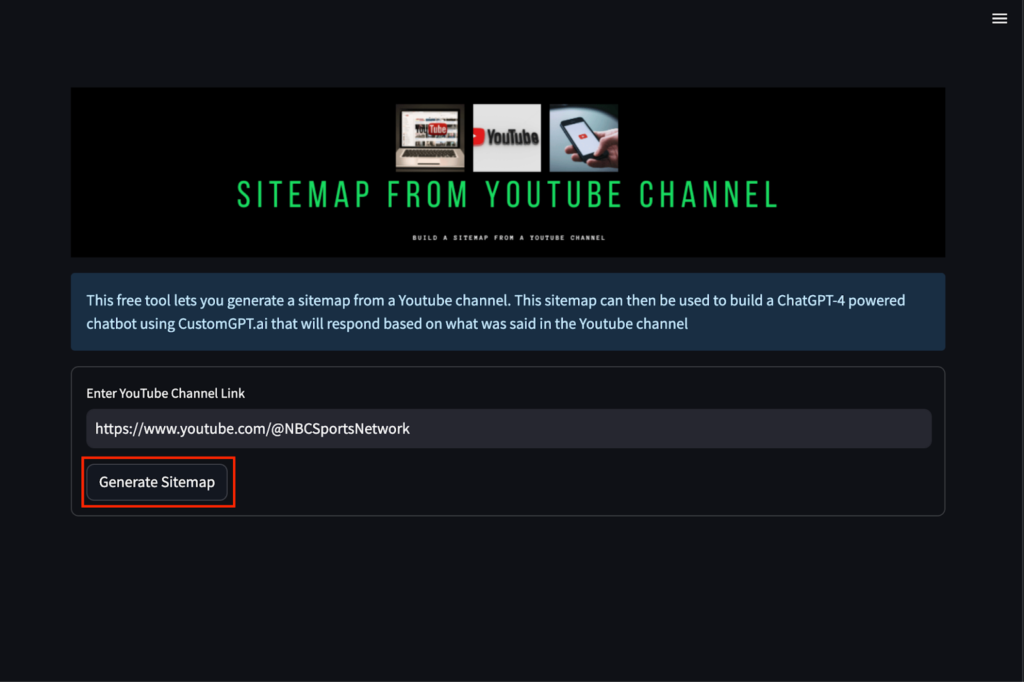
This will initiate the tool to process the provided information and generate a comprehensive sitemap containing all content from the channel.
Step 4: Obtaining and Utilizing Your Sitemap
Once the sitemap has been successfully generated, it will appear on the screen.
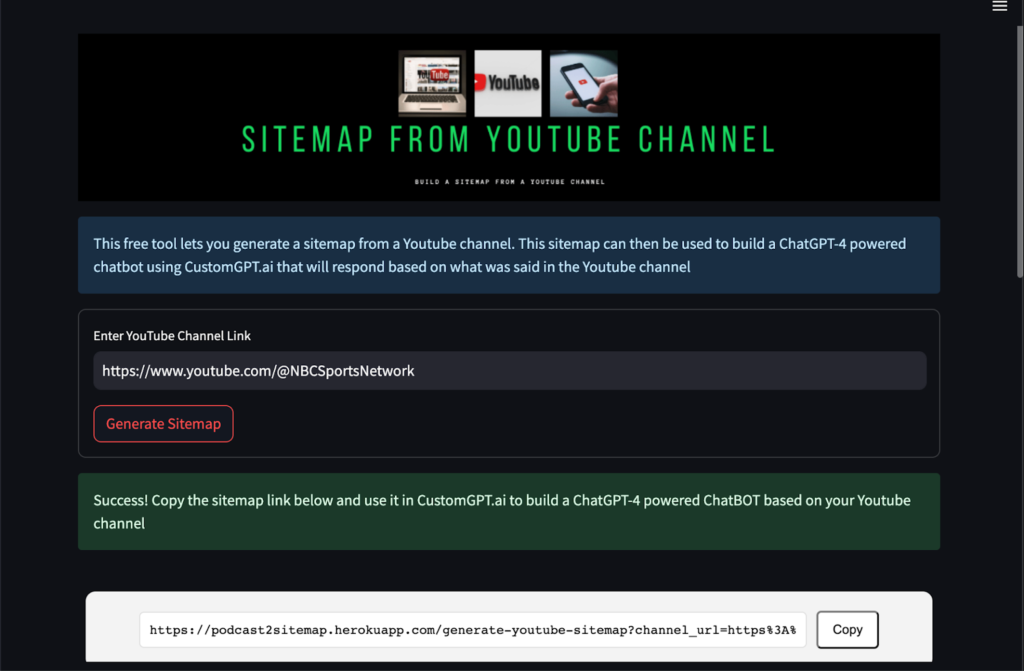
To make use of this valuable asset, click on the “Copy” button. This action will copy the sitemap link to your clipboard, allowing for easy access and implementation.
Step 5: Integrating the Sitemap into Your CustomGPT Chatbot Data Manager
Now that you possess the sitemap link, navigate to your CustomGPT chatbot data manager.
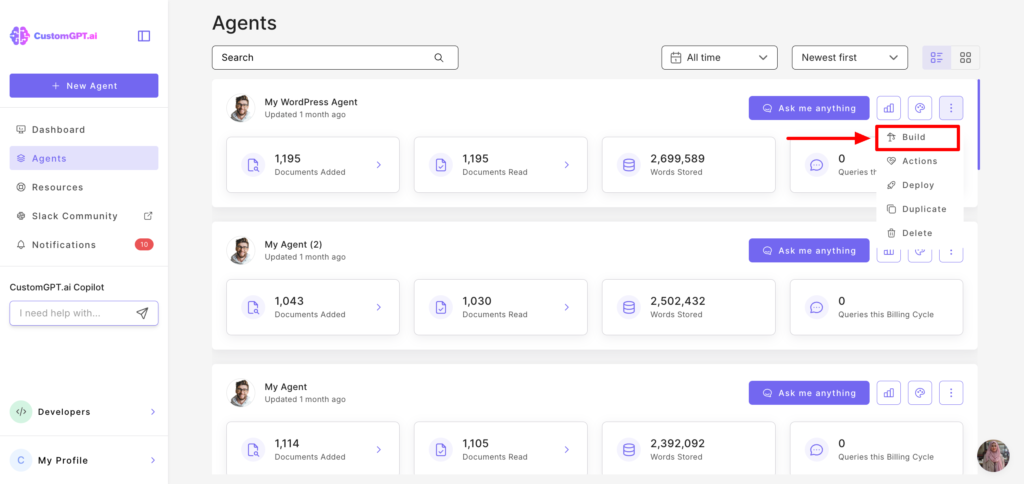
Locate the sitemap section of the data manager, and paste the copied sitemap link.
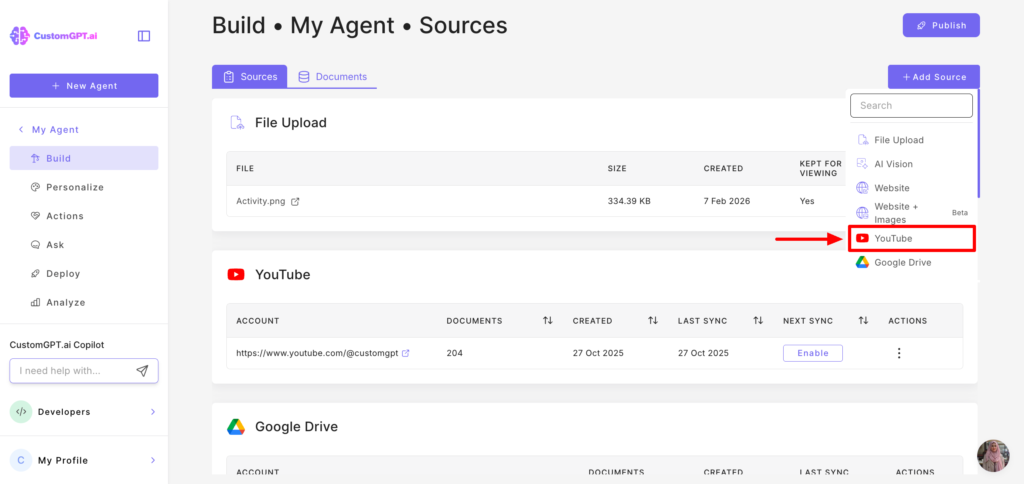
By incorporating the sitemap into your data manager, you enhance the chatbot’s ability to provide accurate and relevant responses based on the content of the channel’s YouTube videos.
Frequently Asked Questions
Do I need to copy video links manually or write code to build a YouTube channel sitemap?
No. The workflow is no-code: paste the YouTube channel URL into the free sitemap tool, click “Generate Sitemap,” copy the sitemap link, and paste it into your chatbot’s Data Manager. That lets you bring in a full channel through one link instead of adding each video URL by hand.
Can a YouTube channel sitemap make recent videos searchable in a chatbot?
Yes, for the videos included when you generate the sitemap. The guide says the tool creates a sitemap from the content of uploaded videos on a channel, and that adding the sitemap to Data Manager helps the chatbot provide accurate and relevant responses based on those videos. If you want the chatbot to use a channel’s latest uploads, generate the sitemap from that channel and use the resulting sitemap link in the chatbot.
Can I build a sitemap from a public YouTube channel I don’t own?
The documented steps only require a YouTube channel URL; they do not mention an ownership check. You paste the channel link into the sitemap tool, generate the sitemap, and then use that sitemap in your chatbot. The guide also does not describe a workflow for private or restricted content, so the supported process is the public channel URL method shown in the tutorial.
Can I combine multiple YouTube channel sitemaps with website content in one chatbot?
Yes. The platform supports multi-source knowledge ingestion across websites, documents, audio, video, and URLs, so a YouTube-channel sitemap can sit alongside website content in one chatbot. Rosemary Brisco of ToTheWeb highlighted the value of this approach: “CustomGPT.ai can work with your own data making it perfect for deep research. The output is naturally human-friendly.” A practical setup is to add each source, wait for indexing to finish, and then test questions that should pull from both the site and the videos.
How do I test whether a YouTube channel sitemap is accurate enough before launch?
Test with real questions people are likely to ask about the channel, then verify each answer against the original video content and any citation shown by the chatbot. That helps you catch missing videos, weak retrieval, or answers that sound plausible but are not grounded. The Kendall Project used that kind of rigorous validation at scale: “We’ve tested over 30 models with hundreds of iterations using CustomGPT.ai.” Brendan McSheffrey added, “The results? High accuracy and efficiency leave people asking, ‘How did you do it?'”
Why use a YouTube channel sitemap for lectures, webinars, or training videos?
A channel sitemap is useful for long-form video libraries because it turns many recordings into a structured source your chatbot can search, so people can ask questions instead of scrubbing through full videos. Evan Weber described the broader value of using your own content this way: “I just discovered CustomGPT, and I am absolutely blown away by its capabilities and affordability! This powerful platform allows you to create custom GPT-4 chatbots using your own content, transforming customer service, engagement, and operational efficiency.”
Conclusion
By following these simple steps, you can efficiently generate a sitemap for your YouTube channel, promoting improved organization and discoverability of your content. If you have any further inquiries or require assistance during the process, please feel free to leave a reply. For more free sitemap tools, please visit this blog post. We will be more than happy to address any concerns you may have. Start utilizing our free sitemap tool today and take a significant step towards optimizing your YouTube channel’s performance.