

CPA affiliate marketing is a performance-based model where you earn commissions when users complete a specific action, such as signing up for a newsletter, filling out a form, or downloading an app.

Make Money With AI
Join our Partner Programs!
Boost your reputation, drive revenue and grow your business with CustomGPT.ai.
Unlike traditional affiliate programs that rely on product sales, this approach rewards precision, strategy, and understanding user intent.
For beginners, this model is appealing because it often requires lower upfront investment and offers faster conversion opportunities.
As you learn how traffic sources, offers, and tracking work together, CPA affiliate marketing becomes a scalable way to build consistent online income.
What Is CPA Affiliate Marketing?
CPA affiliate marketing is a form of performance marketing where affiliates earn a commission when a user completes a predefined action rather than making a purchase.
These actions can include submitting an email, registering for a trial, or installing an app, making it a flexible entry point for beginners. Because success depends on actions instead of sales, this model lowers the barrier to entry and allows faster testing of campaigns.
It’s commonly used across industries like finance, SaaS, and mobile apps, where lead generation and user acquisition are critical.
How CPA Affiliate Marketing Works
CPA campaigns operate through a simple but structured flow that connects advertisers, affiliates, and CPA networks. Understanding this flow helps beginners see where traffic, tracking, and commissions come into play.
Core mechanics of a CPA campaign
- Advertisers create affiliate offers with specific actions
- CPA networks host and manage these offers
- Affiliates drive traffic to the offers using approved channels
- Commissions are paid when the action is completed
Once you understand this process, optimizing each step becomes much easier.
Common Actions in CPA Affiliate Marketing
Unlike traditional affiliate models, CPA focuses on user behavior rather than purchases. This makes cost per action marketing especially attractive for offers with low friction.
Popular CPA actions you’ll encounter
- Email or newsletter sign-ups
- Free trial or account registrations
- App installs or software downloads
- Form submissions or quote requests
Choosing simpler actions often leads to higher conversion rates, especially for new affiliates.
Why Beginners Choose CPA Affiliate Marketing
Many newcomers are drawn to CPA affiliate marketing because it doesn’t require selling skills or expensive products. Instead, it rewards understanding user intent and matching the right traffic to the right affiliate offers.
Beginner-friendly advantages
- No need to close sales
- Faster conversions compared to product-based models
- Wide variety of niches and offers
- Easy scalability through paid or organic traffic
These benefits make CPA a practical starting point for learning performance marketing.
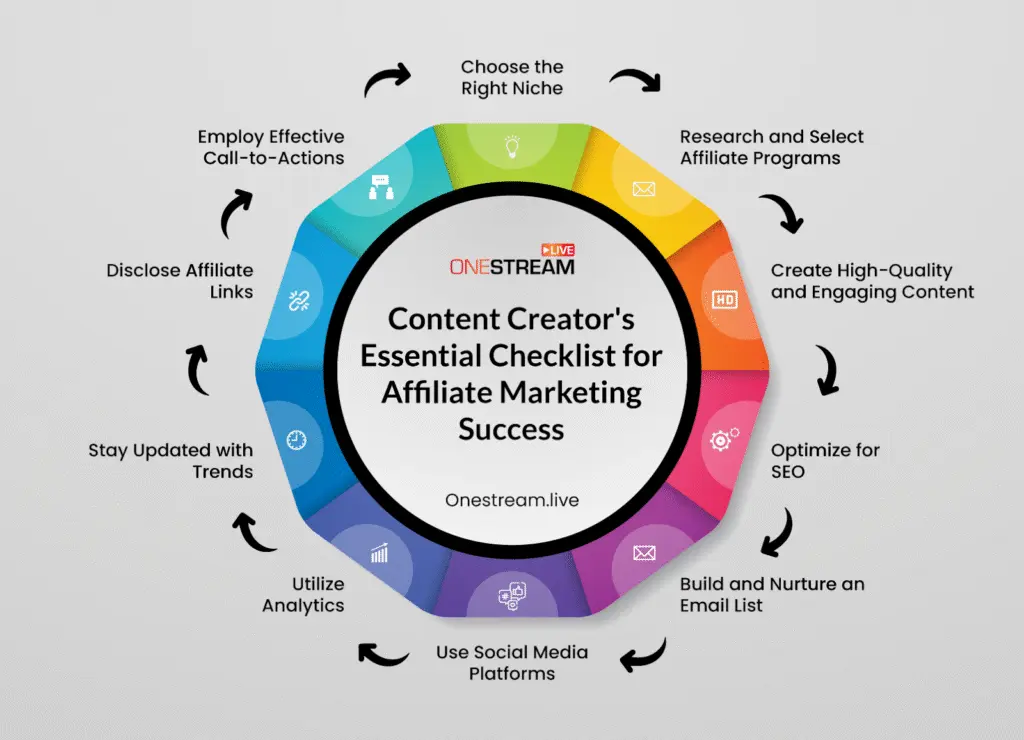
Image source: onestream.live
CPA Affiliate Marketing vs Traditional Affiliate Marketing
While both models fall under affiliate marketing, their goals and strategies differ significantly. Knowing the distinction helps you decide which path aligns with your skills and resources.
Key differences to understand
- CPA focuses on actions, not purchases
- Traditional affiliate marketing relies on product sales
- CPA offers usually have lower payouts but higher volume
- Sales-based programs often require stronger buyer intent
Understanding these differences allows you to choose a model that matches your traffic sources and experience level.
How CPA Affiliate Marketing Pays You
Understanding how payouts work is essential before choosing offers or traffic sources. In CPA affiliate marketing, earnings are tied directly to completed actions, making transparency and tracking especially important.
Payouts vary based on niche, action type, and geographic targeting, with some offers paying a few dollars and others paying significantly more. As you gain experience, you’ll learn how to balance volume and payout value for steady growth.
CPA Payout Models Explained
CPA offers use different payout structures depending on the advertiser’s goal and funnel stage. Knowing these models helps you pick offers that align with your traffic quality.
Common CPA payout models
- Cost Per Lead (CPL) for sign-ups or form fills
- Cost Per Install (CPI) for mobile or software installs
- Cost Per Registration (CPR) for account creation
- Cost Per Trial (CPT) for free trial enrollments
Each model rewards a different level of user commitment, so testing is key.
How Much Can You Earn With CPA Affiliate Marketing?
Earnings in CPA affiliate marketing depend on traffic quality, optimization, and consistency. Beginners often start small, but experienced affiliates can scale campaigns significantly.
High-paying niches like finance and SaaS often offer larger payouts, while simpler actions convert faster but pay less. The balance between conversion rate and payout determines overall profitability.
Payment Methods and Payout Schedules
CPA networks offer flexible payment options to suit affiliates worldwide. Understanding payout terms helps you manage cash flow and reinvest effectively.
Typical CPA payment options
- PayPal or digital wallets
- Bank wire or direct deposit
- Weekly, bi-weekly, or net-30 schedules
Reliable networks clearly outline payment thresholds and timelines upfront.
Factors That Influence CPA Earnings
Several variables affect how much you make from CPA campaigns. Recognizing these early helps you avoid common beginner mistakes.
Key earning factors
- Traffic source quality and intent
- Offer relevance to the audience
- Landing page optimization
- Geographic targeting
Focusing on these elements consistently leads to stronger and more predictable results.
Choosing the Right CPA Offers
Selecting the right CPA offers is one of the most important steps in building a profitable campaign. The best offers align with your traffic source, audience intent, and experience level.
Beginners often see better results by starting with simple, low-friction actions before moving into competitive, high-paying niches. This approach allows you to test, learn, and optimize without excessive risk.
Understanding Offer Types and Niches
CPA offers exist across multiple industries, each with different conversion behaviors. Matching the offer to audience intent improves performance and reduces wasted spend.
Popular CPA niches to explore
- Finance and insurance lead generation
- Health and wellness sign-ups
- SaaS tools and free trials
- Mobile apps and utilities
Choosing a niche you understand makes optimization much easier over time.
How to Evaluate a CPA Offer
Not all CPA offers are worth promoting, even if the payout looks attractive. A proper evaluation helps you avoid low-quality or difficult-to-convert campaigns.
Key factors to check before promoting
- Conversion rate and EPC data
- Allowed traffic sources
- Geographic and device targeting
- Offer compliance and restrictions
Evaluating these elements upfront saves time and advertising budget.

Image source: impactmybiz.com
High-Payout vs High-Converting Offers
New affiliates often struggle to choose between high payouts and high conversion rates. Both options can be profitable depending on your traffic strategy.
High-payout offers typically require stronger user intent, while high-converting offers work well with broader audiences. Testing both helps you discover what fits your traffic source best.
Where to Find Trusted CPA Offers
Reliable CPA networks act as the bridge between affiliates and advertisers. Choosing reputable platforms ensures accurate tracking and on-time payments.
Common places to find CPA offers
- Established CPA affiliate networks
- Direct advertiser partnerships
- Industry forums and communities
Working with trusted sources builds long-term stability in your affiliate marketing journey.
Traffic Sources for CPA Affiliate Marketing
Traffic is the engine behind every successful CPA campaign, and choosing the right source can make or break your results. Different traffic sources attract different user intent levels, which directly impacts conversion rates.
Beginners should focus on understanding one traffic source at a time before expanding. Mastery comes from testing, tracking, and refining rather than spreading efforts too thin.
Paid Traffic for CPA Affiliate Marketing
Paid traffic allows you to drive targeted visitors quickly, making it popular among affiliates who want faster results. However, it requires careful budget control and compliance with platform rules.
Common paid traffic sources
- Google Ads for high-intent searches
- Facebook and Instagram Ads for interest-based targeting
- Native ads for content-style promotions
- Push notifications for volume-based campaigns
Paid traffic works best when paired with strong tracking and optimization. Paid traffic offers speed and scalability, but discipline is essential to stay profitable.
Free Traffic Sources for Beginners
Free traffic methods take longer to build but offer sustainable and lower-risk growth. They are ideal for beginners learning CPA marketing fundamentals.
Popular free traffic options
- SEO-driven blog content
- YouTube videos and short-form content
- Organic social media platforms
- Email lists built over time
These methods reward consistency and audience trust.
Choosing the Right Traffic Source
Not every traffic source fits every CPA offer. Matching traffic intent with the offer’s action increases conversions and reduces wasted effort.
High-intent traffic works better for complex actions, while broad traffic sources suit simple sign-ups. Testing small campaigns helps you identify the best match.
Traffic Source Restrictions You Must Know
CPA networks and advertisers often restrict certain traffic types. Ignoring these rules can lead to rejected commissions or account suspension.
Common traffic restrictions
- No incent or misleading traffic
- Limits on adult or brand bidding
- Restrictions on email or push traffic
Always review offer terms before launching a campaign.

Image source: funnel-media360.tumblr.com
Landing Pages and Funnels in CPA Affiliate Marketing
Landing pages play a crucial role in converting visitors into completed actions. Instead of sending traffic directly to an offer, affiliates often use landing pages to warm up users and increase trust.
Well-structured funnels guide users step by step, improving conversion rates and overall campaign performance. Even simple landing pages can make a noticeable difference when optimized correctly.
What Is a CPA Landing Page?
A CPA landing page is a standalone page designed to prepare visitors before they reach the affiliate offer. Its purpose is to align user expectations and pre-sell the action.
Key elements of an effective landing page
- Clear headline matching the ad message
- Simple and focused call-to-action
- Trust signals like testimonials or badges
- Mobile-friendly design
A strong landing page reduces drop-offs and improves action completion.
Direct Linking vs Landing Pages
Some CPA offers allow direct linking, while others perform better with pre-sell pages. Knowing when to use each approach helps maximize results.
Direct linking works best for simple actions, while landing pages are ideal for competitive or higher-payout offers. Testing both methods reveals which converts better for your traffic source.
Building Simple CPA Funnels
A CPA funnel doesn’t have to be complex to be effective. Many high-performing funnels use just one or two steps.
Basic CPA funnel structure
- Ad or traffic source
- Landing or pre-sell page
- CPA offer page
As you gain experience, you can add email capture or retargeting layers. Simple funnels are easier to optimize and scale.
Common Landing Page Mistakes to Avoid
Small mistakes can significantly hurt conversion rates. Being aware of common pitfalls helps you improve faster.
Mistakes beginners often make
- Overloading pages with too much text
- Weak or unclear calls-to-action
- Mismatched ad and landing page messaging
Fixing these issues can lead to immediate performance improvements.
Tracking and Optimizing CPA Campaigns
Tracking is the backbone of profitable CPA affiliate marketing because it shows exactly what is working and what is wasting money. Without proper tracking, affiliates rely on guesswork instead of data-driven decisions.
Optimization turns raw data into profit by helping you refine ads, landing pages, and offers. Even small improvements can significantly increase ROI when applied consistently.
Why Tracking Is Essential in CPA Affiliate Marketing
Tracking allows you to monitor every click, conversion, and payout in real time. It helps identify profitable traffic sources and eliminate underperforming campaigns quickly.
Benefits of proper CPA tracking
- Clear visibility into conversions and costs
- Better budget allocation
- Faster decision-making
- Scalable campaign growth
Accurate tracking protects your budget and accelerates learning.
Key Metrics You Need to Track
Understanding the right metrics helps you evaluate campaign performance correctly. These numbers reveal whether your CPA campaigns are profitable or need adjustment.
Important CPA metrics to monitor
- Click-through rate (CTR)
- Conversion rate (CR)
- Cost per action (CPA)
- Return on investment (ROI)
Focusing on these metrics keeps optimization simple and effective.
Basic Optimization Strategies for Beginners
Optimization doesn’t require advanced tactics when starting out. Small, focused changes often lead to meaningful improvements.
Beginner-friendly optimization actions
- Test different ad creatives
- Adjust targeting and demographics
- Improve landing page headlines
- Pause low-performing traffic sources
Consistent testing is more important than making drastic changes.
When and How to Scale CPA Campaigns
Scaling should only happen after a campaign proves profitability. Premature scaling often leads to losses instead of growth.
Increase budgets gradually while monitoring performance closely. Successful scaling relies on stable metrics and controlled expansion rather than sudden spikes.
Conclusion
CPA affiliate marketing offers a practical way to earn online by focusing on user actions rather than direct sales, making it accessible for beginners and scalable for experienced marketers.
With the right offers, traffic sources, tracking, and optimization, it can grow into a consistent performance-based income stream.
If you’re ready to take the next step, exploring affiliate programs that pay daily can help you test campaigns faster and improve cash flow. Start by reviewing reliable opportunities and apply what you’ve learned to build momentum confidently.
Get Started With CPA Affiliate Marketing.
Understand CPA affiliate marketing and start building performance-based affiliate revenue.
Trusted by thousands of organizations worldwide


Frequently Asked Questions
What is CPA affiliate marketing in simple terms for a beginner?
CPA affiliate marketing is a performance model where you earn a commission when someone completes a specific action, such as signing up, filling out a form, or downloading an app. Unlike sale-based affiliate models, payment is tied to the action itself, not a purchase.
Can you start CPA affiliate marketing without a website?
A full website is not presented as the core requirement in this beginner model. The key is understanding how traffic sources, offers, and tracking work together so user actions can be completed and credited correctly.
Why are CPA conversions sometimes not counted, even when people click my link?
In CPA, clicks alone are not enough. You are paid only when the predefined action is completed. If the action is not finished—or if tracking between traffic and offer is not set up correctly—the conversion may not be credited.
What traffic source is best for beginners in CPA affiliate marketing?
There is no single best traffic source for every beginner. A better approach is to choose channels where user intent matches the offer, then test and improve based on results. The model rewards precision, strategy, and intent alignment.
Why is CPA affiliate marketing often considered beginner-friendly?
It is often considered beginner-friendly because it usually requires lower upfront investment and can produce faster conversion opportunities than sale-dependent models. That makes it easier to test campaigns and learn what works.
Is CPA affiliate marketing better for beginners than traditional sale-based affiliate programs?
It depends on your situation, but CPA can be easier to test early because commissions are tied to specific actions instead of completed purchases. Sale-based programs can still be strong if your audience is ready to buy, while CPA is often useful for faster early experimentation.