
RAG Data Sync: What Happens When Your RAG is Out Of Sync With Content
Imagine you’re using a chatbot to get the latest product prices, but it keeps giving you outdated information. Frustrating, right?
This happens when Retrieval Augmented Generation (RAG) systems fall out of sync with their content. RAG systems combine the power of large language models with external knowledge sources to provide accurate and informative responses. However, when the data isn’t synchronized properly, the system’s reliability plummets.
Keeping RAG data in sync works best when the ingestion pipeline has a clear document chunking strategy for updated pages, PDFs, and structured files.

Image Credit: CustomGPT.ai
This blog post dives into the critical importance of data synchronization in RAG systems and explores what happens when things go awry. From inaccurate responses to decreased user trust, we’ll cover the consequences and offer solutions to keep your RAG system running smoothly.
Understanding RAG Systems: Enhancing AI with Contextual Knowledge
At its core, RAG is an innovative approach that combines the power of large language models (LLMs) with dynamic, external knowledge retrieval. This synergy results in serverless RAG systems that can provide more accurate, contextually relevant, and up-to-date responses than traditional language models alone.
The Essence of RAG
RAG systems are designed to overcome one of the primary limitations of conventional LLMs: their reliance on static, pre-trained knowledge. While traditional LLMs are incredibly powerful at understanding and generating human-like text, their knowledge is frozen at the time of their training.
RAG addresses this by introducing a dynamic knowledge retrieval mechanism, allowing the system to access and utilize the most current and relevant information available.
The RAG Pipeline: A Three-Step Process

Image source: Medium.com
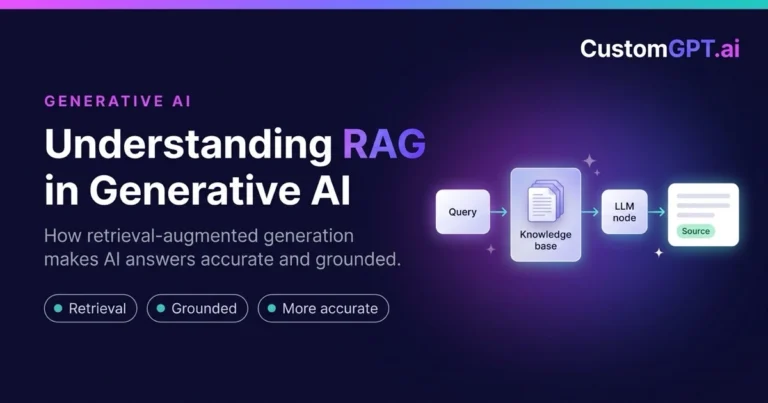
RAG operates through a sophisticated pipeline that can be broken down into three key stages:
- Retrieval
- When a query is received, the RAG system first activates its retrieval mechanism.
- This mechanism searches through a vast, curated knowledge base to find information relevant to the query.
- The knowledge base can include a wide array of sources such as documents, FAQs, manuals, articles, databases, and even real-time data feeds.
- Advanced retrieval algorithms, often based on semantic search or vector embeddings, ensure that the most pertinent information is extracted.
- Augmentation
- In this crucial intermediate step, the retrieved information is seamlessly integrated with the original query.
- This process enriches the input with relevant context and up-to-date facts.
- The augmentation phase ensures that the system has a comprehensive understanding of both the user’s intent and the most current information related to the query.
- Generation
- The augmented query, now rich with context and relevant data, is passed to a large language model.
- The LLM processes this enriched input and generates a response.
- Because the LLM is working with freshly retrieved, relevant information, it can craft responses that are not only linguistically fluent but also accurate and contextually appropriate.
Importance of Data Synchronization
In the realm of Retrieval Augmented Generation (RAG) systems, data synchronization is not just a technical necessity—it’s the lifeblood that keeps the entire system functioning with precision and reliability.
Much like the intricate gears of a Swiss watch, each component of a RAG system must be perfectly aligned and updated to deliver accurate, timely, and valuable information to users.

Data synchronization ensures that the information your serverless RAG system relies on is always current, accurate, and consistent across all touchpoints.
Without robust synchronization mechanisms, the risk of delivering outdated or incorrect responses increases exponentially, potentially leading to a cascade of negative consequences.
Key Benefits of Efficient Data Synchronization:
- Uncompromised Knowledge Accuracy
- Ensures that external knowledge sources are consistently up-to-date
- Maintains the integrity of information across the entire knowledge base
- Enables the RAG system to provide reliable and trustworthy information at all times
- Enhanced Performance and Resource Optimization
- Streamlines data access and processing, reducing latency in response times
- Minimizes redundant data storage and processing, optimizing system resources
- Enables more efficient indexing and retrieval mechanisms
- Seamless Scalability
- Facilitates the smooth integration of new data sources as the knowledge base expands
- Ensures consistent performance even as data volumes grow exponentially
- Supports the addition of new features or use cases without compromising existing functionality
- Improved User Experience and Trust
- Delivers consistent and accurate responses, building user confidence in the system
- Reduces frustration caused by outdated or conflicting information
- Enhances the overall perception of the system’s reliability and usefulness
The Perils of Out-of-Sync RAG Systems
Inaccurate Responses
When RAG systems fall out of sync, the immediate impact is on the accuracy of responses. Consider the scenario where a virtual assistant provides outdated product information or pricing. This not only frustrates users but can lead to tangible business losses, such as missed sales opportunities or increased customer support workload.
The root causes of inaccurate responses can vary:
- Outdated information in the knowledge base
- Missing critical updates or patches
- Data corruption during transfer or storage
- Inconsistencies between different data sources
Decreased User Trust and Engagement
Trust is the currency of digital interactions, and it’s painfully easy to squander. When users encounter inconsistent or inaccurate responses, their faith in the system erodes quickly. This erosion of trust can have far-reaching consequences:
- Users may abandon the system in favor of alternatives
- Negative word-of-mouth can damage the system’s reputation
- Recovering lost trust often requires significant time and resource investment
Systemic Performance Issues
Out-of-sync data doesn’t just affect accuracy—it can cripple system performance. As the RAG system grapples with outdated, redundant, or conflicting data, several issues can arise:
- Increased Latency: Response times slow down as the system sifts through irrelevant or outdated information.
- Resource Overutilization: More computational power is required to process and reconcile inconsistent data.
- System Bottlenecks: The accumulation of sync issues can create chokepoints in data retrieval and processing pipelines.
These performance issues compound over time, leading to a degraded user experience and increased operational costs.
Proactive Synchronization: A Strategic Imperative
Given the critical role of data synchronization, organizations must view it not as a mere technical task but as a strategic imperative. Implementing robust, proactive synchronization mechanisms is essential for:
- Maintaining the integrity and reliability of the RAG system
- Ensuring consistent performance and scalability
- Preserving user trust and engagement
Optimizing resource utilization and operational efficiency
By prioritizing data synchronization, organizations can harness the full potential of their RAG systems, delivering accurate, timely, and valuable insights that drive user satisfaction and business success.
Identifying and Resolving Sync Issues
Identify Synchronization Issues
The first step in addressing synchronization problems is to implement a robust monitoring system. This system should be capable of detecting anomalies in the RAG’s output, such as incorrect answers, irrelevant data, or increased response latency.
By establishing baseline performance metrics and continuously comparing current performance against these benchmarks, you can quickly identify when your system begins to drift out of sync. Automated monitoring tools can be particularly effective in this regard, flagging deviations from expected results and alerting system administrators to potential issues before they escalate into more serious problems.
When monitoring your RAG system, it’s important to pay attention to specific indicators of synchronization issues. These may include a sudden increase in user complaints about inaccurate information, a rise in the number of queries that return irrelevant or outdated data, or a noticeable slowdown in response times.
Each of these symptoms can point to different underlying synchronization problems, so it’s crucial to document them meticulously. Maintain a detailed log of these issues, including the specific queries that triggered them, the incorrect or irrelevant responses provided, and any patterns you observe in terms of timing or content areas affected.
Resolve Issues with RAG
After identifying the root causes of your synchronization issues, it’s time to develop and implement solutions. This often involves updating your content management processes to ensure that new information is promptly and accurately incorporated into your RAG system’s knowledge base.
However, it’s not just about adding new data; it’s equally important to remove or update outdated information. Simply layering new data on top of old can lead to conflicting information and reduced efficiency in your retrieval processes.
One effective strategy for maintaining synchronization is to implement a triggered partial content sync mechanism. This approach allows you to update only the specific parts of your content repository that have changed, rather than performing a full-scale database re-index every time there’s an update.
To implement this, you’ll need to configure a trigger mechanism that detects changes in your source content and initiates a targeted sync process. For instance, if a product price is updated in your e-commerce database, the trigger would initiate a process to update and re-index only the documents related to that specific product, leaving the rest of the knowledge base untouched.
This targeted approach to synchronization is particularly valuable in dynamic environments where data updates are frequent and accuracy is paramount. By minimizing the scope of each update, you can significantly reduce the processing time and resource requirements associated with keeping your RAG system in sync. This not only improves the efficiency of your system but also ensures that users always have access to the most up-to-date information available.
Best Practices for Maintaining Sync

(Don’t want to have to worry about maintaining a perfect sync? customgpt.ai will do it for you)
Regular Monitoring and Updates
Keeping your RAG system in sync requires regular monitoring and timely updates. Think of it like maintaining a car; you wouldn’t skip oil changes, right? Similarly, your RAG system needs consistent check-ups to ensure optimal performance.
Start by implementing performance monitoring tools. These tools help identify bottlenecks and inefficiencies in your data ingestion and sync processes. By catching issues early, you can address them before they escalate.
Automated Sync Processes
Schedule regular updates to your knowledge base. Use incremental updates to incorporate only the changes, reducing processing time and storage requirements. This keeps your data fresh without overwhelming the system.
Automate these processes where possible. Scheduled or event-driven synchronization can keep your system up-to-date without manual intervention. These automated processes can be set to run at regular intervals or triggered by specific events, ensuring your knowledge base is always current. This reduces the risk of outdated information slipping through the cracks.

Use tools like connectors, schedulers, and API endpoints to streamline the sync process. Connectors access various data repositories, while schedulers manage the timing of data access. API endpoints facilitate the flow of data to vector stores or chatbots.
Pro Tip: CustomGPT.ai’s “Auto Sync” feature will automatically do all the heavy lifting for you and keep your RAG in sync with your website content.
For a broader deployment view of sync, indexing, and monitoring, read the production RAG data pipeline guide.
Frequently Asked QuestionsRelated reading: Can I Build an AI Chatbot That Automatically Updates When I Publish a New Help Article?
How do you keep RAG systems up to date when content changes?
Elizabeth Planet, Nonprofit Leadership Coach & Advisor, said, "I added a couple of trusted sources to the chatbot and the answers improved tremendously! You can rely on the responses it gives you because it's only pulling from curated information." To keep a RAG system up to date, resync the external knowledge sources whenever the underlying content changes. RAG relies on retrieved documents, FAQs, articles, databases, and feeds, so stale source data usually leads to stale answers.
What are the warning signs that your RAG is out of sync with its content?
A drop in answer accuracy is the clearest warning sign. A benchmark showed CustomGPT.ai outperformed OpenAI in RAG accuracy, which highlights how much retrieval quality matters. When a RAG system falls out of sync, common symptoms are outdated answers, weaker contextual relevance, and lower user trust. If citations are enabled, a cited source that no longer matches the latest content is also a practical sign that the knowledge base needs refreshing.
How often should you sync a RAG knowledge base?
Evan Weber, Digital Marketing Expert, said, "I just discovered CustomGPT, and I am absolutely blown away by its capabilities and affordability! This powerful platform allows you to create custom GPT-4 chatbots using your own content, transforming customer service, engagement, and operational efficiency." If your chatbot depends on your own content, sync frequency should follow how often that content changes. There is no universal schedule: frequently updated documents, FAQs, databases, or feeds should be refreshed as they change, while relatively static material can be updated less often.
Can auto-sync by itself fix stale RAG answers?
Dan Mowinski, AI Consultant, said, "The tool I recommended was something I learned through 100 school and used at my job about two and a half years ago. It was CustomGPT.ai! That's experience. It's not just knowing what's new. It's remembering what works." The same principle applies to RAG sync: auto-sync can keep sources current, but it cannot decide which sources are trustworthy or useful. If the wrong material is in the knowledge base, automating updates will not fix stale or low-quality answers.
How do you stop auto-sync from pulling in the wrong pages or protected content?
To stop auto-sync from pulling in the wrong or protected content, limit ingestion to approved websites, URLs, documents, or data feeds instead of syncing everything by default. RAG works best with a curated knowledge base. If sensitive information is involved, look for safeguards such as SOC 2 Type 2 certification, GDPR compliance, and a clear statement that customer data is not used for model training.
How do you troubleshoot a RAG bot that starts giving weird answers after a small content change?
Bill French, Technology Strategist, said, "They've officially cracked the sub-second barrier, a breakthrough that fundamentally changes the user experience from merely 'interactive' to 'instantaneous'." Fast answers are useful, but speed does not confirm freshness. If a RAG bot starts giving odd responses after a content edit, first confirm the updated source was resynced, then inspect the answer's citations to see what content was retrieved, and finally use conversation analytics to see whether the issue is isolated or widespread.