
Skip to content
For Membership Associations (opens in a new tab)

Which AI Tools Offer SOC 2 Compliance and SSO? [2026 Buyer’s Checklist]

SOC 2 compliance and SSO are the two security foundations enterprises expect before they will trust an AI platform with sensitive data. SOC 2 Type 2 is an independent attestation that a vendor’s security controls operate effectively over time, and Single Sign-On (SSO) is the mechanism that lets organizations control who can access the platform […]

RAG as a Service: Custom GPT API for Business Data

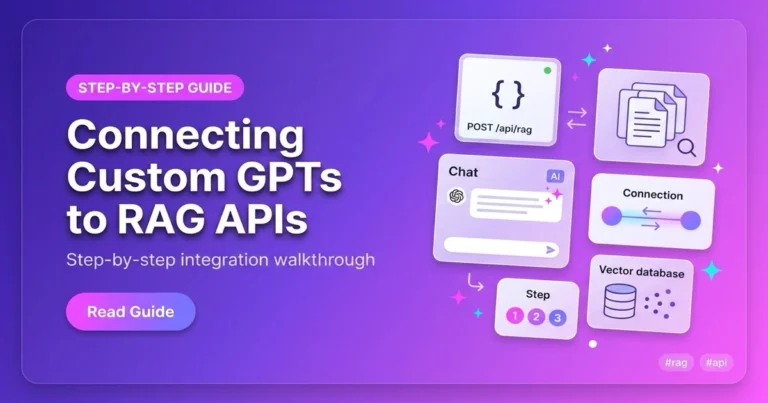
There’s no general API that turns a GPT configured inside ChatGPT into a reusable endpoint for your own application, OpenAI is explicit about that. Most people using “custom GPT API” mean one of two things: OpenAI’s own developer API, or a managed RAG-as-a-service platform like CustomGPT.ai that handles content ingestion, retrieval, citations, and agent management […]

How to Create a Custom GPT with Your Own Business Data

To create a custom GPT with your own data, define the assistant’s purpose, write clear instructions, add approved knowledge sources, enable any necessary tools, test representative questions, and select the appropriate access settings. The best platform depends on whether the assistant will run inside ChatGPT or be deployed on a website, portal, help center, or […]

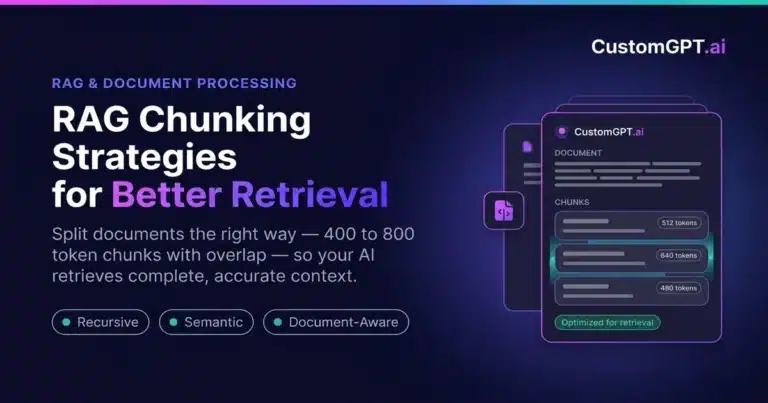
RAG Chunking Strategies: How to Split Documents for Better Retrieval

A RAG system does not retrieve whole documents. It retrieves chunks. That single fact makes chunking one of the highest-leverage decisions in the entire pipeline, because the way you split content decides what the retriever can find, what the model actually sees, and what the answer can cite. Get chunking right and retrieval, grounding, and […]

No-Code RAG Chatbot: How to Build One Without Coding

Most teams that want an AI assistant do not have a spare AI engineering team. They have content: help articles, product manuals, policies, onboarding guides, member resources. The gap is turning that content into accurate, cited answers without building retrieval infrastructure from scratch. Building RAG by hand means owning ingestion, parsing, chunking, embeddings, retrieval, reranking, […]

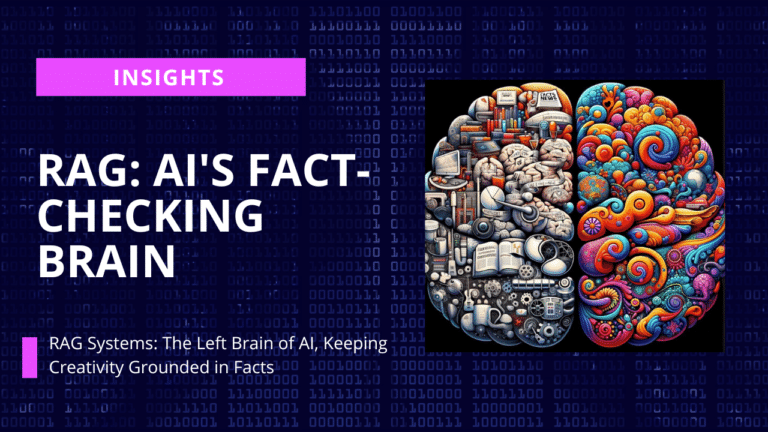
RAG AI Systems: The Left Brain and Right Brain of AI

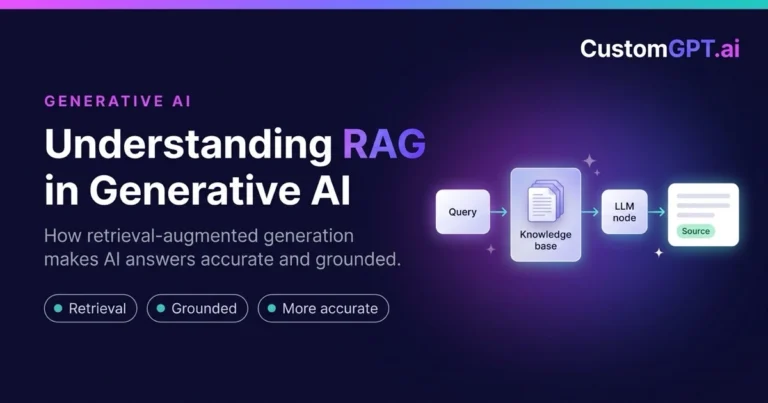
A large language model is a strong writer and a quick thinker. It can draft, summarize, reason, and hold a natural conversation. What it cannot do on its own is know your latest policy, your current pricing, or the exact wording of a contract you signed last week. That gap is why a general-purpose LLM […]

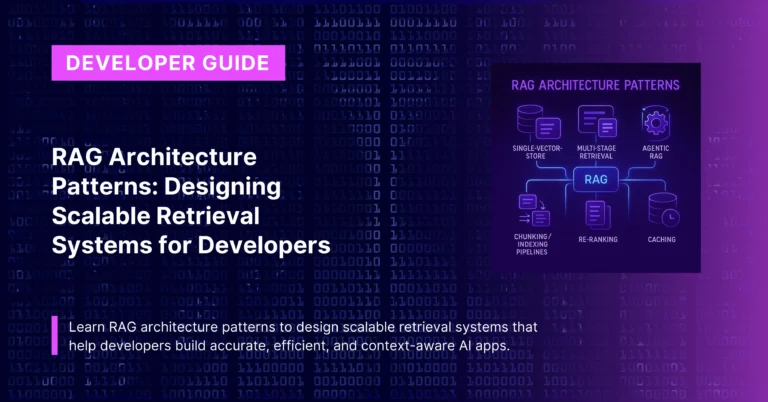
RAG Architecture Patterns: From Basic to Enterprise-Grade

RAG is not a single design. It is a family of RAG architecture patterns that combine retrieval, grounding, generation, evaluation, citations, permissions, and deployment into working systems. Many teams start with a simple retrieve-and-generate pipeline, then discover that production needs far more: ingestion, chunking, indexing, hybrid retrieval, reranking, permission-aware access, citations, evaluation, monitoring, and guardrails. […]

Open Source vs Closed LLMs: What Enterprises Should Know [Updated for 2026]

Last Updated: August 4, 2026 Direct Answer: Are Open-Source LLMs Better Than Closed LLMs? Open-source LLMs are not universally better than closed LLMs, but they are often better when an organization needs deployment control, customization, data residency, lower vendor lock-in, or private infrastructure. Closed LLMs are often better when a team needs frontier performance, mature […]

RAG Implementation Challenges: How CustomGPT.ai Solves Common Problems

Direct Answer: What Are the Biggest RAG Challenges? The biggest RAG challenges are messy data ingestion, poor chunking, weak retrieval quality, hallucinations, missing citations, context window limits, security concerns, latency, and lack of reliable evaluation. Most RAG systems fail not because the language model is weak, but because the retrieval layer cannot consistently find the […]

Create your custom business AI today