
Exploring CustomGPT.ai: 10 Innovative Real-Life Chatbot Applications

The real-world applications of chatbots grow daily as organizations and individuals explore the benefits generative AI adds to these tools. Although still immensely popular as general customer service agents, bots are being developed to perform very specific and valuable tasks with customers and audiences, to sell products and services, and as quickly accessible knowledge repositories, internal trainers, HR tools, and more besides.
In previous posts, we’ve explored general industry use cases like custom GPTs for sales, for CustomGPT.ai for Education and other education AI use cases, or for SEO and marketing as well as how insurer generative AI use cases and banking giant Morgan Stanley are using today’s conversational AI for defined use cases. Now, let’s see if we can inspire your exploration of generative AI by examining more real-life chatbot use cases taken directly from CustomGPT.ai’s client case studies.
- Innovative Scientific Communication via Interactive Knowledge Retrieval
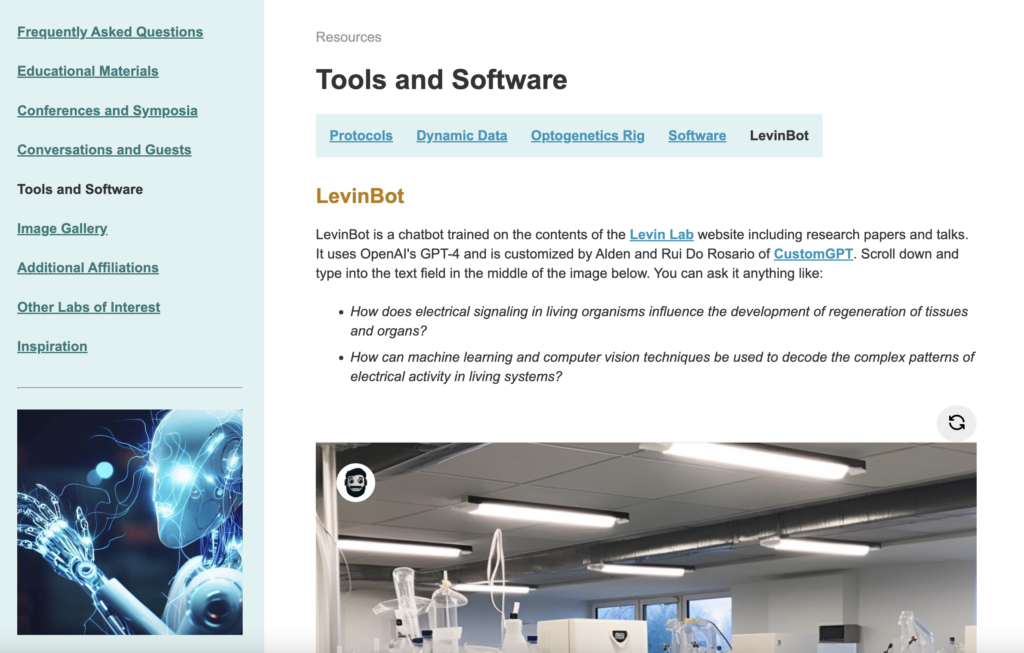
Dr. Levin, for his Levin Lab at Tufts University, wanted to improve the accessibility and interactivity of the pioneering center’s work in developmental biology, artificial life, and cognitive science. His tool would become available to students, researchers, and the public and be able to provide detailed and accurate answers to complex scientific questions. It also needed to embody the aesthetics of the renowned Levin Lab.
Alongside the CustomGPT.ai team, Dr Levin built LevinBot, an interactive knowledge retrieval agent (or chatbot) trained specifically on the lab’s database of research papers, talks, and its philosophical approach, which cites sources to address the critical need for accuracy in scientific communication, reflecting how CustomGPT.ai works. CustomGPT.ai’s UX customization aligned the bot with the aesthetics required and ensured it could be seamlessly integrated as a widget on the Lab’s website.
Read the full case study: Levin Labs: Innovating Scientific Communication with AI Integration
- A Business Assistant to Revolutionize Regulatory Compliance
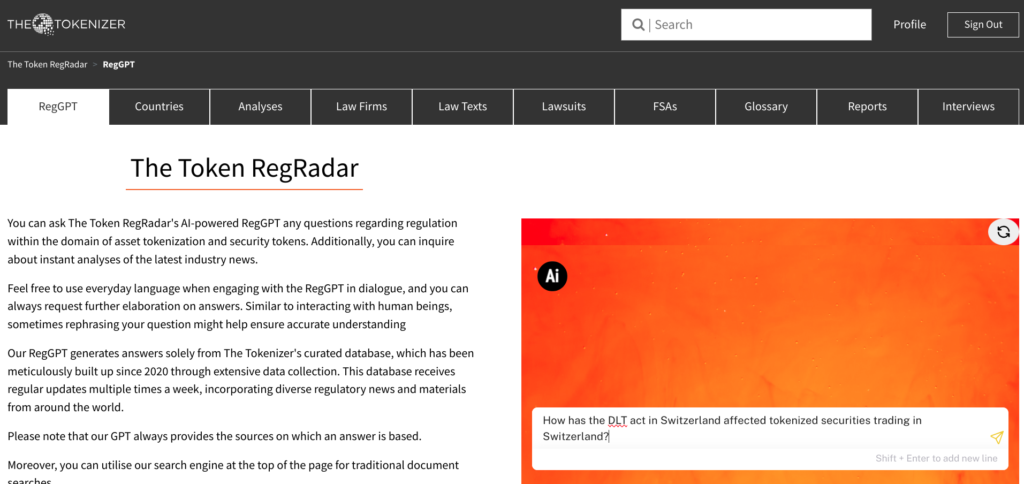
The Tokenizer, a data, information, and news platform oriented to asset tokenization and digital assets, required a GPT tool to help readers navigate the complexities of global regulations. The tool’s goal was ambitious: to scan and interpret regulatory changes across over 80 jurisdictions globally and use The Tokenizer’s massive collection of legal information.
CustomGPT.ai provided an interactive tool with the sophistication to bring the vast database to life, providing instant access to regulatory information for industry professionals. The Token RegRadar is now an essential asset, saving users hours of research and enabling their compliance in a new industry.
Read the full case study: Revolutionizing Regulatory Compliance with The Tokenizer
- Demonstrating and Inspiring the Implementation of AI to Improve Learning
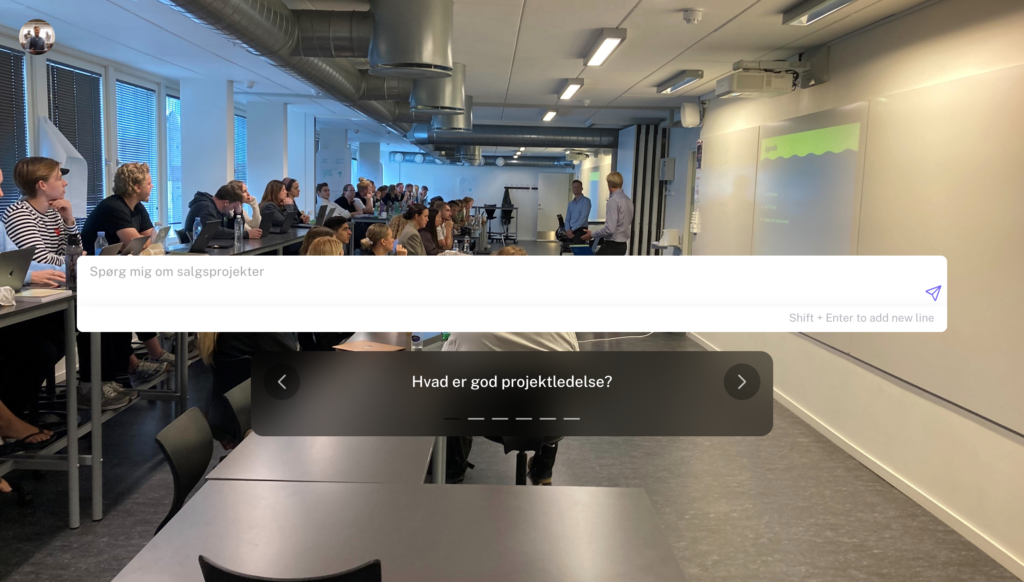
Per Bergfors, an assistant professor at Copenhagen Business Academy prides himself on making complicated concepts easy to understand and relevant to his students. His background with analytical platforms like IBM Watson sparked his interest in applying generative AI to learning to provide a more dynamic and engaging experience for students.
The professor wanted both data security and usability in a zero-code development, with data privacy a clear priority. He built a CustomGPT.ai chatbot tailored to learning experiences topic by topic to create a complementary tool rather than a replacement for traditional learning. He successfully paired the use of AI with traditional textbooks to address declining interest in reading among students and gained impressive feedback from many students who now hope to see AI integrated into other areas of their education.
Read the full case study: Bridging the Gap between AI and Education with CPH Business
- Building a Legal Resource for the Dominican Republic
Gilberto Objio aspired to combine a large language model (LLM) with knowledge of the Dominican Republic’s legal system as a resource for legal representatives in the country. Objio explains:
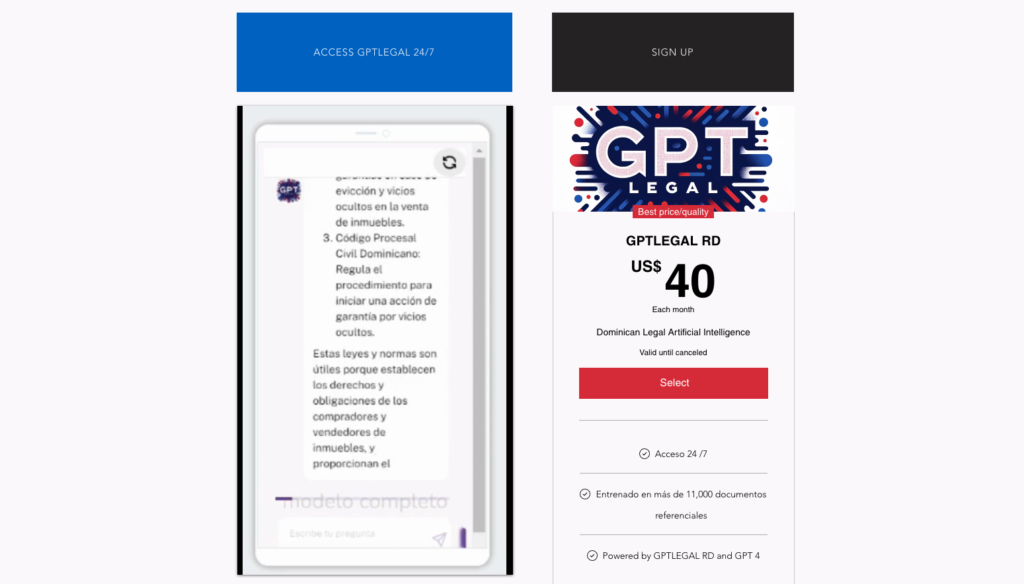
“CUSTOMGPT.ai has been a pivotal tool in the success of GPTLEGAL.com.do, revolutionizing legal services through the integration of cutting-edge artificial intelligence and natural language processing technologies. Initially constrained by technological limitations, GPTLEGAL has evolved to offer immediate and efficient access to crucial legal information.
Looking ahead, we aim to expand our legal knowledge database and encourage collaborative efforts across projects, thereby enhancing the precision and depth of our responses. Additionally, CUSTOMGPT.ai significantly lowers both costs and barriers to implementation.”
The project build consisted of three stages: data collection, model training and adaptation, and validation and testing. Objio used historical and legal texts and trained a CustomGPT.ai bot to handle a variety of legal queries. To date, the bot has received and answered over 19,000 questions.
Read the full case study: GPT Legal: An AI Implementation for Dominican Law
- Outperform ChatGPT in Education with Course Specific Content
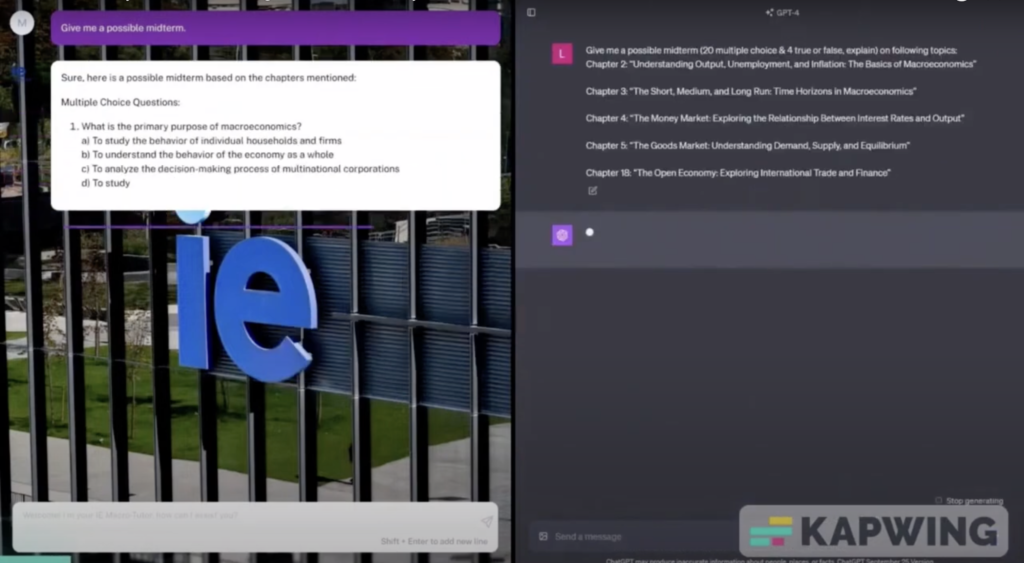
Leon Niederberger, a student at IE Business School Madrid, used CustomGPT.ai to build an AI-powered tutor for his macroeconomics midterm. When he shared the tool with his friends, he knew he was onto something—the AI tutor had answered 1,750 questions from 300 students. Niederberger and fellow student Danil Galkin have since turned the CustomGPT.ai tutor into a business with a valuation of $1.2 million after winning the prestigious Best Undergraduate Start-Up award from IE University.
Read the full case study: AI Ace: Securing a $1.2M Valuation by Creating the Future of Education
- A Zero Code Non-Profit Library of Resources
Non-profit sector leadership coach and advisor Elizabeth Planet wanted to make her extensive library of resources accessible to organizations without overwhelming users with too much dense information. She chose CustomGPT.ai for its zero-code simple technical build interface, uploaded PDFs and resources, and incorporated website sitemaps from top nonprofit resources to create a user-friendly tool that delivers accurate responses with citations to its many sources.
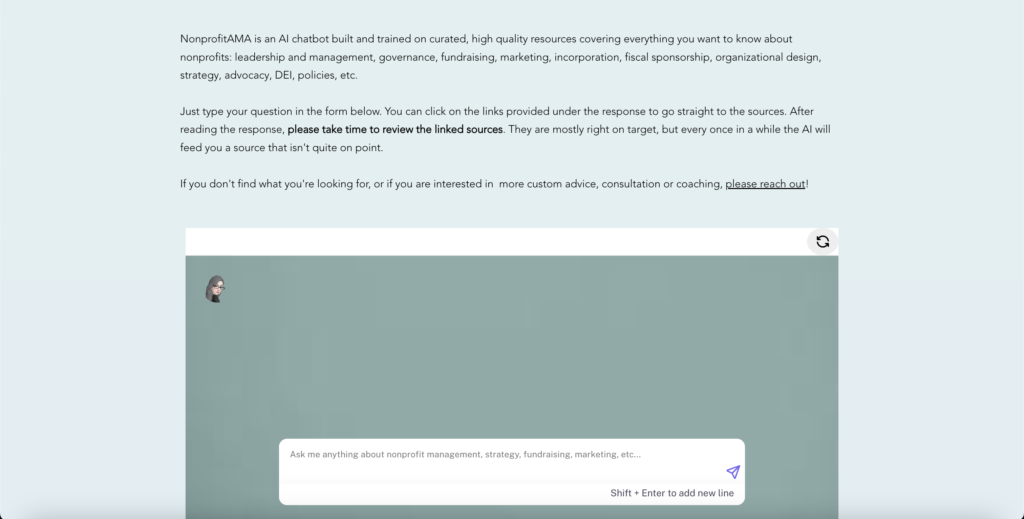
Read the full case study: Nonprofit Consultant: Building an Accurate AI Chatbot – Without Any Code
- A One-Stop Shop of Guidance, Events, Resources and Classes for Entrepreneurs
Massachusetts Institute of Technology’s Martin Trust Center for MIT Entrepreneurship chose CustomGPT.ai for its generative AI chatbot because of its scalable data ingestion platform. CustomGPT.ai enabled the Trust Center to combine its entrepreneurship knowledge bases and build a one-stop shop for entrepreneurs. The resulting bot, “ChatMTC,MIT Uses CustomGPT.ai Create is hosted on the center’s website to address questions from students and budding entrepreneurs.
“We needed a Generative AI platform that would provide trustworthy responses based on our own content, without any hallucination problems.”
— Doug Williams, Product Lead, Martin Trust Center for MIT Entrepreneurship
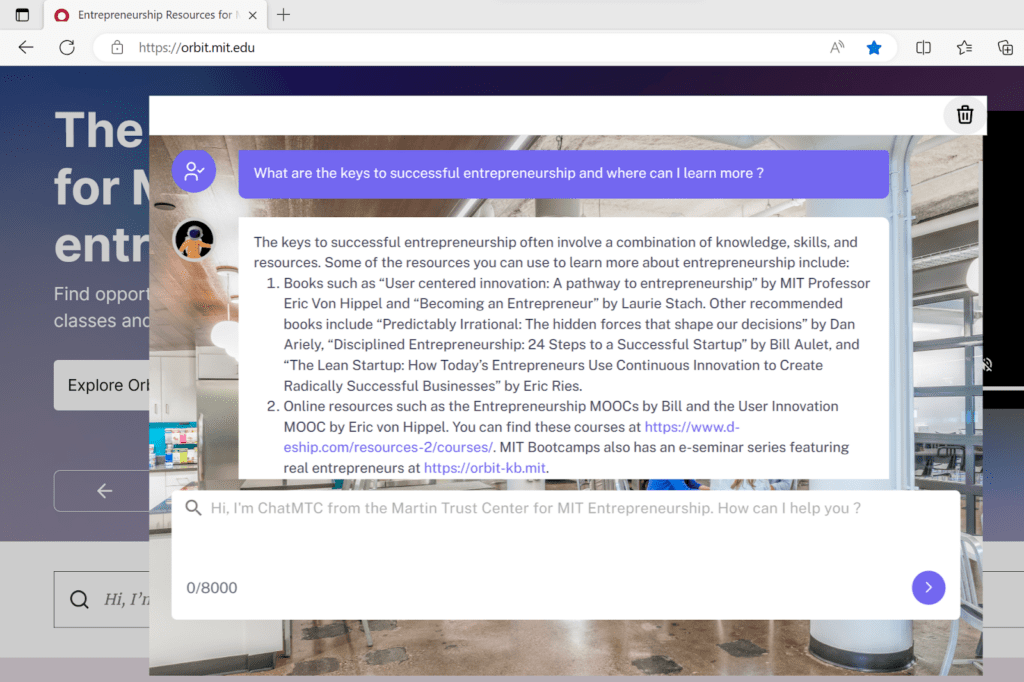
Read the full case study: MIT Entrepreneurship Center: Creating Generative AI For Entrepreneurs
- Enhancing 30 Small Businesses with AI Chatbots in Under 90 Minutes
NITRO! Bootcamp, presented by Cintrifuse, is a program focused on educating and empowering underserved minority and women-owned small business owners. NITRO! provides these entrepreneurs with classes on popular business software like Canva, Wix, and Cyfe and looked to CustomGPT.ai for a generative AI solution attendees could also take advantage of quickly.
NITRO! And CustomGPT.ai set about creating a bootcamp setting at an event where thirty business owners could gather and learn how to build their own AI chatbots. The collaboration provided attendees an “AI Developers Kit,” including a sitemap of their website, a custom “Growth Assistant” Persona (developed using the unique specifications of their businesses), as well as a “Customer Service” prototype Persona (which they could adjust to meet their specific needs), echoing the tailored approach seen in CustomGPT.ai and Optimizely. By using the kits, most businesses went on to use the “Customer Service Agent” and “Growth Assistant.” One business went on to create a chatbot that writes custom DALL-E prompts based on their unique business information, and another customized a GPT Persona with the personality of a character from their book.
Read the full case study: NITRO! Bootcamp worked with CustomGPT to enhance over 30 of its partner small businesses with AI chatbots in under 90 minutes.
- Using AI to Answer Detailed Economic Queries
Sébastien Laye is an entrepreneur and economist with a passion for integrating advanced AI solutions into various sectors. He chose CustomGPT.ai to build an innovative chatbot project and educational tool. The bot is trained on the entrepreneur’s articles, books, TV and radio interviews to serve the French market with economic education and as a resource for media professionals.
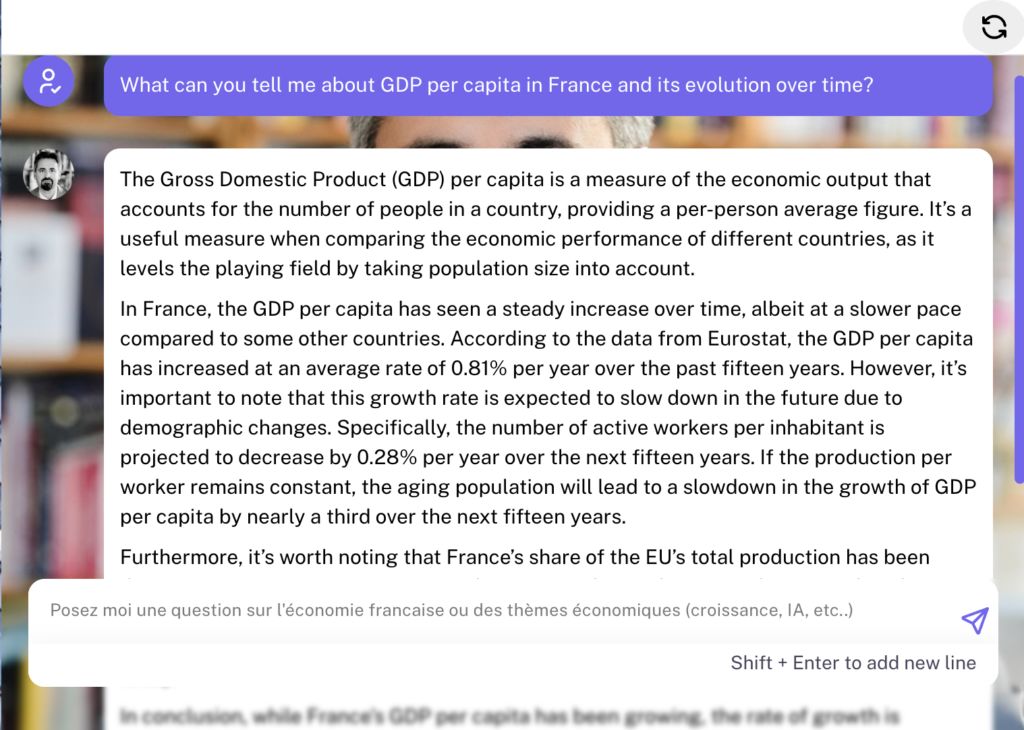
Read the full case study: Aslan AI: Revolutionizing Economic Insights with Generative AI
- Making a Century of University History and News Available to Students
Student Nina Cialone writes for Lehigh University’s tech newsletter. Her professor and mentor tasked her with building an AI agent for students trained on the university’s primary newspaper, The Brown and White, first published in 1894.
The Lehigh senior was looking for an efficient process to upload vast amounts of information from a variety of sources and a system that was capable of ingesting information while also organizing the data in a categorized and structured format. The newspaper’s articles had been written in several formats spread across multiple sources. Enter CustomGPT.ai – a system capable of ingesting over 1400+ different formats of data. The Lehigh newspaper repository already has 300 million words and is currently in the beta stage, being tested by its editors and advisors.
Related Resources
These articles expand on key platform comparisons and implementation considerations connected to real-world chatbot use cases.
- CustomGPT.ai Vs. Ragie.ai — A focused comparison of CustomGPT.ai and Ragie.ai, including differences in features, usability, and ideal use cases.
- CustomGPT.ai Siteimprove Integration — An overview of how CustomGPT.ai relates to Siteimprove workflows, with context for teams evaluating AI search and site experience tools.
Frequently Asked Questions
What are the real-life applications of chatbots?
Real-life chatbot applications include scientific knowledge retrieval, regulatory research, internal knowledge support, proposal automation, customer inquiries, and structured advisory work. For example, LevinBot was built so students, researchers, and the public could ask complex scientific questions based on a lab’s research papers and talks, with citations for accuracy. The Token RegRadar helps users navigate regulations across more than 80 jurisdictions and is described as saving users hours of research. Stephanie Warlick also highlights a practical business use case: “Check out CustomGPT.ai where you can dump all your knowledge to automate proposals, customer inquiries and the knowledge base that exists in your head so your team can execute without you.”
Can an AI chatbot work as an internal knowledge base for employees or members?
Yes. A chatbot can act as an internal knowledge base when you load it with approved documents, websites, and other source material, then let employees or members ask questions in natural language. That use case is directly aligned with knowledge repositories, internal trainers, and HR support. It is especially useful when answers need to stay tied to source material, because citation-supported retrieval helps people find the relevant policy, process, or guidance without searching across files manually.
Do chatbots actually reduce workload and show ROI in real deployments?
The provided examples support workload reduction, but they do not publish a single universal ROI number. The clearest documented outcome here is that The Tokenizer’s regulatory assistant is saving users hours of research, which is a direct labor-saving benefit. Evan Weber also described the broader business impact this way: “I just discovered CustomGPT, and I am absolutely blown away by its capabilities and affordability! This powerful platform allows you to create custom GPT-4 chatbots using your own content, transforming customer service, engagement, and operational efficiency.” If you need to prove ROI in your own environment, the most defensible measures are repeat-question volume, time saved, response speed, and the amount of manual research or support work avoided.
How useful are chatbots in education and training?
They are most useful when the chatbot is grounded in the exact material learners need. LevinBot was built for students, researchers, and the public to answer complex scientific questions from the Levin Lab’s papers, talks, and philosophical material, and it cites sources to support accuracy. That makes this type of chatbot well suited for study support, expert onboarding, and self-serve training where fast access to trusted material matters.
Can a chatbot be trusted for a niche expert or coaching use case?
Yes, if it is restricted to approved source material and can show where answers came from. Barry Barresi described one such advisory workflow this way: “Powered by my custom-built Theory of Change AIM GPT agent on the CustomGPT.ai platform. Rapidly Develop a Credible Theory of Change with AI-Augmented Collaboration.” In niche consulting or coaching, trust usually comes from retrieval over curated documents rather than open-ended answering, and citation-supported responses make it easier to verify the guidance. The provided benchmark also states that the system outperformed OpenAI in RAG accuracy, which supports this expert-use-case fit.
Can chatbots guide product choices before a customer contacts support?
Yes. If you load a chatbot with product information, FAQs, policies, and comparison content, it can answer pre-purchase questions through a website widget, live chat, or search bar before a buyer contacts support. Response speed matters here, which is why Bill French’s observation is relevant: “They’ve officially cracked the sub-second barrier, a breakthrough that fundamentally changes the user experience from merely ‘interactive’ to ‘instantaneous’.” That kind of fast access can make product guidance more useful at the point of decision, even though the provided sources do not include a published shopping-conversion metric.